
By Theko Tlebere
The current immigration discourse in South Africa has reached a critical and emotionally charged juncture. Recent pronouncements from the ‘March and March’ movement, advocating for the departure of undocumented foreign nationals from South Africa by 30 June 2026, have created an atmosphere characterised by heightened tension, uncertainty, and apprehension within numerous migrant communities. For Basotho residing in South Africa, this moment raises profound questions regarding documentation, human dignity, regional historical ties, and the future viability of the Lesotho Exemption Permit.
The sovereign right of South Africa to regulate migration is unequivocally acknowledged. Indeed, no credible argument posits that a sovereign state should relinquish control over its borders, documentation processes, or law enforcement mechanisms. However, the governance of migration must not be ceded to extra-legal demands, fear-mongering, or populist pressures. A constitutional democracy is obligated to operate within the ambit of established law, informed by comprehensive consultation, empirical evidence, and humane administrative practices. The ongoing stakeholder engagements by the South African Department of Home Affairs on the Zimbabwe Exemption Permit and the Lesotho Exemption Permit are important.
These consultations transcend mere bureaucratic formalities; they constitute an indispensable democratic process. They facilitate governmental engagement with affected communities, employers, civil society organisations, religious institutions, legal professionals, migrant populations, and neighbouring states. Furthermore, they enable South Africa to distinguish factual realities from emotional responses. During periods of societal frustration, migrants frequently become scapegoats for issues such as unemployment, crime rates, inadequate public services, and economic hardship. However, the origins of these challenges are considerably more entrenched than migration alone. They are fundamentally rooted in systemic inequality, underdeveloped local economies, corruption, persistent unemployment, inadequate planning, and historical patterns of exclusion. The removal of migrant populations will not automatically generate employment, ameliorate healthcare provision, enhance educational standards, or eradicate crime.
This underscores the critical importance of stakeholder engagement. It provides the government with an opportunity for proactive governance, rather than mere reactive responses. It enables the state to pose pertinent questions: specifically, it facilitates inquiry into the demographic profile of permit holders, their residential patterns, occupational engagement, employment rates, educational enrolment, entrepreneurial activities, and familial circumstances. Furthermore, it prompts consideration of mechanisms for improving documentation processes, establishing requisite security checks, and devising viable legal pathways for compliant permit holders. Such inquiries are indicative of a diligent and responsible state.
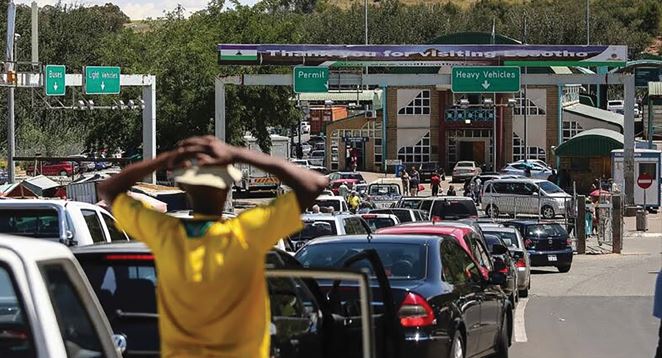
For Lesotho, the issue carries an even greater degree of sensitivity. Basotho migration to South Africa is neither a novel phenomenon, an accidental occurrence, nor a temporary arrangement. Rather, it is an intrinsic component of a protracted historical relationship between two profoundly interconnected societies. Lesotho is geographically enclaved within South Africa. For generations, Basotho individuals have traversed the border into South Africa for purposes of employment, education, commerce, religious practice, familial ties, and subsistence. Basotho labour has been instrumental in the development of South Africa’s mining sector, agricultural enterprises, domestic economy, urban centres, and religious institutions. A significant number of Basotho families possess kinship networks spanning both sides of the border. Indeed, some individuals were born, educated, and employed within South Africa, having known no other social environment.
Consequently, it is insufficient for Lesotho to adopt a passive observational stance from Maseru. The Government of Lesotho must ensure robust representation at these stakeholder meetings. Its delegation must comprise officials possessing expertise in migration dynamics, labour policy, home affairs administration, foreign relations, diaspora engagement, and social protection mechanisms. Lesotho should not participate in these consultations merely as a passive observer. Instead, it must present a well-articulated national position, supported by comprehensive data, historical context, and concrete proposals.
The Government of Lesotho must articulate to South Africa that Basotho nationals are not alien to the regional context. They constitute an integral part of the social and economic fabric of Southern Africa. Moreover, it must put forth pragmatic solutions. These could encompass joint registration systems, biometric data updates, police clearance procedures, labour verification protocols, employer confirmation mechanisms, student status verification, cross-border family documentation, and a clearly defined transitional pathway from exemption permits to ordinary legal status for eligible individuals. Lesotho must unequivocally demonstrate its commitment to lawful migration, as opposed to unregulated movement.
Concurrently, South Africa must uphold its ethical and legal obligations. It must resist the temptation to formulate policy driven by fear. While safeguarding its citizens, it must equally uphold the rule of law. Enforcement of immigration laws must proceed without fostering xenophobia. Engagement with frustrated communities is necessary, but without permitting vigilante movements to dictate national policy. The peril inherent in allowing public anger to dictate migration decisions lies in the potential targeting of innocent individuals. Should society sanction the threatening, harassment, or humiliation of foreign nationals, the integrity of the law itself is compromised.
The Lesotho Exemption Permit should, therefore, not be summarily terminated; rather, it warrants enhancement. South Africa can fortify compliance by mandating updated documentation, valid passports, verifiable proof of residence, evidence of employment or enrolment in educational institutions, tax compliance where pertinent, and comprehensive criminal background checks. Individuals who do not meet the stipulated criteria can be addressed through established legal processes. Conversely, those who have resided peacefully, engaged in legitimate employment, pursued education, fulfilled financial obligations, raised families, and adhered to legal frameworks merit a humane and pragmatic pathway.
Religious institutions also bear a significant responsibility. As moral institutions, churches are obligated to denounce xenophobia, whilst simultaneously encouraging migrants to adhere to legal requirements. The Anglican Church, the Catholic Church, Evangelical denominations, and other faith communities can contribute through initiatives such as documentation awareness campaigns, community education, anti-violence advocacy, and support for vulnerable families. They can serve as a reminder to both governments that migration encompasses more than mere border control; it fundamentally concerns human beings.
The fundamental reality is that Basotho nationals are inextricably linked to the region. Geographical proximity, shared history, familial bonds, labour migration, and existential imperatives have forged a permanent nexus between Lesotho and South Africa. The pertinent question, therefore, is whether this migratory phenomenon will be governed through structured documentation and the preservation of human dignity, or through the propagation of fear and resultant disorder.
South Africa is presently allowed to demonstrate exemplary leadership. Through the continuation of meaningful consultations, the steadfast protection of the rule of law, and the renewal or enhancement of the Lesotho Exemption Permit, it can demonstrate that robust migration governance does not necessitate punitive measures. Instead, it demands courage, equity, and sagacity.
Basotho nationals do not petition South Africa to abrogate its legal frameworks. Rather, they request that South Africa acknowledge its historical ties, uphold human dignity, and prioritise lawful regularisation processes over reactive panic. Such an approach aligns with the principles of good neighbourliness, the tenets of constitutional democracies, and the imperatives of justice. The future is NOW!
Summary
- Recent pronouncements from the ‘March and March’ movement, advocating for the departure of undocumented foreign nationals from South Africa by 30 June 2026, have created an atmosphere characterised by heightened tension, uncertainty, and apprehension within numerous migrant communities.
- For Basotho residing in South Africa, this moment raises profound questions regarding documentation, human dignity, regional historical ties, and the future viability of the Lesotho Exemption Permit.
- The ongoing stakeholder engagements by the South African Department of Home Affairs on the Zimbabwe Exemption Permit and the Lesotho Exemption Permit are important.

Welcome to Newsday Media – Your Trusted Source for News and Insights in Lesotho!
At Newsday Media, we are passionate about delivering accurate, timely, and engaging news and multimedia content to our diverse audience. Founded with the vision of revolutionizing the media landscape in Lesotho, we have grown into a leading hybrid media company that blends traditional journalism with innovative digital platforms.
Our mission is simple: to inform, inspire, and empower our readers by providing comprehensive coverage of local and global events, current affairs, and cultural happenings. Whether you’re looking for breaking news, in-depth analysis, or captivating storytelling, Newsday Media is your go-to destination for all things news-related.
With a dedicated team of journalists, editors, and multimedia experts, we are committed to upholding the highest standards of journalistic integrity and professionalism. We pride ourselves on delivering content that not only informs but also sparks conversation, fosters understanding, and drives positive change in our society.
From our flagship newspaper to our dynamic digital platforms, we offer a wide range of multimedia content to cater to the diverse interests and preferences of our audience. Whether you prefer to stay informed through print, online articles, videos, or podcasts, Newsday Media has something for everyone.
We believe in the power of storytelling to connect people, bridge divides, and inspire action. That’s why we’re dedicated to providing a platform for voices from all walks of life, championing diversity, inclusion, and authenticity in everything we do.
Thank you for visiting Newsday Media. We invite you to explore our website, engage with our content, and join us on our journey to inform, inspire, and empower our community. Together, let’s shape the future of media in Lesotho.