Workers claim white South Africans favoured over Basotho, but resort insists it complies with all labour laws as inspection looms
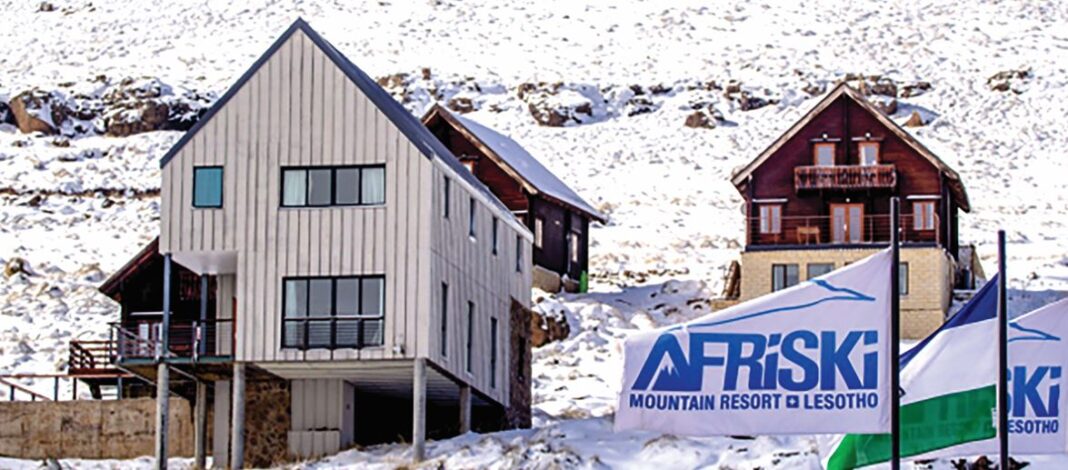
Racial and labour tensions are simmering at Afriski Mountain Resort, Newsday can reveal. Afriski is Lesotho’s only skiing facility and one of just two operational ski resorts in Southern Africa.
Located along the A1 road, past the iconic Moteng and Mahlasela passes in the Botha Bothe ditsrict, Afriski sits high in the Maluti Mountains at over 3,000 metres above sea level.
It boasts a large capacity to host events and winter activities, with accommodation for over 300 people.
The resort employs an estimated 200 staff members every winter season (June to August), its peak operational period. According to high-placed sources at Afriski, these employees are recruited from both South Africa and Lesotho.
Speaking to Newsday this week on condition of anonymity for fear of reprisal, two sources from Afriski alleged that the company was unnecessarily favouring white South Africans over Basotho in its recruitment. During the off-season, they said, Afriski retains a permanent staff of around 50 people.
“The problem is that the company now gives more preference to white South Africans than Basotho. There is a larger number of white South Africans than Basotho in Afriski’s employ at the moment. They [whites] constitute 60 percent of the staff—10 percent more than Basotho,” one source claimed.
Another source added: “Some of these whites are unqualified, yet they are employed as managers and supervisors above qualified Basotho. We teach them the work, but in turn, they are the ones promoted by the company to become our bosses. How strange!” he exclaimed.
The sources further alleged that some of their white South African colleagues are undocumented. “They work with us, but they do not possess work permits from local authorities to be employed in Lesotho,” one said.
This situation, they claimed, has created a division between Basotho and white South African employees.
“There is an atmosphere of sour relations between ourselves. Threats, intimidation, and possible harassment are imminent between us,” one of the sources said.
According to Lesotho’s Labour Act No. 3 of 2024, Section 161(1), no employer shall employ any person in Lesotho who is not a citizen of Lesotho, “and no such person shall accept employment in Lesotho, unless that person is in possession of a valid work permit issued by the Director – National Employment Service.”
However, the workers allege that Afriski has employed some white South Africans without the required work permits.
This allegation was disputed by Afriski’s Human Resource Manager, Masibane Rangoako, who indicated that as a “responsible employer” operating within Lesotho, “Afriski remains fully committed to conducting its recruitment and employment practices in compliance with the applicable legal and regulatory framework, including the Lesotho Labour Act No. 3 of 2024 and all relevant immigration and employment requirements.”
Rangoako added that Afriski remained committed to maintaining lawful employment practices “while continuing to support the development and employment of Basotho across all levels of the organisation.”
Meanwhile, Newsday has seen a series of urgent letters that concerned workers wrote, through their trade union, the Independent Democratic Union of Lesotho (IDUL), to Afriski management and relevant authorities, including Minister of Labour and Employment Tseliso Mokhosi and Labour Commissioner ‘Mamohale Matsoso.
“The problem is that the company now gives more preference to white South Africans than Basotho. There is a larger number of white South Africans than Basotho in Afriski’s employ at the moment. They [whites] constitute 60 percent of the staff—10 percent more than Basotho,” one source claimed.
On March 4, 2026, IDUL’s Deputy Secretary General, Clarke Letsie, wrote to the Director of Afriski, noting in part: “The IDUL Trade Union has identified the following expatriate employees who are allegedly working without the valid certificates of employment required by section 161–163 of the Lesotho Labour Act No. 3 of 2024.”
Letsie then listed the expatriates, their departments, and nationalities as follows: Winand (Maintenance) South African, Anton (Maintenance) South African, Vicky (Finance) South African, and Anton’s Son (Maintenance) South African.
The continued employment of these expatriates without lawful documentation, Letsie warned, “is a direct violation of both the Lesotho Labour Act No. 3 of 2024 and the Aliens Control Act of 1966. This practice unfairly displaces qualified Basotho workers and exposes the company to severe penalties, including fines.”
Letsie concluded with a final demand and an ultimatum: “We require management to produce valid work permits for the above-listed individuals within 48 hours of receipt of this notice. Failure to do so will result in the union immediately escalating this specific list to the National Employment Services (NES) and the Labour Inspectorate for a full-scale audit and subsequent legal action.”
Rangoako responded to this letter on March 7, 2026, stating: “We acknowledge receipt of your letter dated March 4, 2026, regarding the employment status of certain expatriate staff members at Afriski. We confirm that Afriski is in ongoing engagements with the relevant statutory authorities and professional advisors regarding all compliance matters relating to expatriate employment. These engagements include processes relating to applications, renewals, and regulatory compliance in accordance with the applicable statutory procedures.”
Rangoako said Afriski would continue to work through the appropriate legal and administrative channels to ensure that all requirements are addressed in accordance with the law.
“We further note that your correspondence refers to a limited number of individuals. In the interest of consistency and fairness in the application of labour and immigration regulations, it is important that any compliance considerations relating to expatriate employment be addressed in a uniform manner across all individuals who fall within the scope of the relevant legislation, including expatriates that are members of your union,” the Human Resource Manager said.
Afriski, Rangoako argued, values constructive and responsible engagement with organised labour and “remains available for further discussion should the union wish to address any concerns through the appropriate channels.”
On April 2026, Letsie wrote a letter to the Labour Commissioner, titled “Follow-up on Illegal Expatriates and Lack of Skills Transfer at Afriski Mountain Resort.”
“We refer to our previous correspondence dated 19 March 2026 regarding the employment of undocumented expatriates at Afriski Mountain Resort. Following our report, an inspector was dispatched on 23 March 2026. Her findings confirmed that several employees are working without valid work permits. Despite an ultimatum issued for their immediate departure, no action has been taken to date. These individuals remain on site in direct defiance of the law,” Letsie noted to Matsoso.
Letsie further brought to the Labour Commissioner’s attention that “the General Manager [Afriski] and other senior staff members also lack valid work permits, which explains the ongoing disregard for local labour laws.”
Since 2021, Letsie noted further, the resort has consistently rehired the same undocumented expatriates during peak seasons. “This practice bypasses the legal requirement for skills transfer to Basotho workers and denies local citizens employment opportunities,” he said.
At IDUL, Letsie noted that they request the commissioner’s office to intervene immediately to enforce the inspector’s findings and ensure the Labour Act is upheld.
“We draw your attention to section 165 of the Labour Act No. 3 of 2024, which explicitly prohibits the employment of non-nationals without a valid work permit,” he said.
This dispute occurs against a backdrop of heightened sensitivity around cross-border employment and job competition in the region. South Africa, which completely surrounds Lesotho, is experiencing significant anti-immigration sentiment and protests, with groups setting a June 30, 2026 deadline for undocumented migrants to leave amid record-high unemployment and perceptions that foreigners are taking local jobs.
While the Afriski case involves South Africans working in Lesotho, the reverse dynamic, it taps into similar frustrations over prioritisation of non-nationals in employment, skills transfer, and permit enforcement.
Newsday has since learnt that the office of the Inspector General from the Ministry of Labour and Employment will visit Afriski next week to conduct an inspection regarding the concerns raised by IDUL against the resort.
A letter dated June 22, 2026, from Inspection Manager M. Koalepe, states: “The office of labour planned to conduct an inspection at Afriski on 4 June 2026, but due to bad weather, the inspection had to be postponed. The inspection will now take place on 2 July 2026, wherein the grievances raised will now be addressed.”
Summary
- 3 of 2024, Section 161(1), no employer shall employ any person in Lesotho who is not a citizen of Lesotho, “and no such person shall accept employment in Lesotho, unless that person is in possession of a valid work permit issued by the Director – National Employment Service.
- This allegation was disputed by Afriski’s Human Resource Manager, Masibane Rangoako, who indicated that as a “responsible employer” operating within Lesotho, “Afriski remains fully committed to conducting its recruitment and employment practices in compliance with the applicable legal and regulatory framework, including the Lesotho Labour Act No.
- Meanwhile, Newsday has seen a series of urgent letters that concerned workers wrote, through their trade union, the Independent Democratic Union of Lesotho (IDUL), to Afriski management and relevant authorities, including Minister of Labour and Employment Tseliso Mokhosi and Labour Commissioner ‘Mamohale Matsoso.
I am a journalist based in Maseru, Lesotho, renowned for investigative reporting. Over the years, my work has been published both locally and internationally, including in South Africa through the Amabhungane Centre for Investigative Journalism and the Daily Maverick, among other publications.
In Lesotho, I have served as a senior reporter for several leading weekly newspapers, including the Lesotho Times, Public Eye, and Sunday Express. My reporting has focused on uncovering issues of public interest, promoting accountability, and giving voice to underreported stories.
In 2016, I co-founded the MNN Centre for Investigative Journalism in Maseru, an initiative dedicated to strengthening investigative journalism and fostering a culture of transparency and public-interest reporting in Lesotho.