


… Challenges 15-year waiting period
Advocate Fusi Sehapi has formally applied for the prestigious honour of King’s Counsel (Silk), challenging the statutory 15-year waiting period as unconstitutional and discriminatory.
In an application dated July 1, 2026, addressed to the Chief Justice, Sehapi, argues that he has appeared in more than 20 high-profile matters before both the High Court, several of which have shaped Lesotho’s legal jurisprudence.
He points to academic recognition of his work, including an article by constitutional law scholar Professor Hoolo ‘Nyane analysing one of his cases.
He argues that the 15-year requirement violates constitutional protections against discrimination.
King’s Counsel status is reserved for advocates who have distinguished themselves through exceptional legal practice, integrity, and contribution to the development of the law.
The most recent appointment was that of current Attorney-General Advocate Rapelang Motsieloa in July 2022.
Advocate Sehapi, who describes himself as holding “the highest leading record at least amongst my peers and/or even some seniors” in constitutional litigation, contends that waiting for the full 15-year period serves “no legitimate government purpose.”
“Waiting for fifteen years o’clock to beat while one already qualifies for silk now is unjustified and serves no legitimate government purpose. On the other, it is purely punitive and demeaning to one’s sense of self-worth (dignity),” Sehapi states in the application.
He points to South Africa as a comparator jurisdiction where the waiting period is only 10 years, and where exceptional practitioners like Advocate Tembeka Ngcukaitobi SC were conferred the honour after just seven years as an “equitable exemption.”
“The fact that foreign Advocates who are actually my peers and/or even juniors may be my seniors because they may or are actually conferred silk in ten years and/or lesser years as an exception to ten years unfairly subjects me to discriminatory cross-border legal practice in violation of my right to equal protection and benefit of the law,” he argues.
Sehapi further submits that the discrimination subjects him to “unfair and unjustifiable discrimination based on birth or age of practice and national origin” and “indignity, unfair competition in trade, occupation and practice of my profession and provision of legal services.”
The application lists an extensive portfolio of constitutional cases, including several that have shaped Lesotho’s jurisprudence. Among them are matters involving the rights of acting teachers, the constitutionality of COVID-19 regulations, parliamentary procedures, and the recognition of class actions.
“I hold the highest leading record at least amongst my peers and/or even some seniors, of involvement in more than twenty (20) high profile constitutional cases. The said cases are of great importance in the shape and development of our jurisprudence in the High Court ordinary and in the High Court Constitutional,” Sehapi writes.
Among the pending matters where Sehapi serves as applicant’s counsel is Kananelo Boloetse and Another v. The Speaker of the National Assembly and Others, Constitutional Case No: 0023/2025, which he cites alongside other active constitutional challenges including Rastafarians v. Minister of Health and Christian Advocates and Others v. The Prime Minister of Lesotho.
Sehapi has also been involved in significant cases including Boloetse and Another v. The Speaker of the National Assembly and Others, Constitutional Case No: 14 of 2023, where he successfully argued that parliament cannot bind its successor and that bills not passed by a previous Parliament “die irretrievably” and cannot be resurrected by a subsequent Parliament. The Court upheld this argument, holding that all bills that had not been passed before the previous Parliament’s life ended could not be resurrected.
The applicant notes that he influenced class action proceedings even before they were finally recognised in the 10th Amendment to the Constitution in 2025.
Sehapi also says he has assisted pro deo in facilitating the admission of at least six lawyers in cross-border legal practice, including advocates from Lesotho and South Africa.
The advocate candidly acknowledges the personal toll of his practice.
“I have gone through a lot as a practitioner and have experienced serious moments of trauma, weakness, doubt, despair and a call to quit,” he writes.
He cites his mentor, Advocate Zwelakhe Mda KC, as a source of encouragement, though noting that Mda did not initially support the idea of applying before the 15-year mark.
“I would really desire him and my mentor to witness me being conferred silk during their lifetime as my last parents after so many years of their mentorship and sacrifice of their time and resources providing for my livelihood, paying for my school fees and legal training,” Sehapi writes.
The application also reveals personal challenges, including that the advocate lost his hearing after completing university.
“Upon completing my university I suffered a setback when I lost my hearing something which made my legal practice very hard as lawyers require five senses but in particular hearing and speech,” he states.
He also shares that both his parents died “without witnessing my success in the legal practice.”
This is not Sehapi’s first attempt. In 2022, he challenged the constitutionality of the current KC appointment process and the 15-year post-admission requirement, describing it as discriminatory.
He also argued that the Law Society of Lesotho should play a formal role in identifying and forwarding suitable candidates to the King.
Sehapi, who has 13 years of practice and is only months short of the 15-year mark, maintains that his record already meets the standard expected of a King’s Counsel.
His application is supported by a strong recommendation from K.J. Nthontho Attorneys, where he previously practised for three years.
“We had the opportunity to work closely with him and witness first-hand his exceptional legal ability, professionalism, and unwavering commitment to the highest standards of advocacy,” the firm wrote.
The recommendation continues: “It is our considered opinion that Advocate Sehapi has demonstrated the distinction in advocacy, professional excellence, integrity and independence expected of those appointed as King’s Counsel. We have no hesitation in offering our strongest and unqualified recommendation in support of his application.”
Summary
- “The fact that foreign Advocates who are actually my peers and/or even juniors may be my seniors because they may or are actually conferred silk in ten years and/or lesser years as an exception to ten years unfairly subjects me to discriminatory cross-border legal practice in violation of my right to equal protection and benefit of the law,” he argues.
- Sehapi further submits that the discrimination subjects him to “unfair and unjustifiable discrimination based on birth or age of practice and national origin” and “indignity, unfair competition in trade, occupation and practice of my profession and provision of legal services.
- The said cases are of great importance in the shape and development of our jurisprudence in the High Court ordinary and in the High Court Constitutional,” Sehapi writes.
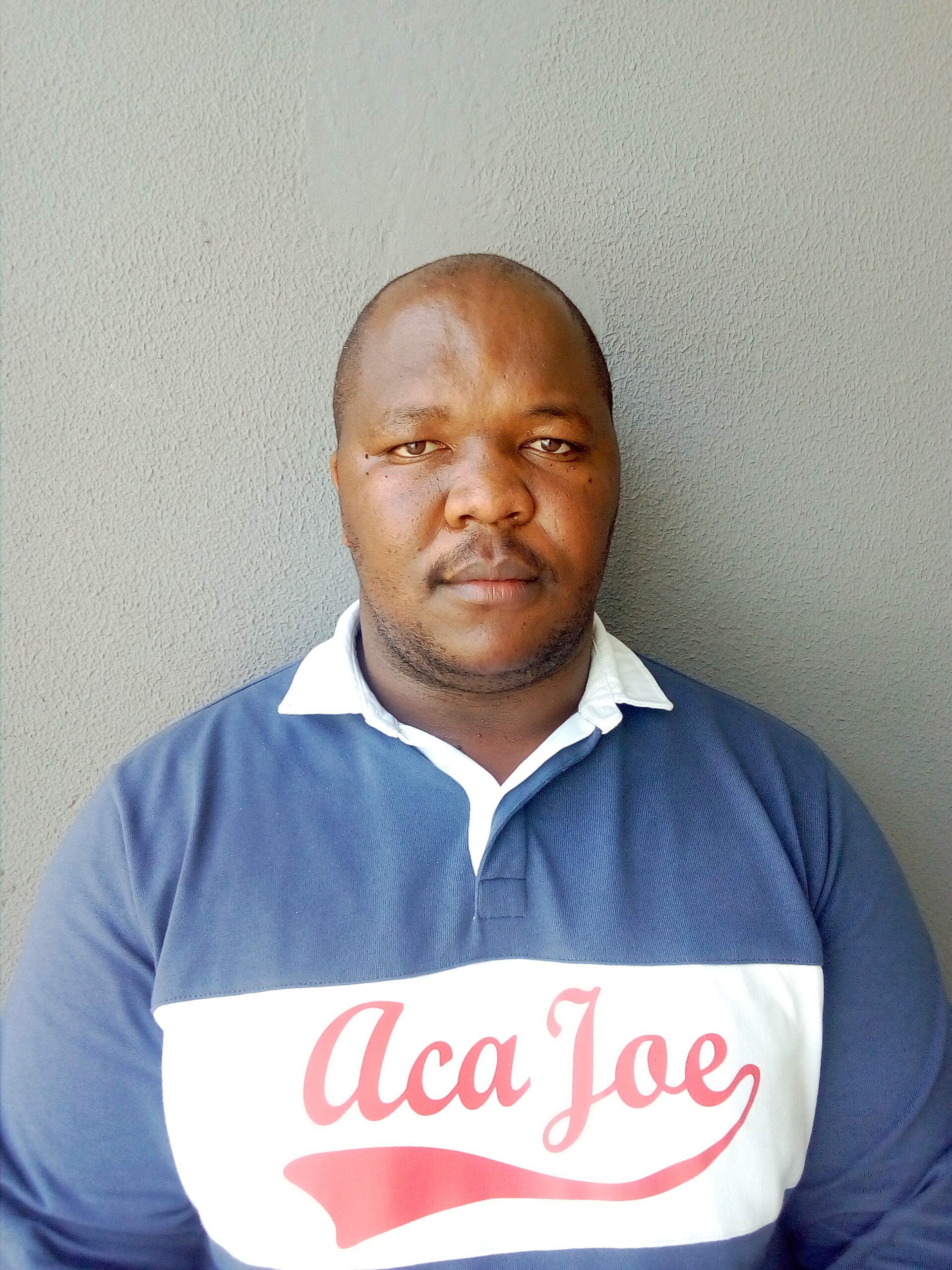
Thoboloko Ntšonyane is a dedicated journalist who has contributed to various publications. He reports on accountability, human rights, exposes corruption and wrong doing by those in power. He reports have exposed corruption, abuse of power, fraud, misconduct and negligence. He subscribes to evidence-based reporting. He reports on governance, parliament, courts, climate change, human rights, sexual and reproductive health rights (SRHR), health, business and agriculture. He gives a voice to the marginalised while also demanding accountability. His work inspires change, triggers dialogue and also promote transparency in a society.