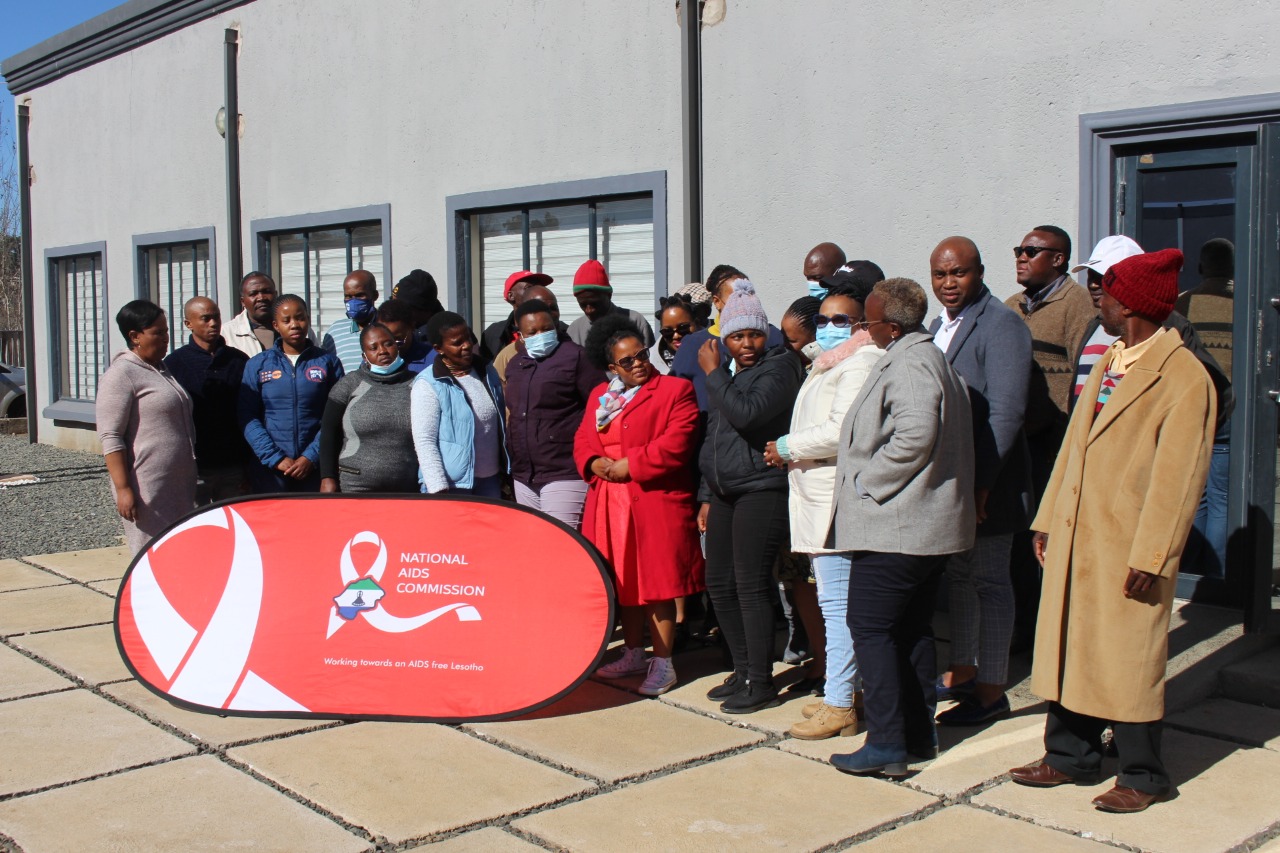

One in three new HIV infections in Lesotho’s Mohale’s Hoek district now occurs among young people, yet only 18 percent of preventive medication reaches adolescents, health officials revealed on World Population Day.
Dr. Bokang Kojana, District Medical Officer for Mohale’s Hoek, told community leaders and health workers that the district records 244 new HIV infections each year, with 85 of those, or roughly one in three, among youth.
That translates to 20 new infections among young people every month.
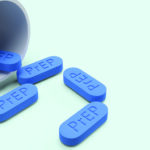
“PrEP uptake among adolescents remains very low, with only 18 percent of distributed PrEP reaching this group,” Kojana said. “This means the epidemic is moving forward, not backward. Our youth are still getting infected.”
The warning came as Lesotho marked World Population Day 2026, an annual commemoration that this year focused on the country’s demographic dividend, a promise that is increasingly threatened by preventable health crises among its predominantly young population.
The crisis extends well beyond HIV. Kojana reported that early and unintended pregnancy is accelerating at an alarming rate. In 2025, one in five teenage girls in Mohale’s Hoek was pregnant. Just halfway through 2026, the figure has already climbed to one in four, a surge from 12 percent to 26 percent in less than two years.
“Many of these girls are not mentally, emotionally, or financially ready,” Kojana said. “Of all family planning services given, only 25 percent is accessed by adolescents and young adults. This low uptake means sexually active youth are at high risk of unintended pregnancy, unsafe abortions, and HIV.”
Access to youth-friendly health services remains deeply uneven, particularly in rural communities. Kojana called for urgent integration of maternity, HIV, and family planning services, and for health officials to “use data to target hot spots in schools and villages where new infections are rising.”
The crisis is unfolding against a backdrop of remarkable treatment success. Lesotho has achieved a 97-97-99 score on UNAIDS targets, meaning 97 percent of people living with HIV know their status, 97 percent are on treatment, and 99 percent have achieved viral suppression. But Kojana warned that these gains are unsustainable without stronger prevention.
“While Lesotho has achieved 97-97-99 on HIV treatment targets, our prevention strategies, especially for youth, are still lagging,” he said. “The goal must be zero new HIV infections.”
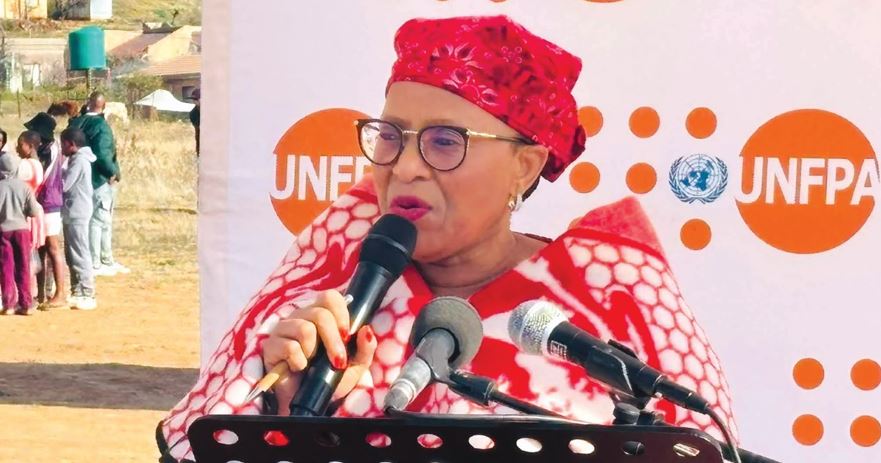
Speaking at the same commemoration, Minister of Finance and Development Planning Dr. Retšelisitsoe Matlanyane tied the health crisis to broader economic stagnation, noting that youth unemployment remains a critical barrier to the country’s development.
“A huge part of Lesotho’s population is youth. We have to work fast to benefit from their skills,” Matlanyane said. “We also have high unemployment rates amongst youth, which needs all of us to do something about it.”
UNFPA Representative John Kennedy Mosoti underscored the demographic stakes, noting that young people under 35 make up the majority of Lesotho’s population. “Many face significant challenges, teenage pregnancy, unmet need for family planning, sexual violence, and unemployment,” he said.
Mosoti pointed to Lesotho’s $173.3 million Maternal Health Investment Case as a blueprint for action.
“By bridging this funding gap, the country will prevent over 344,000 unintended pregnancies, address the 21 percent unmet family planning need among adolescent girls, and save 15,900 lives by 2030,” he said.
The crisis is compounded by pervasive violence. Inspector Tefo Kopeli of the Child, Gender and Protection Unit reported that sexual offences remain the highest category of reported crime in the district.
There were 80 cases in 2024, 85 in 2025, and 20 cases already recorded in the first half of 2026. Domestic violence and child marriage persist, often unreported despite existing legislation.
Matlanyane concluded with a call to accelerate investment in young people. “This theme calls to us to invest more in young people so that they have a bright future as well as contributing to the development of the country,” she said.
Summary
- The warning came as Lesotho marked World Population Day 2026, an annual commemoration that this year focused on the country’s demographic dividend, a promise that is increasingly threatened by preventable health crises among its predominantly young population.
- Lesotho has achieved a 97-97-99 score on UNAIDS targets, meaning 97 percent of people living with HIV know their status, 97 percent are on treatment, and 99 percent have achieved viral suppression.
- “This theme calls to us to invest more in young people so that they have a bright future as well as contributing to the development of the country,” she said.
Ntsoaki Motaung is an award-winning health journalist from Lesotho, specializing in community health stories with a focus on sexual and reproductive health and rights, as well as HIV. She has contributed to platforms like “Be in the KNOW,” highlighting issues such as the exclusion of people with disabilities from HIV prevention efforts in Lesotho.
In addition to her journalism, Ntsoaki serves as the Country Coordinator for the Regional Media Action Plan Support Network (REMAPSEN). She is also a 2023 CPHIA Journalism Fellow.