Childhood immunisation success undercut by stockouts and data failures, WHO and UNICEF Say
A new joint review by the World Health Organization (WHO) and UNICEF has raised serious concerns over Lesotho's childhood immunisation programme, citing repeated vaccine stockouts and unreliable vaccination data. The report reveals sharp declines in coverage for key vaccines, including BCG and measles, following prolonged supply shortages, while questioning the accuracy of official immunisation records. Health experts warn that weak vaccine supply chains and poor data management are leaving children vulnerable to preventable diseases and undermining efforts to protect public health.
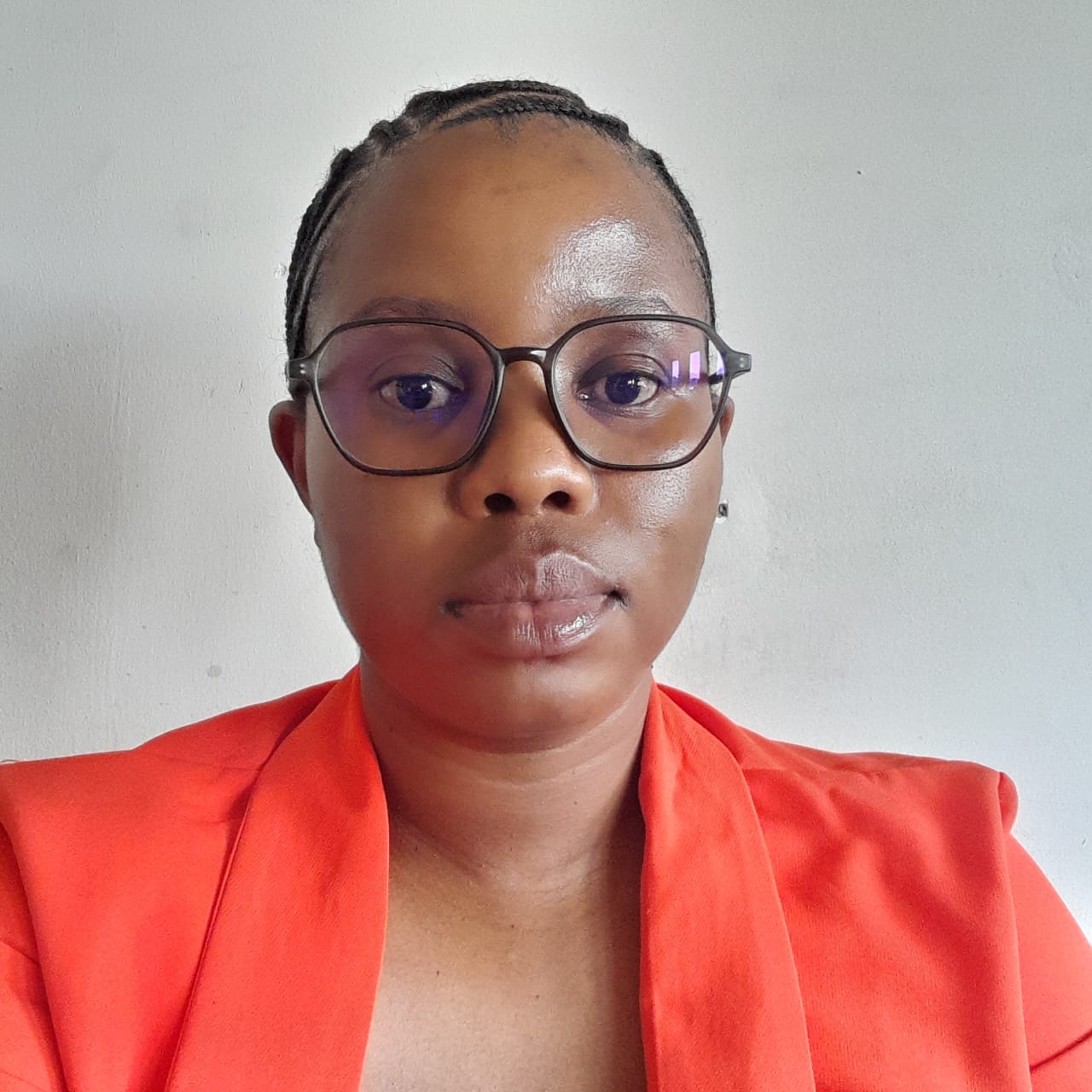
Ntsoaki Motaung is an award-winning health journalist from Lesotho, specializing in community health stories with a focus on sexual and reproductive health and rights, as well as HIV. She has contributed to platforms like "Be in the KNOW," highlighting issues such as the exclusion of people with disabilities from HIV prevention efforts in Lesotho.
In addition to her journalism, Ntsoaki serves as the Country Coordinator for the Regional Media Action Plan Support Network (REMAPSEN). She is also a 2023 CPHIA Journalism Fellow.
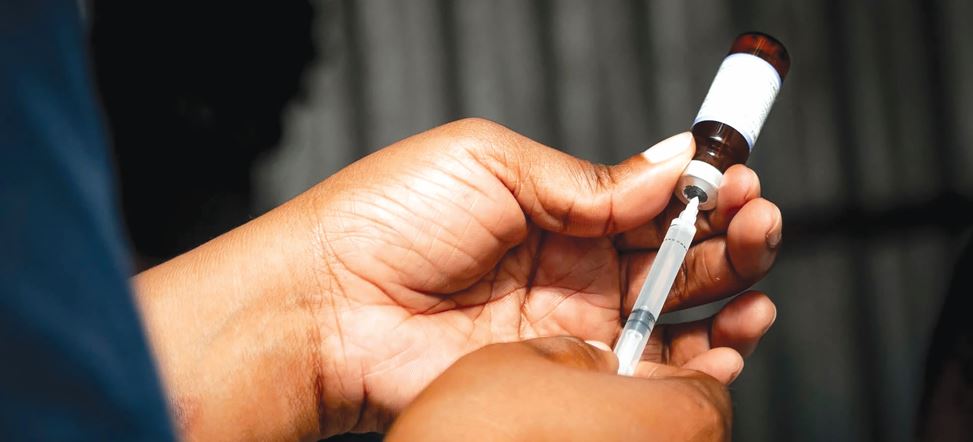
For several years, children in Lesotho have been making a quiet, dangerous journey. It begins at a health clinic, where a mother hoping for a life-saving vaccine for her baby is instead met with a closed refrigerator, a “stockout” in the cold, technical language of global health.
It continues into the labyrinth of government ledgers, where the records of who has been vaccinated and who has not have become so unreliable that international health authorities say they can no longer tell which children are safe and which are at risk.
This is the grim portrait painted by the latest joint review from the World Health Organisation (WHO) and UNICEF, released on July 7. The assessment, which examines data up to June 2026, reveals a country whose immunisation program has not only lost ground but has lost its compass.
“The estimates refer to immunisations delivered through routine immunisation services to children less than 12 months of age… for whom vaccinations are recorded,” the report notes. Yet in Lesotho, those records have become a source of profound confusion.
The report documents a cascade of failures, from supply chain breakdowns to a systemic data crisis that has eroded international trust in the country’s official statistics.
In 2021, coverage for the BCG vaccine, which protects against tuberculosis, stood at a robust 99 percent. By 2023, it had plunged to 68 percent, a collapse the report directly attributes to a “two months vaccine stockout at national and subnational levels” following a three-month shortage the year before.
A similar story unfolded for the measles vaccine. A five-month national stockout in 2022 left the first-dose coverage estimated at just 76 percent the following year, down from 90 percent in 2021. The second dose, for which coverage is already dangerously low, slipped to 63 percent.
These interruptions are not isolated. The report notes a recurring pattern of shortages, for polio and rotavirus in 2021, for measles in 2018 and 2016, that suggests a chronic weakness in the country’s vaccine procurement and distribution.
But perhaps more alarming than the empty refrigerators is the broken pencil. The WHO and UNICEF analysis repeatedly flags “fluctuations in reported data” that “suggest the need for review of the administrative recording and reporting system.” This is a diplomatic way of saying the official numbers, which the government relies on to make policy, are often fiction.
The most glaring example occurred in 2021, when administrative records claimed 102 percent coverage for the first dose of the diphtheria-tetanus-pertussis vaccine (DTP1) and 101 percent for the third dose, a statistical impossibility for a birth cohort. These figures were summarily “excluded by the international working group.”
In other years, the data was simply too volatile to trust. Reported coverage for the measles vaccine jumped from 61 percent in 2018 to 101 percent in 2019, only to fall to 86 percent in 2020, prompting the agencies to discard the data entirely and rely on modeling.
“We encourage another independent coverage assessment to verify coverage levels,” the report states, a clear signal that the international community has lost confidence in Lesotho’s ability to measure its own progress.
The roots of this crisis run deep. The report traces the recording anomalies back to at least 2012, when a Data Quality Assessment first spotlighted severe challenges.
The problem was exacerbated in 2017, when the official target population was revised downward following a census, a statistical adjustment that “resulted in an increase in reported coverage that does not reflect programme improvements,” according to the report.
This failure to track vaccinations has profound real-world consequences. Without reliable data, it is impossible to know which communities are most vulnerable, how to allocate limited resources, or whether campaigns to curb outbreaks like measles are working. It effectively blinds the country to its own public health threats.
The human cost of these systemic failures is not reflected in the numbers alone. Health experts say that when a vaccine is unavailable for months, it’s not just a percentage point that is lost, it is a child. And when the data is wrong, that child becomes invisible.
Summary
It begins at a health clinic, where a mother hoping for a life-saving vaccine for her baby is instead met with a closed refrigerator, a “stockout” in the cold, technical language of global health.
Reported coverage for the measles vaccine jumped from 61 percent in 2018 to 101 percent in 2019, only to fall to 86 percent in 2020, prompting the agencies to discard the data entirely and rely on modeling.
The problem was exacerbated in 2017, when the official target population was revised downward following a census, a statistical adjustment that “resulted in an increase in reported coverage that does not reflect programme improvements,” according to the report.
Ntsoaki Motaung is an award-winning health journalist from Lesotho, specializing in community health stories with a focus on sexual and reproductive health and rights, as well as HIV. She has contributed to platforms like “Be in the KNOW,” highlighting issues such as the exclusion of people with disabilities from HIV prevention efforts in Lesotho.
In addition to her journalism, Ntsoaki serves as the Country Coordinator for the Regional Media Action Plan Support Network (REMAPSEN). She is also a 2023 CPHIA Journalism Fellow.
To ensure optimal experiences, we utilize technologies such as cookies to store and/or access information from your device. Granting consent to these technologies enables us to process data, including browsing habits or unique identifiers on this website. Conversely, not consenting or revoking consent may negatively impact specific features and functionalities.
Functional
Always active
The technical storage or access is strictly necessary for the legitimate purpose of enabling the use of a specific service explicitly requested by the subscriber or user, or for the sole purpose of carrying out the transmission of a communication over an electronic communications network.
Preferences
The technical storage or access is necessary for the legitimate purpose of storing preferences that are not requested by the subscriber or user.
Statistics
The technical storage or access that is used exclusively for statistical purposes.The technical storage or access that is used exclusively for anonymous statistical purposes. Without a subpoena, voluntary compliance on the part of your Internet Service Provider, or additional records from a third party, information stored or retrieved for this purpose alone cannot usually be used to identify you.
Marketing
The technical storage or access is required to create user profiles to send advertising, or to track the user on a website or across several websites for similar marketing purposes.