
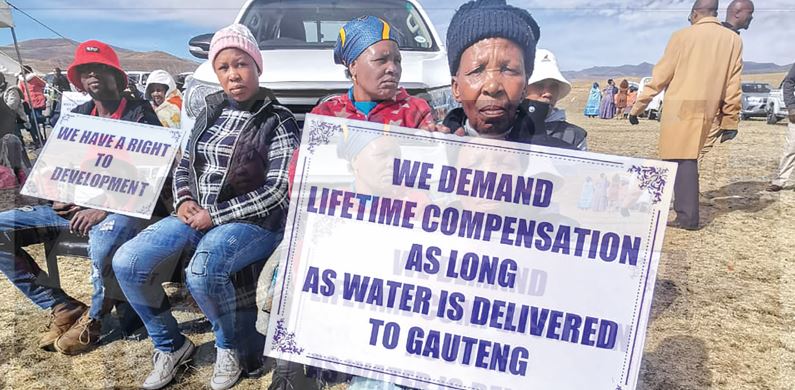

Two civil society organisations have accused the New Development Bank (NDB), the Shanghai-based lender established by Brazil, Russia, India, China and South Africa, of failing to adequately engage communities affected by the second phase of the Lesotho Highlands Water Project (LHWP).
In a letter dated June 18, 2026, to NDB President Dilma Rousseff and the bank’s board of directors, Accountability Counsel, an international nonprofit organisation, and Lesotho-based Seinoli Legal Centre said the bank had failed for two years to respond meaningfully to concerns raised by communities affected by the multibillion maloti project.
The organisations said the concerns include relocation, gender-based violence, labour conditions, environmental impacts and threats to livelihoods.
The dispute has drawn the NDB into a wider accountability debate surrounding LHWP Phase II, one of Lesotho’s biggest infrastructure projects and a critical component of the country’s long-standing water relationship with South Africa.
The LHWP is a binational project between Lesotho and South Africa established under a treaty signed by the two countries in 1986.
Its purpose is to harness water from Lesotho’s highlands and transfer it to South Africa’s Vaal River system, while using the water-transfer infrastructure to generate hydroelectric power for Lesotho.
The first phase was completed in 2003 and inaugurated in 2004.
It included the construction of Katse and Mohale dams, a network of tunnels and the Muela hydropower station. The project transformed Lesotho into a major water supplier to South Africa while creating a significant source of royalty revenue and electricity-generation infrastructure for the country.
The water is transferred from Lesotho through the system into the Vaal River system, which supplies Gauteng and other economically important parts of South Africa.
The New Development Bank itself describes the Vaal River basin as strategically important to South Africa, noting that Gauteng, Free State, North West and Mpumalanga together account for roughly 60 percent of South Africa’s gross domestic product and 45 percent of its population.
Phase II of the LHWP is intended to significantly increase the volume of water transferred to South Africa.
Its centrepiece is the Polihali Dam and reservoir in Mokhotlong, together with a roughly 38-kilometre transfer tunnel connecting the Polihali reservoir to the Katse reservoir.
The LHDA says the Polihali reservoir will have a storage capacity of about 2.325 billion cubic metres and a surface area of approximately 5,053 hectares when full.
The Polihali Dam will stand about 166 metres high, making it larger than the Mohale Dam constructed during Phase I.
Water from Polihali will flow by gravity through the transfer tunnel to Katse and then continue through the existing system towards South Africa.
According to the LHDA, the existing transfer rate of about 780 million cubic metres a year is expected to increase incrementally to approximately 1.27 billion cubic metres a year once Phase II is operational.
The project also includes significant associated infrastructure, including roads, bridges, electricity infrastructure, telecommunications, accommodation, quarries and other facilities required to support construction and operation.
Phase II also includes a hydropower component. The LHDA has said power generation from the Oxbow Hydropower Scheme is expected to begin in 2029, while water transfer is expected to commence in 2028.
Phase II is being financed through a consortium involving multilateral development banks and other lenders.
The NDB approved financing of R3.2 billion for the project in 2019. Its loan is to the South African TCTA, which is responsible for financing the project on the South African side, with the LHDA serving as the implementing agency in Lesotho.
The NDB’s project documentation originally put the total cost of the project at about R31.8 billion, with NDB contributing R3.2 billion and the African Development Bank R1.3 billion, with the remainder expected from local lenders and other financing sources.
The project has since grown into a substantially larger undertaking in terms of overall construction expenditure, with major contracts for the Polihali Dam, transfer tunnel and associated infrastructure running into billions of maloti.
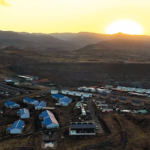
While the project promises increased water revenues, infrastructure and energy generation, its physical footprint has significant consequences for communities in the project area.
The LHDA acknowledges that approximately 5,000 hectares of land will be flooded by the Polihali reservoir.
The affected area includes homesteads, cultivation land, grazing land, trees and other natural resources, while access to some resources and facilities will also be disrupted.
The authority has established processes to register affected land and assets, determine compensation entitlements and establish relocation and livelihood-restoration preferences.
It has also prepared resettlement action plans for various components of the project.
It is this intersection between a project of national and regional strategic importance and its impact on communities that has become central to the dispute involving the NDB.
In their letter, the two groups, which describe themselves as civil society organisations supporting communities affected by the project, said they had been raising environmental and social concerns with the three lenders since 2024, including issues involving relocation, gender-based violence, labour conditions and threats to residents’ livelihoods.
“We have been engaging with the consortium of financiers — including the African Development Bank, Development Bank of Southern Africa, and NDB — since 2024 regarding urgent environmental and social concerns raised by affected communities,” the groups wrote in the letter, which was signed by Reitumetse Nkoti Mabula of the Seinoli Legal Centre.
In 2025, the groups said, they filed a complaint with the African Development Bank’s Independent Recourse Mechanism, citing harm to livelihoods, the environment and relocation processes, and requested a formal dispute-resolution process. They also filed a complaint with the Development Bank of Southern Africa’s Independent Grievance Mechanism.
But the New Development Bank, the groups said, has no comparable independent accountability mechanism of its own, so the African Development Bank’s mechanism could not formally draw it into the complaint as a co-financier, leaving the bank, in the groups’ words, “unaware of the issues and uninvolved in the process of remedial action.”
The groups said they had tried repeatedly since August 2024 to engage the bank directly, including at its annual meeting in Cape Town and with its Africa Regional Center, its Independent Evaluation Department and its Environmental, Social and Governance Department. None of the attempts, they said, produced a meaningful response.
“This experience has brought to the fore how inaccessible NDB is for communities affected by its financing,” the groups wrote. “The lack of a formal complaints channel creates a clear feedback and remedy gap.”
The letter asked Rousseff and the board to direct the bank’s relevant departments to open a dialogue with affected communities and to contact the African Development Bank’s mechanism to help monitor the existing complaint and carry out any remedies that result.
The groups also said communities affected by the project had separately raised complaints through grievance channels run by the project itself, without resolution, evidence, they argued, that requiring only project-level mechanisms “does not guarantee access to justice or accountability.”
Mosa Letsie, a program lawyer at the Seinoli Legal Centre, said in an interview that the organisation was still awaiting a response from Rousseff. Letsie said the groups had made “positive progress” in their engagement with the project’s other financiers, but not with the New Development Bank.
On its website, the bank describes its mandate as having “strong mandate and potential to contribute to global growth and development.”
Summary
- In a letter dated June 18, 2026, to NDB President Dilma Rousseff and the bank’s board of directors, Accountability Counsel, an international nonprofit organisation, and Lesotho-based Seinoli Legal Centre said the bank had failed for two years to respond meaningfully to concerns raised by communities affected by the multibillion maloti project.
- The dispute has drawn the NDB into a wider accountability debate surrounding LHWP Phase II, one of Lesotho’s biggest infrastructure projects and a critical component of the country’s long-standing water relationship with South Africa.
- Its loan is to the South African TCTA, which is responsible for financing the project on the South African side, with the LHDA serving as the implementing agency in Lesotho.

I am a journalist based in Maseru, Lesotho, renowned for investigative reporting. Over the years, my work has been published both locally and internationally, including in South Africa through the Amabhungane Centre for Investigative Journalism and the Daily Maverick, among other publications.
In Lesotho, I have served as a senior reporter for several leading weekly newspapers, including the Lesotho Times, Public Eye, and Sunday Express. My reporting has focused on uncovering issues of public interest, promoting accountability, and giving voice to underreported stories.
In 2016, I co-founded the MNN Centre for Investigative Journalism in Maseru, an initiative dedicated to strengthening investigative journalism and fostering a culture of transparency and public-interest reporting in Lesotho.