
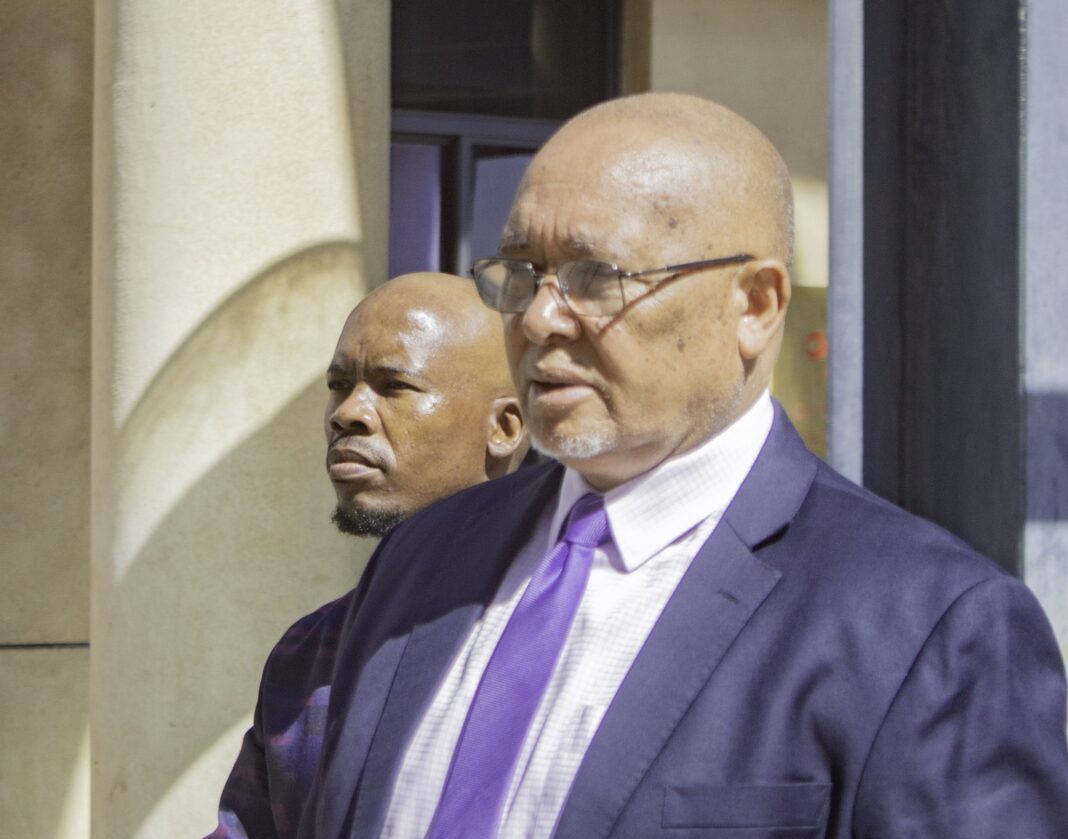
Law and Justice Minister Richard Ramoeletsi’s secret plan to coax Newsday editor Kananelo Boloetse out of hiding collapsed at the eleventh hour, after Boloetse pulled out of a planned meeting at the minister’s office, Newsday can reveal.
The failed approach is the latest in a string of attempts by senior members of government to draw Boloetse out of hiding.
Chief of Police advocate Borotho Matsoso, Home Affairs and Police Minister Voeswa Tsheka, Prime Minister Ntsokoane Samuel Matekane and now Ramoeletsi have all tried to get him to come forward in person.
None has succeeded. The effort has left many asking why the state is so keen to have Boloetse physically present for a police investigation into an attack on him. Boloetse remains in danger from his unknown attackers.
Newsday’s investigation shows Ramoeletsi worked separately from the police. He used a lawyer who is well known to Boloetse and trusted by him, apparently in the hope that Boloetse would let his guard down.
The lawyer, acting on the minister’s instructions, contacted Boloetse on 17 September. He asked whether Boloetse would be available to meet the minister to discuss his safety and the police case. The lawyer’s identity is withheld for his safety.
The lawyer said Ramoeletsi wanted to facilitate talks between Boloetse and the police. He also said the minister guaranteed Boloetse’s safety at the ministry.
Boloetse tentatively agreed to a meeting at the minister’s office on 24 September. Shortly before the date, he called it off. The reason relayed was that members of his team, who were to accompany him, were inconvenienced.
Sources close to Boloetse say the deeper reason was that he did not trust the police, who are said to be involved in the process, with his safety.
Boloetse believes his safety cannot be guaranteed in the hands of the police. United Africans Transformation (UAT) leader Dr Mahali Phamotse has told the National Assembly that police are among the suspects in the attack.
The secret Ministers approach ran alongside a public one. Earlier this week, Matekane announced that Boloetse should avail himself to the police, both for his own safety and to help investigators. While the Prime Minister made that appeal in public, Ramoeletsi had privately failed to convince the journalist to get to his office.
About a fortnight ago, Home Affairs Minister Tsheka was grilled in parliament over the Boloetse matter. Basotho National Party leader Machesetsa Mofomobe asked why Ramoeletsi was interested in the matter and had asked the journalist to come out of hiding and meet him at his office.
Mofomobe appeared to know how Ramoeletsi had gone parallel to the police investigation and started his own mission.
“What is his interest? He is the Minister of Law. The relevant Minister of Police is yourself,” Mofomobe said, referring to Tsheka. “Why does Minister Ramoeletsi interfere in the matter that belongs with the police?”
Tsheka said she was absent when police began their investigation, having left Public Works and Transport Minister Matjato Neo Moteane in charge. She said Moteane then left the country, leaving Ramoeletsi as acting Minister of Home Affairs and Police.
Newsday’s independent investigation contradicts that account. On 17 September, when the lawyer first contacted Boloetse, Tsheka was still the substantive Home Affairs and Police Minister. Moteane was launching new traffic lights along Kingsway Road in Maseru, in his own ministry’s portfolio.
Ramoeletsi had appeared on 15 September before the UN Committee on Enforced Disappearances in Geneva. The committee was reviewing Lesotho’s implementation of the international convention against enforced disappearance during its 31st session.
How the saga began
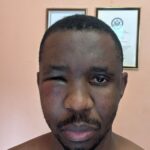
Boloetse was abducted from his home in Katlehong, Maseru, on 5 September 2026. Three unidentified men took him to a remote location, questioned him about his journalism and human rights work, then assaulted him and threatened his life. The assailants abandoned him in the Thaba-Bosiu area. He regained consciousness and made his way to a road, where a passing driver picked him up.
Neighbours had seen a suspicious vehicle watching the house in the hours before the abduction. They passed the vehicle’s registration plate to investigators. The attack followed after a cyberattack disrupted Newsday’s website and email services. Newsday has linked that attack to its investigative work on education financing in Lesotho.
Boloetse filed a complaint at a Maseru police station the next morning. Police spokesperson Thabo Mohai confirmed that a special investigative team had been set up. On 7 September, Communications Minister Nthati Moorosi visited Newsday’s offices and assured the newsroom of government support.
International press freedom groups reacted quickly. Amnesty International urged the authorities to guarantee Boloetse’s safety and to conduct a prompt, independent and impartial investigation. RSF and the International Press Institute also called for a thorough investigation. MISA Lesotho, which Boloetse once chaired, condemned the assault.
The attack also recalls earlier violence against journalists in Lesotho. In May 2023, radio host Ralikonelo Joki was shot dead in Maseru. At the time Boloetse, as MISA-Lesotho chair, said the group believed Joki was attacked because of his work.
The question that remains
Amnesty’s call for an independent investigation underlines the problem. When the person at the centre of a case says he cannot trust the police, and the police have been publicly named as suspects, summoning him to a police process does not obviously serve justice. Why, then, are so many ministers pressing for his physical appearance?
Summary
- Law and Justice Minister Richard Ramoeletsi’s secret plan to coax Newsday editor Kananelo Boloetse out of hiding collapsed at the eleventh hour, after Boloetse pulled out of a planned meeting at the minister’s office, Newsday can reveal.
- He used a lawyer who is well known to Boloetse and trusted by him, apparently in the hope that Boloetse would let his guard down.
- Sources close to Boloetse say the deeper reason was that he did not trust the police, who are said to be involved in the process, with his safety.

Welcome to Newsday Media – Your Trusted Source for News and Insights in Lesotho!
At Newsday Media, we are passionate about delivering accurate, timely, and engaging news and multimedia content to our diverse audience. Founded with the vision of revolutionizing the media landscape in Lesotho, we have grown into a leading hybrid media company that blends traditional journalism with innovative digital platforms.
Our mission is simple: to inform, inspire, and empower our readers by providing comprehensive coverage of local and global events, current affairs, and cultural happenings. Whether you’re looking for breaking news, in-depth analysis, or captivating storytelling, Newsday Media is your go-to destination for all things news-related.
With a dedicated team of journalists, editors, and multimedia experts, we are committed to upholding the highest standards of journalistic integrity and professionalism. We pride ourselves on delivering content that not only informs but also sparks conversation, fosters understanding, and drives positive change in our society.
From our flagship newspaper to our dynamic digital platforms, we offer a wide range of multimedia content to cater to the diverse interests and preferences of our audience. Whether you prefer to stay informed through print, online articles, videos, or podcasts, Newsday Media has something for everyone.
We believe in the power of storytelling to connect people, bridge divides, and inspire action. That’s why we’re dedicated to providing a platform for voices from all walks of life, championing diversity, inclusion, and authenticity in everything we do.
Thank you for visiting Newsday Media. We invite you to explore our website, engage with our content, and join us on our journey to inform, inspire, and empower our community. Together, let’s shape the future of media in Lesotho.