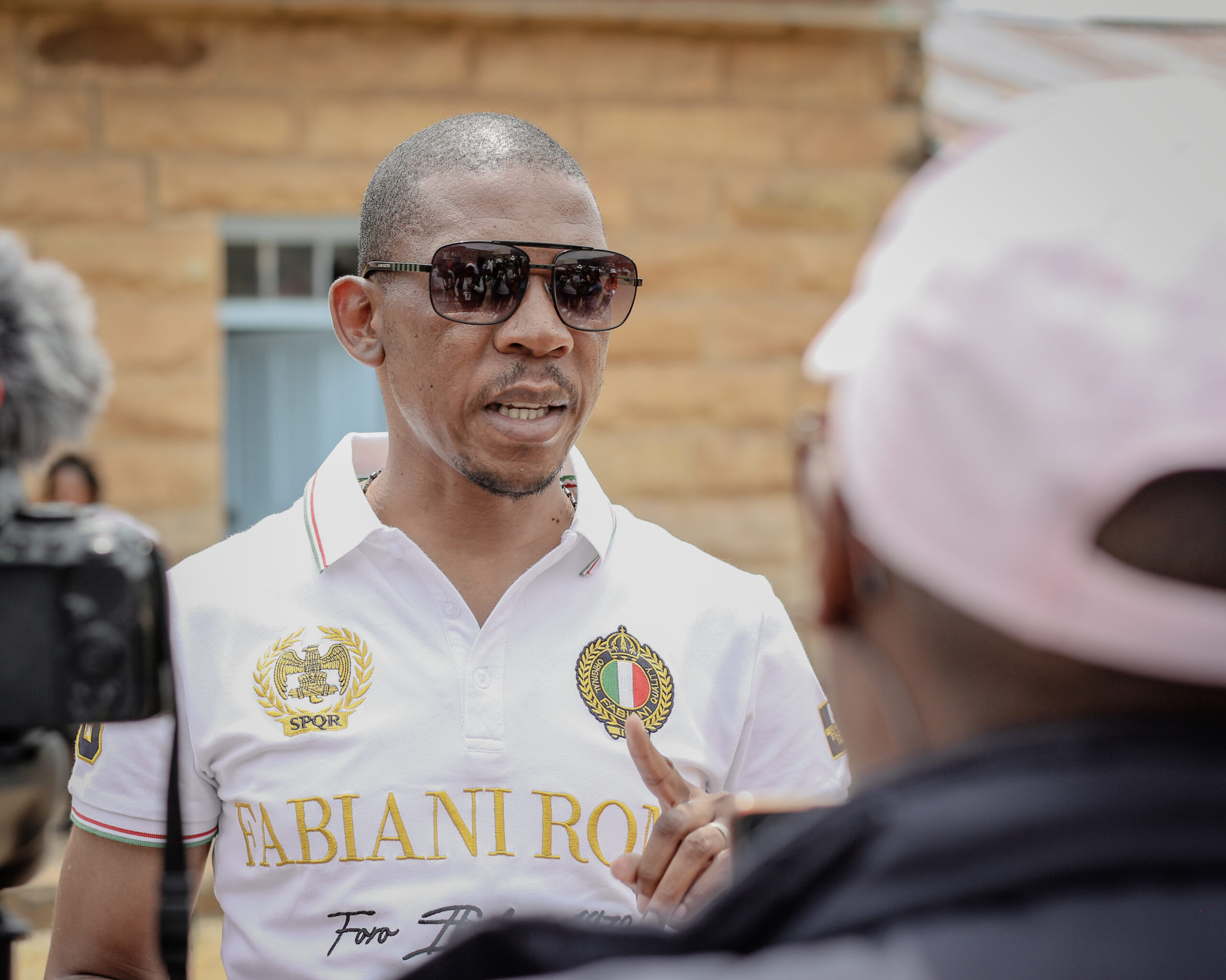

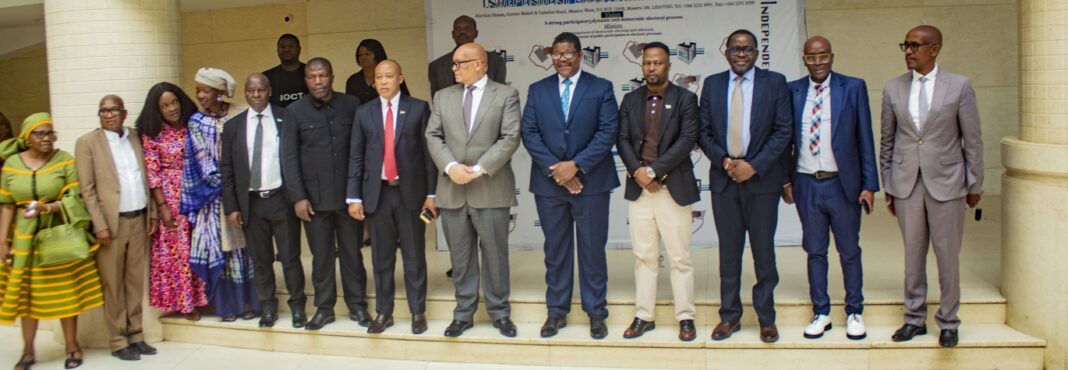
Political leaders and stakeholders were divided on the first day of a national political dialogue over whether Lesotho’s Mixed-Member Proportional (MMP) electoral model should be kept, strengthened or replaced.
Some called for reforms to improve representation, political stability and inclusion. Others argued that the system should be better understood and properly implemented, not changed.
The two-day dialogue was convened by the Independent Electoral Commission (IEC) to examine the country’s electoral model, how it has performed and where it falls short. It also covers political-party governance and relations between and within parties.
Organisers said it was meant to promote informed national reflection and constructive engagement, without predetermining any reform outcome.
IEC’s Director of Elections Tebello Nthakong said the formation of coalition governments and the allocation of proportional representation (PR) seats are not the IEC’s responsibility alone.
She said strong parties are built on fairness, and that whatever path the electoral process takes must be owned by Basotho and serve them. A communique will be adopted to guide the next phase.
Lesotho’s National Assembly has 120 seats. Eighty are elected through constituencies and 40 are allocated proportionally, based on the national party vote. MMP was introduced for the 2002 elections, replacing the first-past-the-post system used in 1993 and 1998.
That history shapes today’s debate. The 1998 elections were disputed after the then ruling Lesotho Congress for Democracy (LCD) won 79 of the 80 seats. The opposition Basotho National Party (BNP) accused the LCD of fraud, and the protests that followed turned into unrest, with towns burnt and economic activity disrupted.
The Southern African Development Community (SADC) intervened, including with troops from Botswana and South Africa.
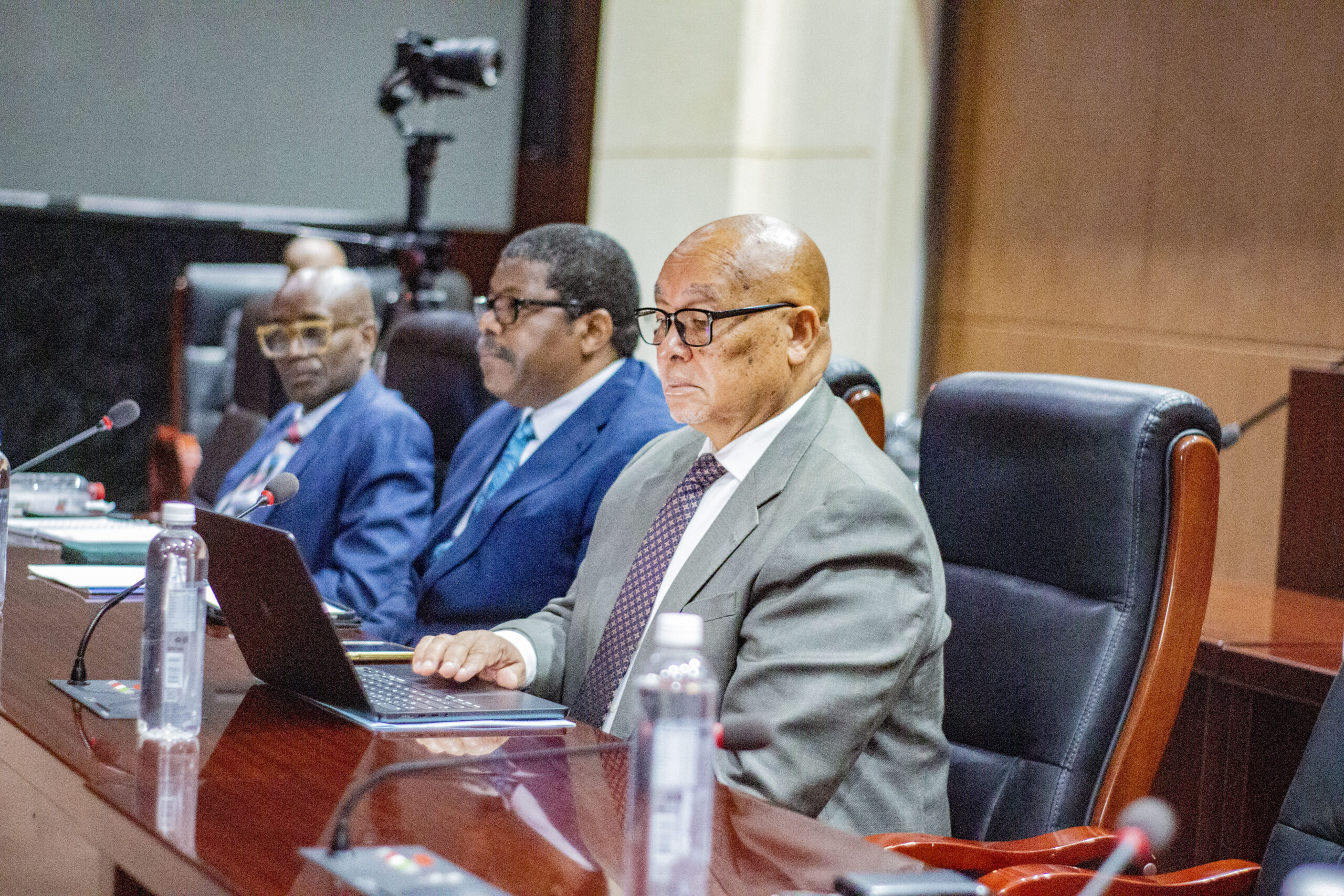
Political leaders and stakeholders were divided on the first day of a national political dialogue over whether Lesotho’s Mixed-Member Proportional (MMP) electoral model should be kept, strengthened or replaced.
Former Deputy Prime Minister Mothetjoa Metsing questioned why the country should “fix it if it is not broken”. He argued that civic education on the MMP model should be strengthened so the country could “sing from the same hymn”.
He said parties must tell their members how to use the party ballot properly, and he called for the continued use of two ballots, which are the party ballot and the individual ballot.
“When we make decisions it is no longer for the common good but to protect ourselves. Let’s make this model in a universally accepted manner,” he said.
Molefi Ntšonyane also said there is nothing wrong with the existing model and that the problems lie with political parties. “The law does not have emotions.”
Maimane Maphathe came at the issue from a different angle. He criticised the country for not fully using the MMP model, pointing to the zebra model, which places men and women alternately on party lists to determine PR seats. He said no similar arrangement applies in constituencies, where more men than women contest elections.
Executive Director of the Lesotho Council of NGOs (LCN), Sekonyela Mapetja, said any electoral system presented a “dilemma” between ensuring fair representation and ensuring government stability.
Others wanted more change. Lebohang Thotanyane argued that the closed PR list should be done away with and replaced with an open list. He also criticised the inability of political parties to remove a Member of Parliament.
Former MP Teboho Sekata also called for an open PR list. Prof Motlamelle Kapa described the open PR system as one in which voters directly choose the candidates they want in Parliament.
Litaba Mohatle, who represents political parties outside Parliament, welcomed the dialogue as a platform to discuss the future of Lesotho. He described the current model as distorted.
He proposed moving to a 100 per cent MMP electoral model, saying it would be cheaper and accommodate a 60:60 arrangement. The alternative, he said, would be to keep the current model with two ballots: a candidate ballot and a party ballot.
Mohatle also called for the strengthening of the Electoral Act on political donations, including the auditing of expenses. He said parties should not be funded by foreign sources because this could influence the country.
He also complained that party funding goes only to parties represented in Parliament, and said parties outside Parliament should receive an allocation too because they serve the population.
The dialogue also brought together representatives of the European Union (EU) and SADC, including electoral bodies from South Africa, Botswana and Namibia.
United Nations Development Programme (UNDP) Resident Representative Dr Jacqueline Olweya said institutions must act impartially and political actors must resolve their differences peacefully. She described the relationship between citizens, institutions and political leaders as a compact in which citizens confer legitimacy.
For her, the test of any system is not only how parties compete but how they talk to each other and represent the people who put them in office.
“Again, whatever system that we adopt, it would be very important to ensure inclusivity. Yes, at the centre of any system are the citizens, but are all the citizens represented in the right way? Are we considering women? Are we considering persons with disabilities? Are we considering, in our case here in Lesotho, people who are farthest away from the centre in other words, the most rural, mountainous areas are they able to bring their space into being? Similarly, are we considering the youth?” she said.
Leader of the Opposition Mathibeli Mokhothu said the dialogue must not happen only in times of crisis but should be an ongoing process. He said inclusion must be understood in terms of representation as well as voting, and that the strength of the political system is closely tied to citizens’ confidence.
He said the dialogue came at a crucial time, as the country is still pursuing reforms across many sectors, and he noted that Lesotho has built institutions, held elections periodically and learnt from neighbours and international partners.
“At the same time, our experience reminds us that elections are not simply events that take place periodically and do pass. Democracy is a continuous process. It is about how political parties conduct themselves between elections, how citizens participate in public affairs, how institutions exercise their mandates, how disagreements are managed, and how peaceful political competition is conducted in our country.
“We should therefore use this dialogue not merely to discuss electoral procedures, but to consider the broader democratic environment in which our electoral system operates, reflecting on the MMP electoral model, that is, the Mixed-Member Proportional electoral model that our country is applying or using,” Mokhothu said.
He argued that the MMP system needs careful, evidence-based evaluation, not a simple verdict on whether it is good or bad. He questioned whether it provides meaningful representation and ensures that every vote cast and counted contributes to the outcome.
He also asked whether it strikes the right balance between proportional and constituency representation, limits the dominance of constituency winners, and gives smaller parties a real chance of gaining seats.
Speaker of the National Assembly Tlohang Sekhamane echoed calls for the electoral system to be assessed periodically, to start a national conversation on what works, what challenges it faces and what changes are needed. He also called for political tolerance in Parliament.
Sekhamane described Lesotho as the “most democratic country in the world”, pointing to the snap elections held since coalition governments began to emerge in 2012, when no party won a majority of seats. He said the electoral model must be efficient and effective, even if it has to change.
“People don’t eat democracy, people eat food. If democracy continues to put bread on the table then our people will not reject democracy,” he said, referring to the poor voter turnout in the 2022 elections that produced the current administration.
He said democracy must also be able to uproot corruption.
“Corruption is an albatross on which the nation falls. Parliament is the best voice against all ills of society,” he said, calling for its autonomy.
IEC Chairperson Dr John Maphephe said the dialogue is not about a predetermined electoral model but a platform to pause, listen and learn from one another. For the IEC, he said, the electoral process is not only about what happens on election day, echoing the view that democracy requires regular engagement.
He said the IEC would be the first to feel the effects if political parties were unstable within their ranks, which makes dialogue between and within parties equally important. He stressed that trust underpins everything.
“Trust cannot simply be requested from citizens; it is earned through consistent institutional behaviour. The public must have confidence that electoral institutions are independent, impartial, transparent, and accountable to our people. They must have confidence that their vote matters, that electoral rules are applied consistently.”
Representing the government, Minister of Law and Justice Richard Ramoeletsi said the government would respect democratic processes and governance institutions. He called for dialogue that promotes constitutional processes rather than political expediency.
Summary
- Political leaders and stakeholders were divided on the first day of a national political dialogue over whether Lesotho’s Mixed-Member Proportional (MMP) electoral model should be kept, strengthened or replaced.
- He said parties must tell their members how to use the party ballot properly, and he called for the continued use of two ballots, which are the party ballot and the individual ballot.
- He criticised the country for not fully using the MMP model, pointing to the zebra model, which places men and women alternately on party lists to determine PR seats.
Thoboloko Ntšonyane is a dedicated journalist who has contributed to various publications. He reports on accountability, human rights, exposes corruption and wrong doing by those in power. He reports have exposed corruption, abuse of power, fraud, misconduct and negligence. He subscribes to evidence-based reporting. He reports on governance, parliament, courts, climate change, human rights, sexual and reproductive health rights (SRHR), health, business and agriculture. He gives a voice to the marginalised while also demanding accountability. His work inspires change, triggers dialogue and also promote transparency in a society.