
.

Lesotho’s Premier League cannot become a truly professional competition while its administrative independence, financial sustainability and governance remain unresolved.
Lesotho’s Premier League cannot become a truly professional competition while its administrative independence, financial sustainability and governance remain unresolved.
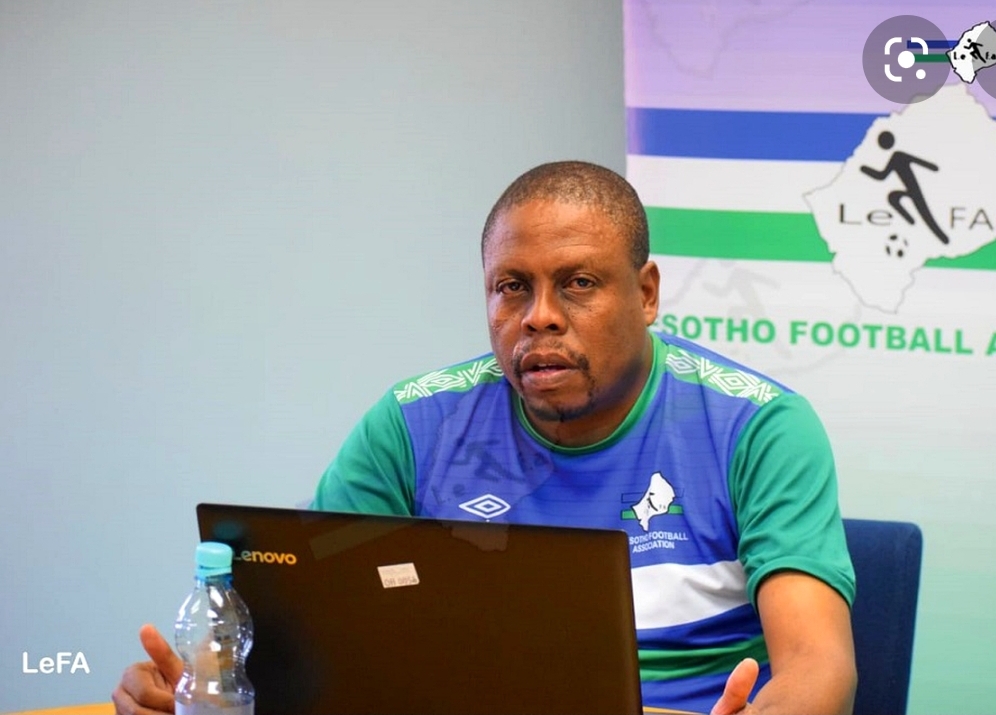
More than three decades after football administration was reorganised in 1994 to give the sport greater control over its affairs, a pressing question remains; how long will the country’s top-flight league depend on the Lesotho Football Association (LeFA)?
The Premier League Management Committee (PLMC) is responsible for managing the elite competition as a direct LeFA subsidiary, yet questions about its governance and finances continue to cast doubt on its ability to operate independently.
The problem is not that the Premier League remains attached to LeFA. It is whether that relationship has become a substitute for developing the structures and resources needed to run the competition sustainably.
In August 2026, this publication reported disputes over the PLMC’s composition, the appointment of its chairperson, vacancies and the postponement of its annual general meeting ahead of the season’s scheduled August 22 kick-off.
LeFA publishes financial statements and budgets through its official documents centre. However, the publicly accessible material reviewed for this article does not establish the PLMC’s standalone revenue, expenditure, liabilities or level of financial dependence on the association.
Such uncertainty undermines the credibility of a league seeking to attract sponsors and build a professional product. Commercial partners need stable leadership, transparent decision-making and clear lines of accountability. Without these foundations, efforts to market the competition will struggle to inspire confidence.
Financial dependence presents an even greater challenge. In October 2025, newly elected LeFA president LijaneNthunya said the association would explore financial subventions for Premier League and A-Division clubs while working towards greater autonomy for the PLMC.
The commitment acknowledged the financial pressures facing local football. However, it also exposed the difficulty of achieving independence when clubs themselves struggle to finance competitive teams.
Player salaries, transport, equipment and other operational expenses place considerable demands on club finances. Expecting the PLMC to become self-sufficient without addressing these pressures would be unrealistic. But continued dependence on LeFA cannot be a permanent solution either.
The league needs a business model that generates reliable income rather than relying on financial support whenever resources fall short.
There have been attempts to improve revenue. In November 2025, Lesotho Times reported that the PLMC introduced a triple-header at BambathaTšita Sports Arena to help clubs improve gate takings after studies found that separately staged matches generated low returns.
While such initiatives may improve match-day income, they cannot replace a comprehensive commercial strategy. The league must make its product more attractive to spectators and sponsors through effective marketing, stronger club identities, improved match-day experiences and partnerships that generate value beyond ticket sales.
Crucially, it must also demonstrate how its finances are managed.
LeFA publishes financial statements and budgets through its official documents centre. However, the publicly accessible material reviewed for this article does not establish the PLMC’s standalone revenue, expenditure, liabilities or level of financial dependence on the association.
Without separate financial reporting, clubs and potential investors cannot easily assess the league’s financial position or measure its progress towards independence. The PLMC should publish its own accounts, identify its funding gaps and set measurable targets for increasing revenue.
There is an opportunity to accelerate this process. In September 2026, LeFA announced a commercialisation partnership with Radisol Global Investments to pursue sponsorships, media rights and other revenue streams across the football ecosystem.
The partnership could open new commercial opportunities, but the Premier League and its clubs must benefit directly. Clear revenue-sharing arrangements are essential to ensure that commercial growth strengthens the competition rather than concentrating resources at association level.
The PLMC should now publish a transition plan towards greater autonomy, with clear milestones covering governance, finances, staffing and commercial rights.
This should include a properly constituted and accountable committee, a professional secretariat, independently reported finances and realistic targets for sponsorships, gate receipts and media revenue. LeFA, in turn, must clarify which services and funding it will continue providing and what the PLMC must achieve before assuming greater responsibility.
Clubs must also take ownership of the process. An independent league requires members willing to support sound governance, meet their obligations and contribute to a sustainable competition.
There is no need to impose an arbitrary deadline for full independence. Local football’s financial realities demand a gradual transition. But a gradual process must have measurable progress, not an indefinite promise.
LeFA can remain a strategic partner without carrying the Premier League’s administrative and financial burdens indefinitely. Autonomy should mean the PLMC has the capacity to manage its affairs, account for its decisions and sustain its operations.
The real question, therefore, is not whether the Premier League should cut ties with LeFA tomorrow. It is whether its leadership can present a credible plan for standing on its own.
Until that plan is published and implemented, independence will remain an ambition rather than an achievement. Lesotho’s top-flight football cannot build a professional future on dependence alone.
Summary
- The Premier League Management Committee (PLMC) is responsible for managing the elite competition as a direct LeFA subsidiary, yet questions about its governance and finances continue to cast doubt on its ability to operate independently.
- It is whether that relationship has become a substitute for developing the structures and resources needed to run the competition sustainably.
- In August 2026, this publication reported disputes over the PLMC’s composition, the appointment of its chairperson, vacancies and the postponement of its annual general meeting ahead of the season’s scheduled August 22 kick-off.

Senior journalist and communications professional with extensive experience in general news reporting, specializing in business and sports journalism. Skilled in public speaking, media relations, and strategic communication, with a proven ability to deliver accurate, engaging, and impactful stories.
A strong team player who thrives in collaborative environments and adapts effectively to diverse working conditions. Passionate about continuous learning, professional growth, and enhancing communication practices to meet evolving industry demands.