
Communities in Leribe and Mafeteng have expressed a mix of hope and frustration as the Lesotho Lowlands Water Development Project (LLWDP) moves forward, with residents saying years of water shortages, unpaid bills, and broken promises have eroded public trust.
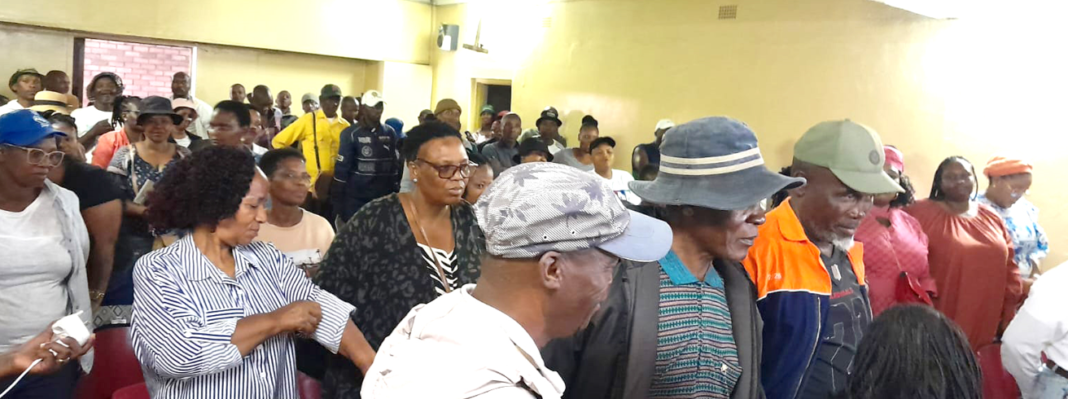
This week, 4D Climate Solutions, contracted under the LLWDP, held one-day workshops in Leribe, Mafeteng, and Mohale’s Hoek to update communities on the progress of the project. The sessions were intended to raise awareness about the infrastructure rollout, but quickly became platforms for residents to air grievances about longstanding water challenges.
Maputsoe residents cite debt and distrust
In Maputsoe, Leribe, residents said the water crisis has left them financially strained and skeptical of official assurances.
Clifford Santi, speaking from the office of Area Chief Ha Nyenye, said trust in authorities has worn thin.
“We no longer have trust in anyone who promises to end our water crisis. We are now saying we will believe it when we see it happening,” Santi said.
He acknowledged that some infrastructure work has begun, but said past billing disputes remain unresolved.
“Because we had WASCO (Water and Sewage Company) taps, people continued to receive bills despite the fact that there was no water. Many refused to pay because they said they cannot pay for water they did not consume. Some were later told they owed M8,000, M10,000, or even M15,000,” he said.
According to Santi, some residents have resorted to applying for new connections under relatives’ names to avoid settling old debts.
‘Manehello Mohlotsane, a member of the Maqele Electoral Division and Maputsoe Urban Council, said the shortages forced residents to fetch water at night.
“We used to stay awake waiting for water to be opened at night because during the day only factories and businesses were supplied,” she said.
While welcoming the project, she raised concerns about construction standards.
“Some roads were damaged during pipe installation and were not properly repaired. When it rains, movement becomes very difficult because of the mud,” Mohlotsane said.
Cost of water for vulnerable households
For some residents, the crisis has had severe social and economic consequences.
‘Matšepang Ratolo, who lives with her husband and child, and both adults have disabilities, said buying water has been costly and physically demanding.
“This project is going to change my life and the lives of other people living with disabilities,” Ratolo said.
“As it stands, I buy a 20-litre container for M5 and pay someone at least M20 to fetch two containers for me.”
Ratolo, who works as a street vendor, said the expense is difficult to sustain given her inconsistent income.
Mafeteng youth raise water quality concerns
In Mafeteng and Mohale’s Hoek, where drought has frequently affected households and livestock, residents are looking to the planned Makhaleng River dam for relief.
Reitumetse Mantsoe, representing youth from Ha Motlere, questioned the quality of water supplied during drought periods.
“In times of drought, WASCO gets water from nearby dams. Sometimes it comes out of the taps looking dirty and smelling awful,” Mantsoe said, adding that some residents have fallen ill.
He expressed hope that the project will be completed as scheduled in 2027 to provide a lasting solution.
Economic expectations and environmental concerns
Residents also see the LLWDP as a potential boost to agriculture and employment.
Moeketsi Matlosa of Matheneng in Mafeteng said a reliable water supply could encourage young people to pursue farming.
“Now that the country is facing high unemployment, I hope that once the project is completed, it will encourage youth to go into farming and produce for sale,” he said, noting that water shortages have limited his livestock and vegetable production.
Lebohang Thulo, representing a livestock owners’ committee, urged project implementers to protect natural water sources.
“We plead with the project not to destroy our natural water sources but to protect them,” Thulo said.
He added that arable land is increasingly being used for housing because farmers can no longer rely on rainfall, and called for water to be directed toward fields to support large-scale farming.
WASCO assures a permanent solution
Responding to the concerns, Pelesa Motsieloa of WASCO Hlotse acknowledged the severity of past droughts.
“The peak of the crisis was during the drought years of 2015, 2019, and 2020,” Motsieloa said.
He said the LLWDP is designed to ensure long-term water security.
“The project is there to make sure that people in Leribe, Mafeteng, and Mohale’s Hoek do not run short of water, even in times of extreme drought,” he said.
Motsieloa added that once completed, households will be able to apply for yard connections, while urging residents to avoid water wastage.
Background to the project
The LLWDP is a multi-billion maloti initiative first conceptualised in 2008 to supply water to Lesotho’s lowlands. Unlike the Lesotho Highlands Water Project, which exports water to South Africa, the LLWDP is intended solely to meet domestic demand.
Phase II, currently under implementation, is financed by a consortium of international partners. The World Bank’s International Development Association (IDA) is providing approximately €68.4 million for Zones 2 and 3 (Hlotse and Maputsoe), while the European Investment Bank and the European Union are jointly contributing about €123 million for Zones 6 and 7 (Mafeteng and Mohale’s Hoek). The Government of Lesotho is also providing counterpart funding.
Despite the scale of investment and a targeted completion date of 2027, residents say the true test of the project will be whether it finally delivers reliable, affordable water after years of shortages and unfulfilled expectations.
Summary
- Communities in Leribe and Mafeteng have expressed a mix of hope and frustration as the Lesotho Lowlands Water Development Project (LLWDP) moves forward, with residents saying years of water shortages, unpaid bills, and broken promises have eroded public trust.
- ‘Manehello Mohlotsane, a member of the Maqele Electoral Division and Maputsoe Urban Council, said the shortages forced residents to fetch water at night.
- “Now that the country is facing high unemployment, I hope that once the project is completed, it will encourage youth to go into farming and produce for sale,” he said, noting that water shortages have limited his livestock and vegetable production.
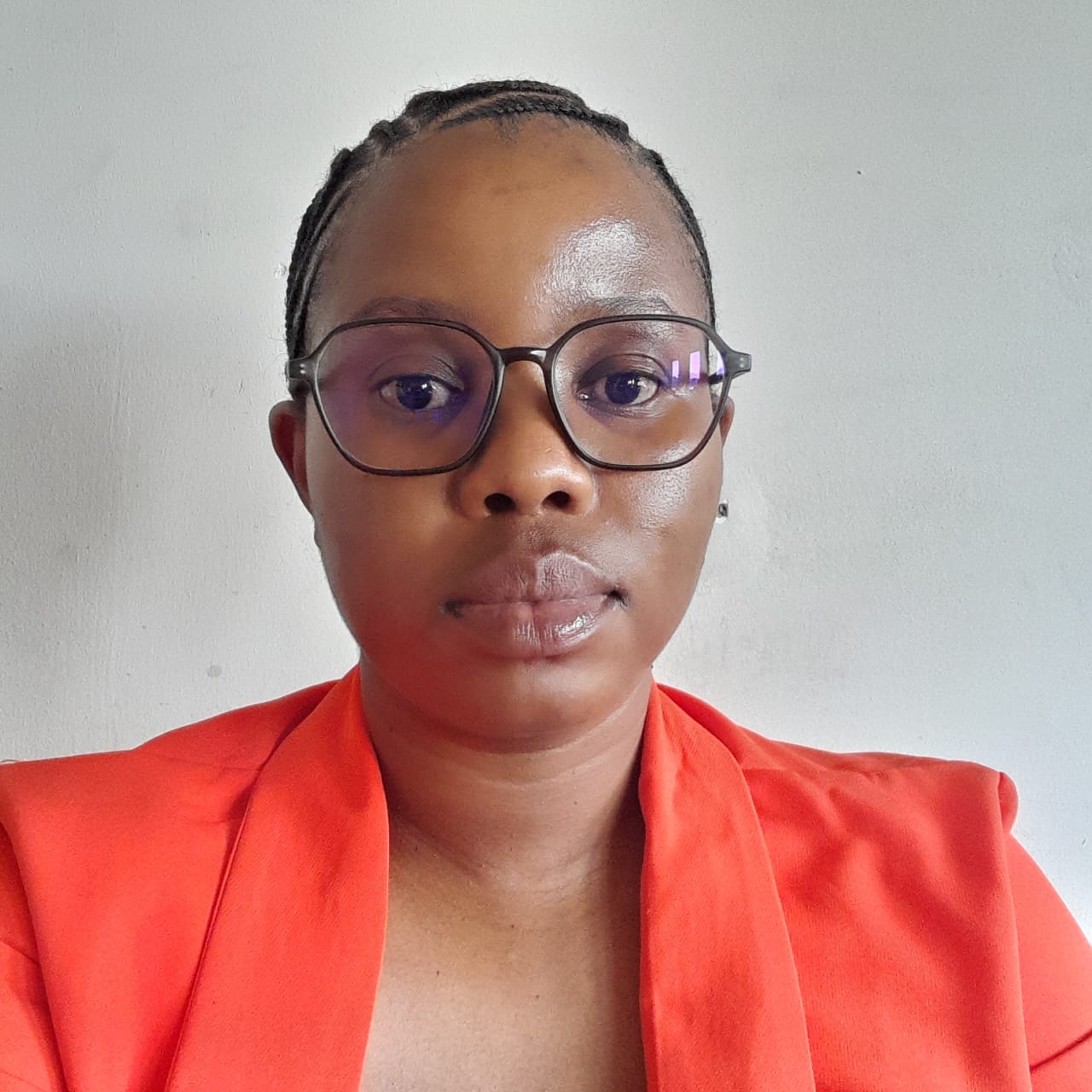
Ntsoaki Motaung is an award-winning health journalist from Lesotho, specializing in community health stories with a focus on sexual and reproductive health and rights, as well as HIV. She has contributed to platforms like “Be in the KNOW,” highlighting issues such as the exclusion of people with disabilities from HIV prevention efforts in Lesotho.
In addition to her journalism, Ntsoaki serves as the Country Coordinator for the Regional Media Action Plan Support Network (REMAPSEN). She is also a 2023 CPHIA Journalism Fellow.