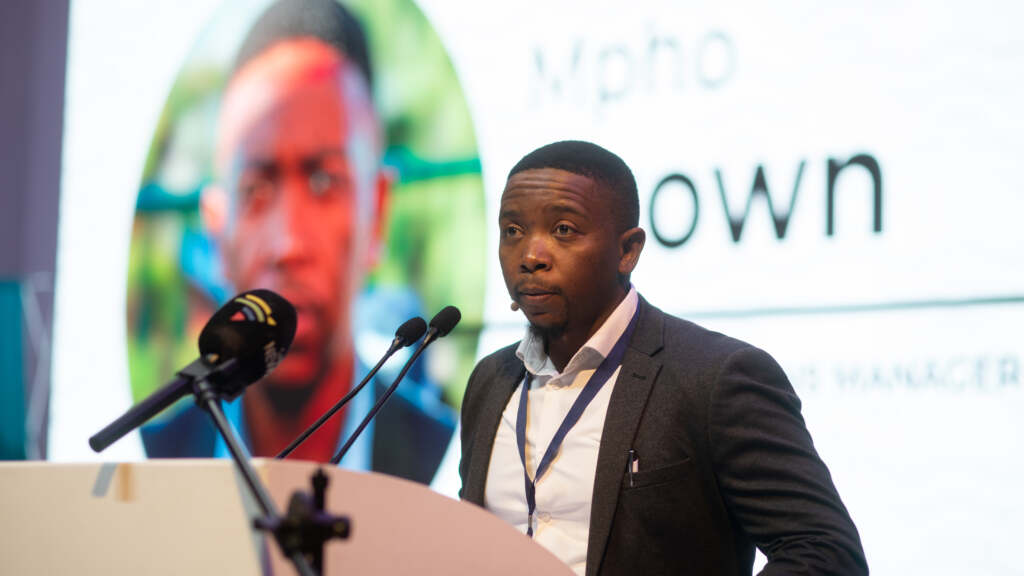

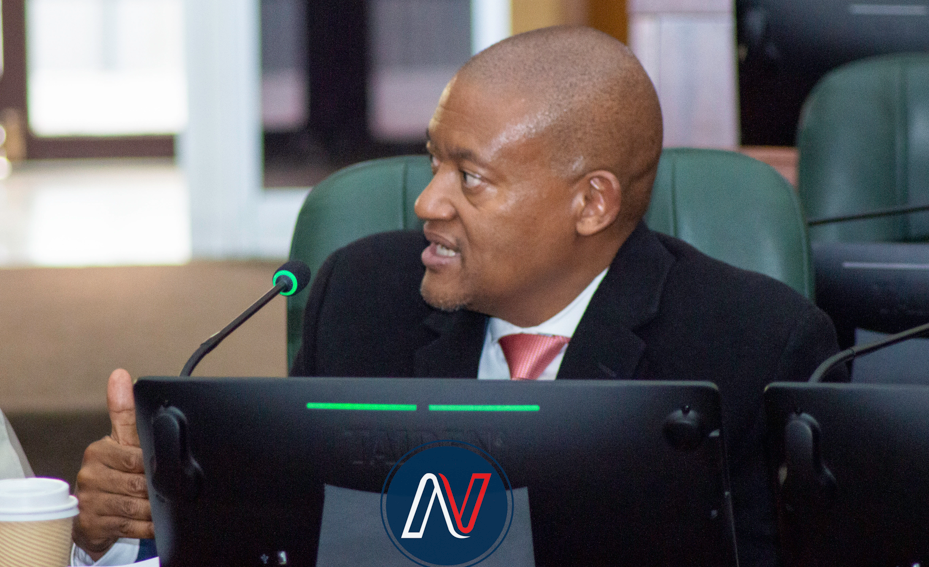
Lesotho and South Africa business communities have taken a major step toward strengthening regional economic cooperation with the launch of the Lesotho-South Africa Business Council (LesSABC), a joint initiative between the Private Sector Foundation of Lesotho (PSFL) and South Africa’s Black Business Council (BBC).
The new council seeks to shift long-standing bilateral ambitions from “vision to action” by championing cross-border economic empowerment, improving trade efficiency, and accelerating the development of regional economic corridors.
Launched this week in Maseru, LesSABC aims to transform border interactions by identifying and advancing strategic corridor projects that can unlock growth for both countries.
It will also address key issues such as project financing, banking regulations and capital flow efficiencies, critical components of facilitating seamless trade and investment.
Lesotho National Development Corporation (LNDC)’s Chief Executive Officer, Thabo Khasipe, used the platform to highlight the structural disadvantages hampering Lesotho’s development.
“Lesotho’s landlocked status continues to weaken it compared to countries such as Eswatini, which borders both South Africa and Mozambique and thus faces fewer development constraints,” Khasipe said.
He noted that analysts have long argued that it is “almost impossible for a small landlocked country to develop” due to limited access to export markets and global value chains.
Lesotho’s small domestic market further restricts economies of scale, limiting its ability to build a diversified economy. Khasipe, however, identified the proposed Trans-Maluti Corridor as a transformative opportunity.
“We have the Trans-Maluti corridor, a highway that would be a silver bullet in unlocking Lesotho’s industrial development,” he said.
The highway would connect Durban, SADC’s busiest port, to central South Africa and Bloemfontein through Lesotho, cutting across the Maluti Mountains.
It is expected to reduce travel time by two hours and shorten the route by about 200km for cargo destined for inland markets such as Zambia and the DRC. Currently, traffic from Maseru must detour north before heading east, “losing 270km going in the wrong direction,” Khasipe added.
BBC’s Vice-President Gregory Mofokeng said it was now crucial to move corridor plans from concept to implementation.
“The corridors are there. The issue is how do we implement?” he asked.
He said once corridor projects are included in national and regional infrastructure pipelines, efforts can then shift to securing funding and mobilising government support.
“These projects are going to benefit both our countries… so it is in our interest to ensure their implementation,” he said.
Dr Sindiswa Mzamo, Global President of the Circle of Global Business Women, urged both nations to view borders as economic assets rather than barriers.
“Borders should not be walls but gateways to shared prosperity,” she said, noting that corridor development could stimulate new industries, logistics clusters and deeper integration.
She also called for the creation of cross-border economic zones linking the two countries.
PSFL’s Chief Executive Officer, Thabo Qhesi, emphasised the council’s role in supporting SMMEs, which are central to both economies. He said LesSABC creates a structured platform for private-sector collaboration, enabling the two countries to jointly address trade obstacles, pursue harmonised regulations, and improve cross-border infrastructure.
Qhesi further noted that Lesotho and South Africa already share strong economic ties, through labour migration, trade, value chains and membership of the Common Monetary Area.
“We are in the Common Monetary Area (CMA), and the Loti is pegged to the Rand, showing how this initiative will strengthen economic partnership between the two countries,” Qhesi said.
Summary
- Lesotho and South Africa business communities have taken a major step toward strengthening regional economic cooperation with the launch of the Lesotho-South Africa Business Council (LesSABC), a joint initiative between the Private Sector Foundation of Lesotho (PSFL) and South Africa’s Black Business Council (BBC).
- He noted that analysts have long argued that it is “almost impossible for a small landlocked country to develop” due to limited access to export markets and global value chains.
- “We are in the Common Monetary Area (CMA), and the Loti is pegged to the Rand, showing how this initiative will strengthen economic partnership between the two countries,” Qhesi said.

Seabata Mahao is a general news reporter with special focus on Business and Sports. Started working at Newsday in 2021. Working in a team with a shared goal is what I enjoy most and that gives me the motivation to work under any environment leading to growth.