
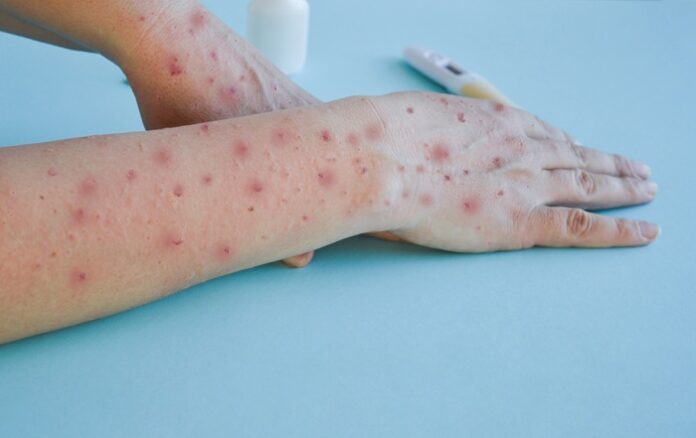
The global campaign against measles is at a decisive crossroads, marked by a historic public-health success on one hand and a worrying resurgence on the other. This is according to new findings from the World Health Organisation (WHO) and the Immunisation Agenda 2030 (IA2030) Mid-Term Review.
According to WHO, for more than two decades, a massive global immunisation effort has saved nearly 59 million lives with the highly effective and low-cost measles vaccine.
The report highlighted that between 2000 and 2024, the world witnessed an astonishing 88 percent drop in measles deaths. This success brought the annual death toll in 2024 to an estimated 95,000 people, mostly children younger than five, one of the lowest tolls on record.
Findings showed that despite the progress in saving lives, the narrative has dramatically shifted as measles cases are now surging worldwide.
An estimated 11 million infections were recorded in 2024, nearly 800,000 more than pre-pandemic levels in 2019. The virus, one of the most contagious known, is exploiting gaps in collective immunity across the globe.
“The impact has been uneven. Compared with 2019, cases rose sharply in the WHO Eastern Mediterranean Region to 86 percent, the European Region to 47 percent, and the South-East Asian Region to 42 percent,” the report showed.
Dr. Tedros Adhanom Ghebreyesus, WHO Director-General, underscored the gravity of the situation.
“Measles is the world’s most contagious virus, and these data show once again how it will exploit any gap in our collective defences against it. Measles does not respect borders, but when every child in every community is vaccinated against it, costly outbreaks can be avoided, lives can be saved, and this disease can be eliminated from entire nations,” he said.
Gavi, the Vaccine Alliance, has intensified efforts to close these immunity gaps. The organisation is assisting lower-income countries with the introduction of the second measles vaccine dose, supporting timely preventive campaigns, and funding outbreak response activities.
In 2024 alone, Gavi aimed to reach up to 100 million children across 24 countries with measles-containing vaccines. This scale-up is backed by a US$290 million injection into the “Big Catch Up” initiative, which seeks to reverse immunisation setbacks caused by the COVID-19 pandemic.
According to Gavi, the push is among the greatest measles-control efforts in its 24-year history.
Derrick Sim, Gavi’s Chief Vaccines Programmes and Markets Officer, said sustained momentum is critical.
“Against a backdrop of increasing measles outbreaks, lower-income countries have undertaken historic efforts to improve coverage and respond to emergencies. For instance, first dose coverage in African countries went up by 2 percent in 2023. We must sustain this effort to reach the high levels of coverage needed to prevent outbreaks and deaths. Every child deserves protection from measles, and often it is the most vulnerable who are most at risk,” he said.
Meanwhile, Lesotho conducted its national measles vaccination campaign from 20–24 October 2025. However, the Ministry of Health’s public relations officer, ’Mateboho Mosebekoa, says the post-campaign evaluation has not yet been completed.
According to Gavi, Lesotho still faces significant challenges in measles immunisation. WHO and UNICEF estimates for 2024 put the country’s second-dose measles vaccine coverage at 74 percent, well below the 95 percent threshold required to prevent outbreaks and achieve herd immunity.
Summary
- The global campaign against measles is at a decisive crossroads, marked by a historic public-health success on one hand and a worrying resurgence on the other.
- Compared with 2019, cases rose sharply in the WHO Eastern Mediterranean Region to 86 percent, the European Region to 47 percent, and the South-East Asian Region to 42 percent,” the report showed.
- WHO and UNICEF estimates for 2024 put the country’s second-dose measles vaccine coverage at 74 percent, well below the 95 percent threshold required to prevent outbreaks and achieve herd immunity.
Ntsoaki Motaung is an award-winning health journalist from Lesotho, specializing in community health stories with a focus on sexual and reproductive health and rights, as well as HIV. She has contributed to platforms like “Be in the KNOW,” highlighting issues such as the exclusion of people with disabilities from HIV prevention efforts in Lesotho.
In addition to her journalism, Ntsoaki serves as the Country Coordinator for the Regional Media Action Plan Support Network (REMAPSEN). She is also a 2023 CPHIA Journalism Fellow.