
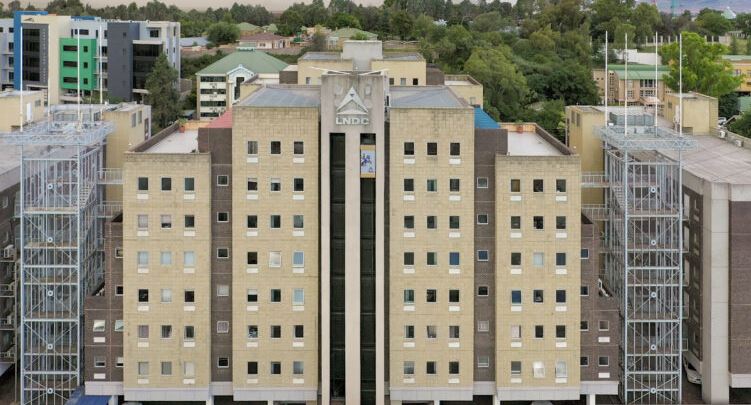
In a move that highlights the importance of partnerships in mobilising investment, the Lesotho National Development Corporation (LNDC) has recently resolved to embark on blended finance to build a stronger and more sustainable economy.
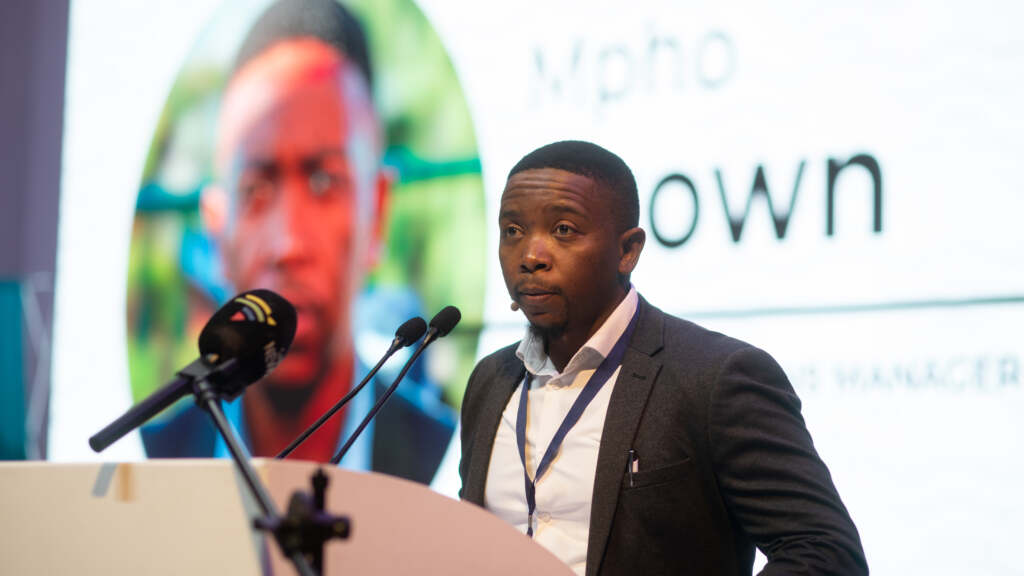
During a one-day forum held at Avani Lesotho on 28 August 2026, LNDC explored practical mechanisms for mobilising capital for Lesotho’s industrial transformation. The Corporation has since announced that the forum resolved to embark on blended finance in an effort to implement its Letsema Strategy 2026–2031, which is expected to transform the industrial sector.
Blended finance, as the concept is understood internationally, refers to the strategic use of public sources of capital to attract private investment in developing countries, blending capital such as official development assistance or development-finance funding with private capital.
Public money in such arrangements is typically offered on concessional terms, more attractive than prevailing market conditions, and used to reduce risk on investment projects so that additional private capital can be mobilised.
This is because private capital flowing to developing countries is often constrained by investors’ unfavourable perceptions of risk, ranging from currency and credit risk to political, regulatory and technical risks.
According to the LNDC Chief Executive Officer Thabo Khasipe, “the strategy recognises that industrial development cannot be achieved by government alone, but requires collaboration among diversified stakeholders including public and private sectors, as well as some development partners.
“The Blended Finance Forum is a direct, practical expression of this mandate. Lesotho has money available within its financial sector, including banks, insurance companies, and pension funds. However, many local projects are not yet prepared well enough to attract investment,” he said.
Blended finance, Khasipe said, would unlock additional investment by using limited public and development funding as “bait to catch more investment” and magnify its overall impact.
Under the traditional financing model, Khasipe explained that the public sector bears most or all of the risk.
“For instance , when the Minister of Finance allocates M100 million for the construction of a road, the Government is exposed to 100% of the project risk. Whereas, under a blended-finance model, the risk is shared among the participating funders, with the public sector absorbing some of the initial losses in order to protect commercial private capital,” Khasipe said.
He added, this risk-sharing mechanism can attract greater private-sector investment and support broader economic growth.
Khasipe also said Lesotho needs to be crisscrossed by a modern highway network, similar to that of Eswatini. He referred to the proposed 170 km road linking Lesotho to South Africa’s N3 to Durban, arguing that the country should have direct access to the Port of Durban.
He said this strategic link would improve the transportation of Lesotho’s products to international markets and buyers, particularly through the proposed Trans-Maloti project, which is expected to be constructed in the Highlands.
“We have the advantage of proximity, but we are squandering it. We travel 170 km in the wrong direction, which costs us in terms of travel time and results in unnecessary fuel expenditure,” Khasipe said.
The fund is intended to make it easier for private-sector businesses to access finance. However, only business proposals that meet the fund’s investment criteria will be considered. Each proposal will be assessed by an investment committee comprising representatives of the institutions that contribute to the fund.
The committee will evaluate the financing needs of each business, including whether it requires working or growth capital; patient capital, which allows the business more time to generate returns and repay the funding; or equity investment, where the fund takes an ownership stake in the business.
Only businesses considered commercially viable and capable of generating sustainable returns will qualify for funding.
In his keynote speech, Dr Farzam Kamalabadi, founder and president of Future Trends Group, drew on the example of the People’s Republic of China, which transformed its economy through market-oriented reforms, industrialisation, infrastructure development and large-scale investment.
China expanded its productive capacity, attracted foreign direct investment and built globally competitive industries, lifting millions of people out of poverty.
The lesson to be drawn, he showed, was that economic transformation requires a clear national strategy, strong institutions, private-sector participation and sustained investment in productive sectors.
Dr Kamalabadi is Botswana’s Presidential Envoy for International Relations and Economic Development, supporting that country’s ambition to become a high-income and globally competitive economy. He has advised governments and national economic or energy institutions in several countries, including China, Oman and Kuwait.
Dr Stephen Lehlomela, the King’s Advisor on Energy, explained that His Majesty King Letsie III’s Just Energy Transition Platform is a strategic vehicle for attracting blended finance to infrastructure development.
The platform aims to improve economic development and social well-being for the Basotho people by making better use of Lesotho’s natural resources, including water, sunlight and wind.
Lesotho’s efforts to develop its water and renewable energy resources began as early as the 1950s. However, progress has been held back by geopolitical challenges, dependence on bilateral agreements, limited access to regional electricity markets and low levels of private-sector participation in the energy sector.
Other major challenges include limits on government borrowing and the lack of a suitable financing and governance model. Such a model would need to clearly separate: long-term strategic infrastructure finance; short-term government budget requirements; and electricity tariffs that reflect the real cost of supply.
The LNDC chairperson Palesa Matobako said Lesotho has strong ambitions, but lacks the resources needed to turn them into reality. She said blended finance is well suited to addressing this challenge.
She explained: “Our challenge is economic transformation, and our response must therefore be collective. This financing model will help unlock Lesotho’s potential to transform its economy. It is precisely the kind of economic ecosystem that Lesotho requires. The ultimate test is whether we can move from conversations to transactions.”
Summary
- In a move that highlights the importance of partnerships in mobilising investment, the Lesotho National Development Corporation (LNDC) has recently resolved to embark on blended finance to build a stronger and more sustainable economy.
- The Corporation has since announced that the forum resolved to embark on blended finance in an effort to implement its Letsema Strategy 2026–2031, which is expected to transform the industrial sector.
- Blended finance, as the concept is understood internationally, refers to the strategic use of public sources of capital to attract private investment in developing countries, blending capital such as official development assistance or development-finance funding with private capital.
Thoboloko Ntšonyane is a dedicated journalist who has contributed to various publications. He reports on accountability, human rights, exposes corruption and wrong doing by those in power. He reports have exposed corruption, abuse of power, fraud, misconduct and negligence. He subscribes to evidence-based reporting. He reports on governance, parliament, courts, climate change, human rights, sexual and reproductive health rights (SRHR), health, business and agriculture. He gives a voice to the marginalised while also demanding accountability. His work inspires change, triggers dialogue and also promote transparency in a society.