
- Inside LEC’s financial collapse to nepotism, rigged procurement and a board that looked the other way
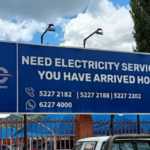
A damning Public Accounts Committee (PAC) report has laid bare a deep-seated rot at the Lesotho Electricity Company (LEC).
It describes a state utility hollowed out by financial irregularities, weak oversight, nepotism and open disregard for procurement regulations and professional human resources standards.
The findings follow successive adverse opinions from the Auditor-General (AG). In accounting terms, an adverse opinion means the auditor has concluded that an institution’s financial statements fail to give a true and fair view under the applicable framework. It is the most severe verdict an auditor can deliver, and LEC has received it year after year.
The report covers the financial years ended March 2017 to March 2022, and also examines financial management issues between 2023 and 2025. The numbers are stark.
The audit found M408.9 million in journal entries with no supporting documentation or proper authorisation, a M37.9 million gap between trade payable balances and the age analysis, and M17.8 million in receivables and payables that were misclassified.
It also found unrecorded journals that distorted reported balances, electricity amounts credited to vendors with no evidence of matching payments, and the omission of the Southern African Power Pool (SAPP) Trading Account from the financial statements.
Procurement emerges as a major source of leakage. According to the report, contracts were awarded without competitive bidding and irregular procurement methods were used. It raises concerns about overpricing, inadequate checks on suppliers, and the purchase of equipment described as incompatible and unstable.
Other key findings include the circumvention of directives to buy directly from manufacturers, the use of an unregistered intermediary supplier, missing trading documentation, irregular approval processes and inflated transport and intermediary costs.
Revenue and debt management fare no better. The PAC flagged unsupported deferred tax assets totalling M205.2 million and a failure to recognise government grants.
It also found discrepancies between value added tax (VAT) returns and the financial statements, inconsistent inter-company balances involving LEC Communications (LECC), and loan repayments and interest that were not properly accounted for. The report ties these failures to weak internal controls and non-compliance with International Financial Reporting Standards (IFRS).
The committee also exposed irregularities in post-paid account management. LEC officials reportedly cleared the outstanding debts of several commercial entities using “single, shared receipts”. The report says this produced what it termed a “massive discrepancy” in the ledger, with M34 million unconfirmed.
The PAC’s verdict on all of this was blunt. “The Committee considers these findings to be indicative of systemic governance and financial management failures requiring urgent corrective intervention, “reads the report.
The rot extends into recruitment. The human resources files of senior personnel, including former Managing Director Mohato Seleke, Head of Finance ‘Makabelo Matsoso, former Company Secretary Attorney Khotso Nthontho and Legal Officer Dr Phoka Matete, were found to be “missing essential documents” such as selection reports, interview score sheets and employment contracts.
“The systematic absence of specific pages in personnel files suggests an intentional effort to obscure irregular recruitment processes. Multiple appointments, including that of the Company Secretary, proceeded without any documented recruitment process.”
The report notes that Matsoso scored 49% in the recruitment process, below competitors who scored higher. Ntjane received 81% in job matching ratings and Alina Seeko scored 51%. Records show Matsoso previously served as General Manager of Corporate Services at the Lesotho National Development Corporation (LNDC) when Seleke was its CEO, before he joined LEC as Managing Director.
The report continues: “It is alleged that Mr. Seleke played an instrumental role in supporting and directly influencing the recruitment and selection process of Mrs. Matsoso’s appointment at the Lesotho Electricity Company (LEC).”
It also raises allegations of nepotism. “Allegations indicate that Mr. Nthontho facilitated the recruitment of former colleagues, including Dr Phone Matete and Advocate Lerato Mainoane ,without disclosing their prior professional associations.
“Ms. Mapule Moholisa,reportedly Mr. Nthontho’s sister in law was allegedly hired as a Legal Officer temporarily within the Company Secretariat division.”
On the state of the HR department, the report says: “The HR department’s disorganized record-keeping has hindered oversight, making it difficult to enforce compliance or verify the legitimacy of acting roles and benefit allocations”.
The ongoing suspension of executive management has also drained the company. LEC continues to pay full remuneration and benefits both to suspended executives and to those acting in their positions.
“This practice of paying both the suspended executives and their acting replacements has resulted in an avoidable and unnecessary drain on LEC’s financial resources,” said the report.
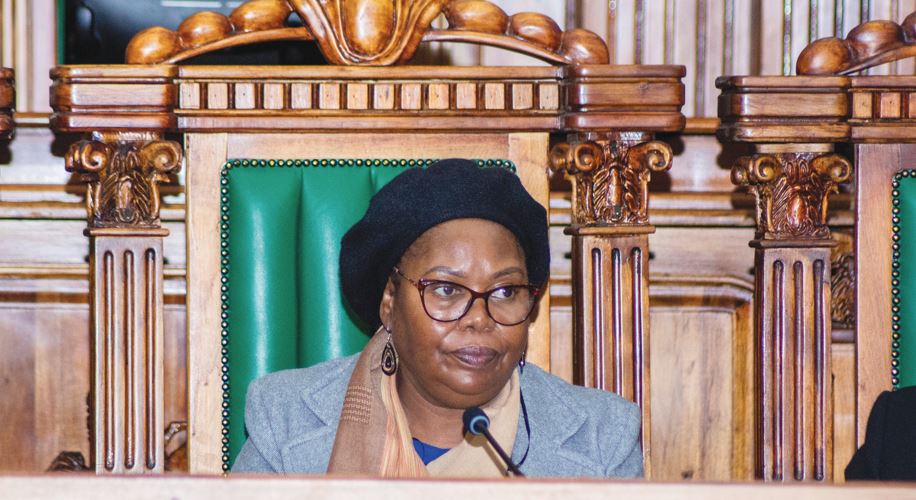
The PAC placed much of the blame on the board. It found that major decisions were made without board approval, that political interference went unchecked and that related-party relationships were not disclosed.
“The Committee observed that the Board failed to adequately protect the independence of Executive Management and failed to enforce accountability.
“The Board’s inability to prevent unlawful interference constitutes a serious abdication of fiduciary responsibility.”
The inquiry was extensive. With help from the AG’s office, the PAC summoned LEC board members, acting and suspended executives, staff, officials from the Ministry of Energy and the Ministry of Finance and Development Planning, sales agents, and representatives of LECC, LECGO and LEWA. It also toured LEC headquarters, the Ha-Ramarothole Solar Project, the Belo sub-station and HDM Catering and Projects in South Africa.
The inquiry was not without resistance. In 2025, as the PAC probed alleged mismanagement, questionable remuneration, suspensions and governance at the utility, the LEC board petitioned the court to halt the proceedings, accusing the committee of exceeding its mandate. This publication broke several of the stories on irregularities first raised by the AG’s report, some of which the PAC later confirmed.
The PAC has now called on LEC to implement the forensic audit recommendations and stop the ongoing financial “haemorrhage”. It has also urged government, the board, regulators and law enforcement agencies to “Act decisively and urgently” on its recommendations.
Summary
- In accounting terms, an adverse opinion means the auditor has concluded that an institution’s financial statements fail to give a true and fair view under the applicable framework.
- It also found unrecorded journals that distorted reported balances, electricity amounts credited to vendors with no evidence of matching payments, and the omission of the Southern African Power Pool (SAPP) Trading Account from the financial statements.
- Other key findings include the circumvention of directives to buy directly from manufacturers, the use of an unregistered intermediary supplier, missing trading documentation, irregular approval processes and inflated transport and intermediary costs.
Thoboloko Ntšonyane is a dedicated journalist who has contributed to various publications. He reports on accountability, human rights, exposes corruption and wrong doing by those in power. He reports have exposed corruption, abuse of power, fraud, misconduct and negligence. He subscribes to evidence-based reporting. He reports on governance, parliament, courts, climate change, human rights, sexual and reproductive health rights (SRHR), health, business and agriculture. He gives a voice to the marginalised while also demanding accountability. His work inspires change, triggers dialogue and also promote transparency in a society.