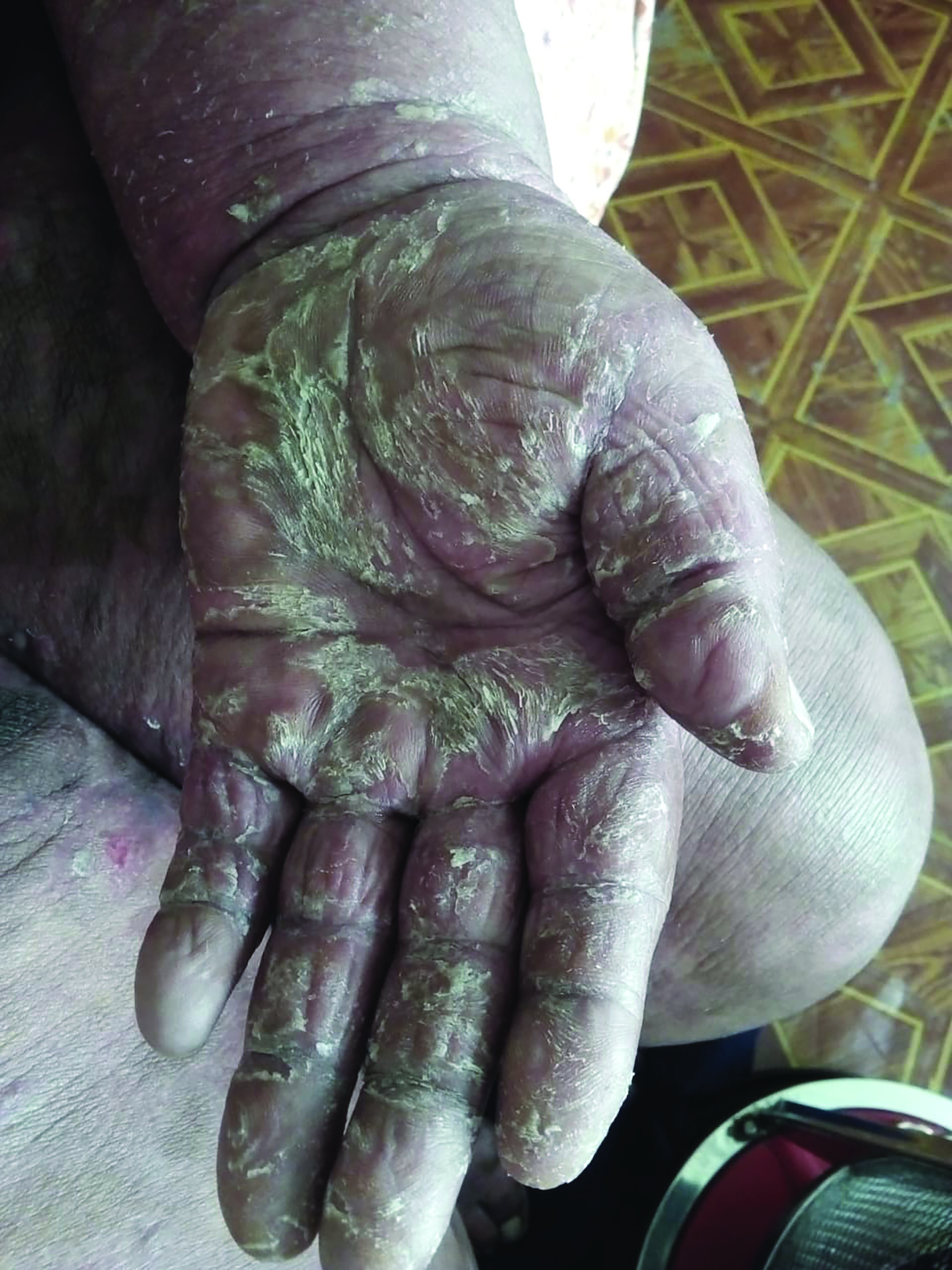


My grandmother lived with pain for more than 20 years. Her knees were bone on bone. Her back curved like a question mark. Every morning, she would shuffle to the kitchen, boil water for tea, and swallow two small white tablets. Then she would sit, motionless, waiting for the medicine to do its work.
We, children, would watch her and wonder why she did not see a doctor. Why doesn’t she get the surgery that would fix her knees, straighten her back, and let her walk without wincing?
The answer, we learned, was that the painkillers worked. Not perfectly, she never ran, never danced, never carried a child on her hip. But they worked well enough. The pain was manageable. The surgery was terrifying. So she took the tablets, year after year, until the day she stopped taking anything at all.
I thought of my grandmother on Wednesday, watching the Minister of Finance deliver her budget speech. I thought of her as the Minister announced the 2 percent salary increase for public servants. I thought of her as she detailed the new programs for youth employment. I thought of her as the parliament applauded politely.
And I realised that Lesotho has become my grandmother.
We are in pain. The indicators are unmistakable:
- Hundreds of thousands of young people unemployed
- A wage bill consuming 17 percent of GDP, crowding out investment
- SACU revenues making up a third of our budget, entirely dependent on South Africa’s economy
- Grants collapsing, development partners retreating
- Textile factories closing, diamond mines faltering, jobs disappearing
The pain is real. The pain is chronic. The pain, if left untreated, will eventually kill us.
But the truth is that the painkillers still work.
Consider the medicine cabinet we have assembled over decades.
SACU revenues are our strongest painkiller. Every year, billions of maloti flow from the customs union, allowing us to pay wages, fund programs, and maintain the appearance of a functioning state. Never mind that we have no control over these revenues. Never mind that they could disappear with a change in South African policy or a global recession. They work today. That is enough.
Water royalties are our newest prescription. The Minister proudly announced M4.78 billion from LHDA, “exceptionally high,” she called them, and “temporary and cyclical.” But temporary is fine. Cyclical is fine. The pain is managed for now. Tomorrow is tomorrow’s problem.
Development assistance has been our reliable tonic for generations. Grants, loans, and technical assistance, they have flowed consistently enough that we built a government dependent on them. The Minister acknowledged their “structural withdrawal” in this budget, but the acknowledgement itself feels like a painkiller. We name the problem, and in naming it, we feel we have addressed it.
Borrowing is our emergency injectable. When the pain spikes, when revenues fall short, when disasters strike, we reach for the debt syringe. M23 billion and counting. Moderate distress, the ratings agencies say. Limited space to absorb shocks. But the injection works for now. We can worry about the side effects later.
Programs are our daily tablets. Youth programs, agricultural programs, health programs, education programs, each one a small white pill designed to manage a specific symptom. The Power Hub Initiative. The National Volunteer Corps. The Inclusive Growth Fund. Take them regularly. Report progress. Issue press releases. Manage the pain.
The pharmacopoeia is extensive. The side effects are accumulating. But the medicine cabinet is not yet empty.
So who needs surgery?
The surgery we require has been prescribed many times. The diagnosis is not mysterious. The procedure is not experimental.
We need to reduce the wage bill by fundamental restructuring of the public service. Functional reviews. Attrition targets. Voluntary separation. A smaller, better-paid, more productive civil service.
We need to diversify the economy, not by pilot programs and feasibility studies, but by creating an environment where private enterprise can flourish. Reliable electricity. Functional roads. Access to capital. A regulatory environment that rewards risk rather than punishing it.
We need to invest in productive capacity, not at the margins, but at scale. Irrigation schemes that actually irrigate. Factory shells that actually house factories. Digital infrastructure that actually connects.
We need to confront the beneficiaries of the status quo, the connected, the comfortable, the protected, and tell them that their comfort is killing the country.
This is the surgery. It is painful. It is risky. The patient might not survive the procedure. There will be recovery time, and the recovery will hurt.
But here is the question the budget answers, whether the Minister intended to answer it or not: Why would any government choose surgery when the painkillers still work?
Let us be honest about why the budget looks the way it does.
The Minister gave public servants a 2 percent raise. The pundits will debate whether this is too much or too little. The economists will calculate its impact on the fiscal deficit. The commentators will wring their hands about unsustainable wage bills and crowded-out investment.
All of them will miss the point.
The wage bill is not large because public servants are overpaid. It is large because the civil service is overflowing with people who should not be there. It is large because we have turned government employment into the ultimate patronage prize, the golden ticket handed out to relatives, friends, and political activists who have nowhere else to go and nothing else to offer.
In Lesotho, if you are related to a minister, you do not need to look for a job. The job comes to you. If you campaigned for the ruling party, you do not need to update your CV. Your reward is waiting. If you are connected to the right people, you do not need qualifications, experience, or even a clear job description. The system will find a place for you.
This is not speculation. This is the open secret that every Mosotho knows. Walk into any ministry in Maseru. Look at the faces. Ask how they got there. The answers will tell you everything about why our wage bill is 17 percent of GDP and why our public services remain abysmal.
The government has made a deliberate political choice that no one connected to power will go hungry. If a minister’s nephew cannot find work in the private sector, put him in the ministry. If a party activist needs an income, create a position.
When the government freezes wages, as it should, as fiscal responsibility demands, it does not freeze only the salaries of the minister’s niece who cannot type. It freezes the salary of the dedicated teacher in Quthing who has been inspiring children for twenty years.
It freezes the salary of the nurse in Mokhotlong who works in an understaffed clinic. It freezes the salary of the engineer in the Roads Directorate who actually knows about building bridges.
The meritorious, those who entered the civil service through genuine competition, who understand their jobs, who show up and deliver, are punished alongside the patronage appointments. Their real wages decline. Their families struggle. Their commitment is tested.
And when the government gives a raise, however modest, it gives it to everyone. The nurse gets the same percentage as the nephew. The teacher gets the same as the party activist. The engineer gets the same as the entirely unnecessary “special assistant” whose only qualification is a family name.
This is the cruelty of patronage. It makes reform nearly impossible because the meritorious and the connected are bound together in the same pay scale. Any attempt to discipline the wage bill punishes the people we need most. Any attempt to protect real workers also protects the parasites.
Here is the trap we have built for ourselves:
Step one: Staff the civil service with patronage appointments to reward political loyalty and keep the connected from going hungry.
Step two: Watch the wage bill balloon as more and more people are added to the payroll.
Step three: Find that there is no money left for investment, infrastructure, or the things that might actually create private sector jobs.
Step four: When fiscal pressure mounts, freeze wages across the board, punishing the competent alongside the connected.
Step five: Watch the competent leave, reducing the civil service’s capacity to deliver anything at all.
Step six: Hire more patronage appointments to fill the gaps, because the connected never stop demanding their sliver platters.
Step seven: Repeat until the system collapses.
We are somewhere between step five and step six. The competent are leaving. The connected are arriving. The wage bill remains unsustainable. The services continue to decline.
And every budget, including this one, treats the symptom (the wage bill) while ignoring the disease (the patronage system that fills it).
The capital budget cut is not an economic decision. It is a political decision. Roads and factories and irrigation schemes do not vote. The future does not have a constituency. The young people who would benefit from investment are not organised, not mobilised, not demanding. Their pain is real, but it is diffuse. It can be managed with programs rather than addressed with investment.
The SOE audits and PPP reviews are not reform. They are delay. Audits take time. Reviews take longer. By the time the reports are written and the recommendations are considered, this government will be preparing for the next election. The pain is managed. The crisis is deferred.
This is not conspiracy. This is not corruption, or not only corruption. This is the political economy of palliative care. Governments, like patients, choose the path of least immediate pain. They manage symptoms because symptoms are what voters feel. They defer surgery because surgery is what voters fear.
The miracle is not that the budget fails to transform. The miracle is that anyone expected it to.
The patients who demand painkillers
We must also be honest about our own role.
We, the people of Lesotho, are not innocent bystanders in this drama. We are active participants. We demand painkillers.
When the government tries to reduce the wage bill, we protest. When it tries to rationalise the public service, we resist. When it proposes reforms that threaten the comfort of the connected, we elect someone else.
We want jobs, but we do not want the economic transformation that creates them. We want investment, but we do not want the regulatory certainty that attracts it. We want prosperity, but we are not willing to endure the pain of achieving it.
The budget gives us what we demand: manageable pain. Not relief, not cure, but enough tablets to get through another year.
Who needs surgery when the painkillers still work?
We have answered that question with every election, every protest, every defence of the status quo. We do not need surgery. We need the prescription refilled. We need the pain to stay manageable. We need tomorrow to look enough like today that we can pretend everything is fine.
The Minister understands this. She is not stupid. She is not malicious. She is responding to the incentives we have created, the demands we have made, and the limits we have set.
She gives us what we ask for.
We should be careful what we ask for.
The addiction we cannot acknowledge
There is a name for what we are doing. It is called addiction.
We are addicted to SACU revenues we do not control. We are addicted to development assistance we cannot replace. We are addicted to a wage bill we cannot afford. We are addicted to borrowing we cannot repay.
And like any addiction, ours is characterised by denial, by short-term thinking, by the relentless pursuit of the next dose.
The budget is our daily fix. It delivers the revenues, the programs, the adjustments that keep the withdrawal symptoms at bay. It allows us to pretend, for another year, that we are not in crisis.
The Minister’s speech, for all its honesty about the global environment and the structural challenges, is also an enabler. It diagnoses the addiction without prescribing detox. It names the disease while dispensing the medicine.
Why do we fear surgery so much? Because we know what withdrawal looks like.
A real wage bill reduction would mean pseudo-public servants losing jobs. It would mean families losing income. It would mean villages losing their most reliable source of cash. The social cost would be immense. The political cost would be catastrophic.
A real economic diversification would mean industries failing while new ones struggle to be born. It would mean a period of transition when jobs disappear before new ones appear. It would mean uncertainty, anxiety, fear.
A real confrontation with the beneficiaries of the status quo would mean conflict, with the connected, the powerful, the protected. It would mean fights we are not sure we can win.
So we choose the pain we know over the pain we fear. We choose manageable decline over uncertain transformation. We choose palliative care over surgery.
And the budget reflects this choice perfectly.
The moment when painkillers stop working
Here is what my grandmother’s story does not tell you. The painkillers did not work forever.
Eventually, her body could no longer absorb the medicine. The doses stopped helping. The pain broke through. By then, she was too weak for surgery. By then, the only option was more painkillers, stronger painkillers, until even those stopped working.
She died in bed having never had the surgery that might have given her years of pain-free life. She chose comfort over cure. She chose the known over the unknown. She chose the path of least immediate pain.
I loved my grandmother. I do not judge her choice.
But I do not want my country to make the same choice.
The moment is coming when the painkillers will stop working. SACU revenues will decline and not recover. Development assistance will dry up completely. Debt will reach its limit. The wage bill will consume everything and still be insufficient.
When that moment comes, we will be too weak for surgery. We will have spent our reserves, exhausted our options, and used up our chances. We will reach for the medicine cabinet and find it empty.
The Minister’s budget does not prepare us for that moment. It delays it. It manages the pain today while ensuring the crisis tomorrow.
This is the slow suicide of a nation that has lost the will to live.
The surgery we must demand
I am not a doctor. I cannot prescribe the specific procedure our nation requires. But I can name the organs that need attention:
The heart, our economy, must be restarted. It cannot continue pumping blood only to the head while the limbs wither. We must redirect resources from consumption to investment, from wages to infrastructure, from the present to the future.
The brain, our governance, must be rewired. It cannot continue rewarding loyalty over competence, connection over merit, comfort over courage. We must build institutions that serve the nation, not themselves.
The muscles, our people, must be strengthened. They cannot continue carrying the weight of a system that offers them nothing in return. We must educate, train, employ, and empower every Mosotho who wants to work.
The spine, our leadership, must be stiffened. It cannot continue bending to every pressure, accommodating every interest, avoiding every conflict. We must demand leaders who tell the truth, take risks, and accept that surgery hurts.
This is the surgery. It is not a metaphor. It is not a speech. It is the hard, painful, necessary work of transforming a nation that has spent sixty years learning to manage decline.
Who will wield the scalpel?
The Minister will not wield it. Her budget proves she will not. She is competent, honest, and trapped, trapped by the incentives of her office, the demands of her colleagues, the limits of her mandate.
Parliament will not wield it. Its silence during the budget speech proves it will not. The members nodded and applauded while the future was being sacrificed. They are part of the comfort coalition, not its challengers.
The Prime Minister will not wield it. His confession that job creation is “difficult” proves he will not. He promised 62,000 jobs and delivered an acknowledgment of impotence. He is not a surgeon. He is a pharmacist, dispensing the same prescriptions, refilling the same bottles.
The development partners will not wield it. Their retreat proves they will not. They have decided that Lesotho is not worth the investment, not worth the risk, not worth the surgery. They are walking away, and who can blame them?
That leaves us.
The people. The citizens. The ones who suffer the pain and swallow the pills. The ones who will be left holding an empty medicine cabinet when the painkillers finally stop working.
We must wield the scalpel. Not because we want to, but because no one else will. Not because we are qualified, but because we are desperate. Not because surgery is safe, but because the alternative is death.
The choice before us
My grandmother chose painkillers over surgery. She died in bed, comfortable until the end, having never run or danced or carried a child on her hip.
I do not blame her. But I do not want to be her.
I want to live in a country that runs, that dances, that carries its children toward a future worth wanting. I want to live in a country that chooses surgery while the patient is still strong enough to survive it. I want to live in a country that looks at the medicine cabinet and says: this is not enough.
The budget is delivered. The speech is history. The applause has faded.
Now the choice is ours.
We can continue managing the pain. We can accept the programs, the adjustments, the small white pills that keep the symptoms at bay. We can pretend that next year’s budget will be different, that the next government will be braver, that the next generation will somehow inherit a country we were too afraid to build.
Or we can demand the surgery.
We can organise. We can mobilise. We can vote differently, speak differently, live differently. We can tell our leaders: the painkillers are not enough. We want to walk without wincing. We want to run. We want to dance. We want to carry our children toward a future that does not require medicine.
The choice is ours. It has always been ours.
Who needs surgery when the painkillers still work?
We do.
Summary
- Every year, billions of maloti flow from the customs union, allowing us to pay wages, fund programs, and maintain the appearance of a functioning state.
- Never mind that they could disappear with a change in South African policy or a global recession.
- The Minister acknowledged their “structural withdrawal” in this budget, but the acknowledgement itself feels like a painkiller.

Your Trusted Source for News and Insights in Lesotho!
At Newsday Media, we are passionate about delivering accurate, timely, and engaging news and multimedia content to our diverse audience. Founded with the vision of revolutionizing the media landscape in Lesotho, we have grown into a leading hybrid media company that blends traditional journalism with innovative digital platforms.