
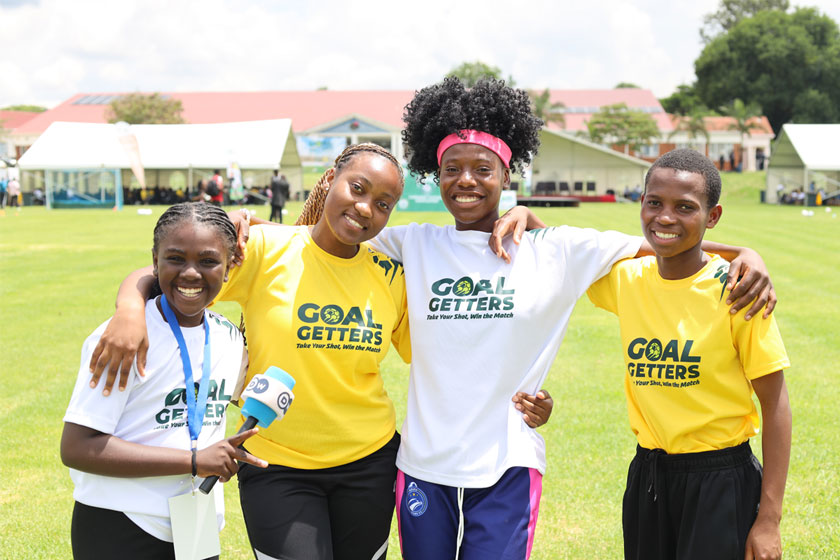
On the sidelines of a CAF girls football tournament in Zimbabwe this month, 200 talented young players gathered to take a shot at one major goal: ending cervical cancer.
- 16 December 2025
- byDerick Matsengarwodzi
At a glance
- As eight teams from six African nations vie for the trophy at the CAF Under-17 Girls Integrated Football Tournament in Zimbabwe this month, Goal Getters, a campaign run by UEFA, CAF and Gavi, brought the players together at a workshop on the sidelines to teach them about the human papillomavirus, cervical cancer and the vaccine that’s the best defence.
- “When you train, when you pass the ball. When you work as a team, you are already practising the discipline that builds strong bodies and strong futures. Part of the strength comes from making healthy choices, such as getting the HPV vaccine,” said Zimbabwe’s First Lady, Dr Auxilia Mnangagwa.
- Former England and Chelsea star Eniola Aluko said football had the power to inspire confidence in HPV vaccination in Africa.
At only 15, Negumbo Shekupe, a Namibian footballer, is already playing to inspire change.
One of about 200 young female players representing six countries at the CAF Under-17 Girls Integrated Football Tournament (GIFT) Zimbabwe 2025, which is running between the 8th and 18th of this month, Shekupe’s ambitions are not confined to the pitch.
As every touch, dribble and loss thrusts her closer to her dream of football fame, the shy teenager is using her nimble footwork to influence other young Africans to shoot for health. On 10 December, she swapped out her kit for blue track bottoms and white T-shirt, and joined her peers and a few famous faces at a game-changing workshop.

Goal Getters, a campaign run by the Confederation of African Football (CAF), UEFA and Gavi, the Vaccine Alliance, is using the energy of youth football to empower young girls to understand the importance of vaccines in securing their futures.
“Before I become professional, I am encouraging other girls of my age to get vaccinated against the human papillomavirus – which causes cervical cancer – in order to reach their dreams,” Shekupe told VaccinesWork.
A lifestyle, and the road to a better life
Known as the ‘beautiful game’, football is a lifestyle in Africa. At any given moment, in often unforgiving heat, on spare lots, potholed streets, and well-groomed pitches, hundreds of thousands of games are ongoing. Players, gleaming with sweat and alive with reckless energy, hammer home the ball – and excitedly call out top footballer’s names, as a homage or a boast, after a goal or a skilful dribble.
When you train, when you pass the ball. When you work as a team, you are already practising the discipline that builds strong bodies and strong futures. Part of the strength comes from making healthy choices, such as getting the HPV vaccine.”The game’s popularity captivates billions on the continent – and that makes it a great vehicle for change.
Shekupe, a promising player, is in her own small way slowly learning that. “By getting vaccinated, young girls will live healthier, better lives and reach greater, professional heights,” she said. It’s a message she intends to carry back home.
Previous Goal Getters workshops have been hosted in Eswatini and Tanzania. Like this month’s event in Harare, the aim on those occasions was to educate girls about the human papillomavirus (HPV), the leading cause of cervical cancer worldwide, a disease that kills finds a disproportionate number of its victims in low- and middle-income countries.

Zimbabwe’s Acting Minister of Health and Child Care, Dr Anxious Masuka, told the gathering that Zimbabwe first introduced the HPV vaccine in 2014, scaling the programme to the national level in 2018, mainly through school-based delivery, and recording high coverage.
But COVID-19 brought both logistical disruption and appeared to trigger a spike in misinformation, which has hampered the programme. Uptake currently hovers at just over 50%. The Ministry has embarked on an HPV vaccination revitalisation programme, while also increasing cancer screening and addressing misinformation.
Have you read?
- Older teens get a shot at safety as Mozambique launches HPV vaccine campaign
- How do you make HPV vaccination a normal part of every girl’s life? Try asking her local nurse
Zimbabwe’s First Lady, Dr Auxilia Mnangagwa, a health ambassador, who officially launched the HPV vaccine in 2018, has taken a personal interest in supporting the government’s efforts.
“This tournament is not just about football; it is about your future and your health,” Dr Mnangagwa said, in a speech read out by Minister of Women’s Affairs, Community, Small and Medium Enterprise Development Monica Mutsvangwa. “When you train, when you pass the ball. When you work as a team, you are already practising the discipline that builds strong bodies and strong futures. Part of the strength comes from making healthy choices, such as getting the HPV vaccine.”

Kick out HPV and misinformation
Prior to the event, the majority of the girls in attendance admitted to having known very little about the HPV virus, cervical cancer or the available vaccine.
But at the workshop, sessions held by various health workers left them with answers to their many questions – answers they could pass on to peers and football rivals.
Some of the information came as a surprise – a ripple of shock ran through the group as speakers explained that by age 45, an estimated four in five men and women will have had at least one HPV infection. While the body naturally clears the virus in 90% of people, in some, it can cause cancers, including cervical cancer, which kills 2,300 Zimbabwean women each year.
Football is one of the biggest unifiers: it brings people together. The fact that cervical cancer is the biggest killer of women in Africa means that it is important to correct the misinformation, to give confidence about the high HPV vaccination success rate.”
Crucially, they learned that there’s a shield. A single dose of HPV vaccine is recommended to girls aged 9 to 14 – in other words, before exposure – and can protect them for life.
CAF legend Amanda Dlamini, who played for South Africa’s Banyana Banyana from 2007 to 2018, spoke at the event, addressing vaccine hesitancy. “Vaccination in Africa is something that has been frowned upon [in some communities], but we encourage young girls, and equip them with enough knowledge, where health and awareness is concerned – and this is a good platform to start,” she said. “The information gained here will be shared across families, friends, and then the rest of communities are informed and inspired.”

Eniola Aluko, a star former England and Chelsea player originally from Nigeria, and the UEFA Together Goal Getters Ambassador is convinced that football can effectively address such misinformation to save lives. “Football is one of the biggest unifiers: it brings people together. The fact that cervical cancer is the biggest killer of women in Africa means that it is important to correct the misinformation, to give confidence about the high HPV vaccination success rate,” she told VaccinesWork.
Future pledge
Away from the workshop’s lively discussions, the CAF Under-17 Girls Integrated Football Tournament (GIFT) Zimbabwe 2025 roared to life.
Eight teams from six nations fielded young players – a chance for them to gain international experience and deepen their investment in women’s football. On the pitch, pouring rain paused for the occasional burst of sunshine, which beamed down on a crop of potential champions.

“Empowering young girls through football goes beyond just the game; it’s about developing their leadership skills and helping them make informed decisions that will shape their futures,” said Meskerem Tadesse, CAF Head of Women’s Football Development. “By investing in young girls through these initiatives, CAF – under the leadership of President Dr Patrice Motsepe – demonstrates a commitment to expanding opportunity and well-being.”
In Africa, Zimbabwe ranks fourth globally and regionally in cervical cancer mortality. In 2029, local screening services reached only 20% of the population.
For former top player Aluko, Goal Getters is personal. It’s about giving back to Africa, she says – and being part of an overdue turn from exploitative foreign interest, towards international investment in the continent and its people. “It’s important to see various organisations investing in Africa, and in our future. For me, for a long time, the culture has been about extracting from Africa, and now this is about investing in the future of Africa,” said Aluko.

After the tournament’s final whistle on 18 December, Shekupe and her peers will not only carry back home winning medals, new skills and memories, but also health messages to benefit future generations and nations. “The governments should look out for young girls that need to get vaccinations,” she wrote on the public Champions’ Pledge Wall. “They must also tell them about how HPV works and how they should prevent themselves against this virus.”
Summary
- As eight teams from six African nations vie for the trophy at the CAF Under-17 Girls Integrated Football Tournament in Zimbabwe this month, Goal Getters, a campaign run by UEFA, CAF and Gavi, brought the players together at a workshop on the sidelines to teach them about the human papillomavirus, cervical cancer and the vaccine that’s the best defence.
- Goal Getters, a campaign run by the Confederation of African Football (CAF), UEFA and Gavi, the Vaccine Alliance, is using the energy of youth football to empower young girls to understand the importance of vaccines in securing their futures.
- Like this month’s event in Harare, the aim on those occasions was to educate girls about the human papillomavirus (HPV), the leading cause of cervical cancer worldwide, a disease that kills finds a disproportionate number of its victims in low- and middle-income countries.

Welcome to Newsday Media – Your Trusted Source for News and Insights in Lesotho!
At Newsday Media, we are passionate about delivering accurate, timely, and engaging news and multimedia content to our diverse audience. Founded with the vision of revolutionizing the media landscape in Lesotho, we have grown into a leading hybrid media company that blends traditional journalism with innovative digital platforms.
Our mission is simple: to inform, inspire, and empower our readers by providing comprehensive coverage of local and global events, current affairs, and cultural happenings. Whether you’re looking for breaking news, in-depth analysis, or captivating storytelling, Newsday Media is your go-to destination for all things news-related.
With a dedicated team of journalists, editors, and multimedia experts, we are committed to upholding the highest standards of journalistic integrity and professionalism. We pride ourselves on delivering content that not only informs but also sparks conversation, fosters understanding, and drives positive change in our society.
From our flagship newspaper to our dynamic digital platforms, we offer a wide range of multimedia content to cater to the diverse interests and preferences of our audience. Whether you prefer to stay informed through print, online articles, videos, or podcasts, Newsday Media has something for everyone.
We believe in the power of storytelling to connect people, bridge divides, and inspire action. That’s why we’re dedicated to providing a platform for voices from all walks of life, championing diversity, inclusion, and authenticity in everything we do.
Thank you for visiting Newsday Media. We invite you to explore our website, engage with our content, and join us on our journey to inform, inspire, and empower our community. Together, let’s shape the future of media in Lesotho.