
Refiloe Molise
A multi-stakeholder push to confront Lesotho’s growing youth mental health and substance abuse crisis recently took a stand through a national workshop in Maseru calling for stronger coordination and faster implementation of solutions.
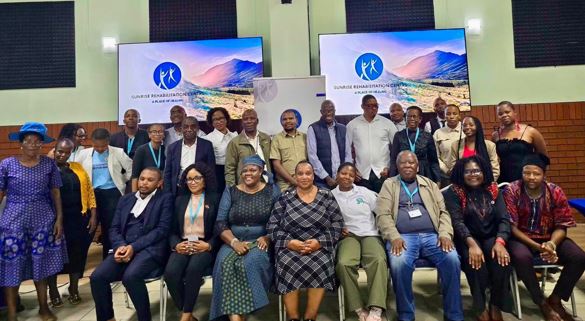
Held at Victory Hall on 19 March, the workshop brought together government officials, educators, civil society organisations and mental health professionals under a shared goal to shift the country’s response from fragmented interventions to a unified, prevention-focused strategy.
The initiative, spearheaded by Sunrise Rehabilitation Center, forms part of efforts to establish the Lesotho Coalition for Prevention of Substance Use and Mental Health Promotion. The coalition is expected to prioritise prevention, early intervention and awareness campaigns in schools and communities.
Mokhothu Makhalanyane, the Chairperson of National Assembly committees, speaking at the gathering questioned the country’s approach to tackling the crisis. While welcoming the initiative, he stressed that Lesotho’s challenges stem less from a lack of funding and more from inefficiencies in execution.
“The nation is struggling not because there is no money but because of how we implement our systems. Government must focus on putting strong laws and standards in place while allowing organisations and communities to deliver services more efficiently,” he said.
Makhalanyane argued that government’s role should be to create an enabling legal and policy environment, while empowering civil society and communities to drive delivery on the ground, a model he suggested would accelerate impact.
He further revealed that Parliament is working on a public participation bill designed to strengthen the role of civil society in shaping national policy.
The proposed law is expected to ensure that community voices are more meaningfully integrated into decision-making processes, particularly on mental health and social development.
His remarks underscored a recurring theme throughout the workshop that coordination gaps and slow systems continue to undermine otherwise well-resourced interventions.
Sunrise Rehabilitation Center’s advisor, Chaba Makuku, reinforced the urgency of treating mental health as a national development priority, warning that economic progress would remain constrained without a healthy population.
“There is no business or economy that can grow with people who are unstable or sick. That is why we must take illness seriously. It cannot be left to the Ministry of Health alone but every Mosotho has a role to play,” he said.
Makuku also called for a shift in societal attitudes, stressing that stigma remains a major barrier to care.
“Mental health is not a luxury. It is everyone’s right to be healthyin both body and mind. We must stop stigmatising people and instead support them so they can live dignified and safe lives,” he said.
Echoing these concerns, Sunrise Rehabilitation Center’s Executive Director Sekhoane Kolobe highlighted the silent struggles facing many young people.
“Many young people in our communities are quietly drowning not in water, but in pain they cannot put into words,” Kolobe said.
He explained that the workshop aimed to align efforts across sectors and lay the foundation for a coordinated national response integrating education, healthcare, policy and community-based support systems.
Evidence of impact from such collaboration was shared by Idzai Muchabaiwa of Machabeng College, who pointed to tangible improvements following the school’s partnership with Sunrise Rehabilitation Center.
“In the past, Machabeng College was often associated with drug and substance abuse, but because of the support from Sunrise, we have seen a very big change,” she said.
She noted a significant decline in cases of vaping, smoking and alcohol use among students, attributing the progress to sustained support and awareness initiatives.
Muchabaiwa also emphasised the need for schools to create safe, supportive environments where learners can openly discuss their struggles.
“It is very rare for a child to raise their hand and say, ‘I am not okay.’ Sometimes learners who misbehave or bully others are actually asking for help, so instead of only reprimanding them, we must offer solutions and support,” she said.
Summary
- A multi-stakeholder push to confront Lesotho’s growing youth mental health and substance abuse crisis recently took a stand through a national workshop in Maseru calling for stronger coordination and faster implementation of solutions.
- Held at Victory Hall on 19 March, the workshop brought together government officials, educators, civil society organisations and mental health professionals under a shared goal to shift the country’s response from fragmented interventions to a unified, prevention-focused strategy.
- Makhalanyane argued that government’s role should be to create an enabling legal and policy environment, while empowering civil society and communities to drive delivery on the ground, a model he suggested would accelerate impact.

Welcome to Newsday Media – Your Trusted Source for News and Insights in Lesotho!
At Newsday Media, we are passionate about delivering accurate, timely, and engaging news and multimedia content to our diverse audience. Founded with the vision of revolutionizing the media landscape in Lesotho, we have grown into a leading hybrid media company that blends traditional journalism with innovative digital platforms.
Our mission is simple: to inform, inspire, and empower our readers by providing comprehensive coverage of local and global events, current affairs, and cultural happenings. Whether you’re looking for breaking news, in-depth analysis, or captivating storytelling, Newsday Media is your go-to destination for all things news-related.
With a dedicated team of journalists, editors, and multimedia experts, we are committed to upholding the highest standards of journalistic integrity and professionalism. We pride ourselves on delivering content that not only informs but also sparks conversation, fosters understanding, and drives positive change in our society.
From our flagship newspaper to our dynamic digital platforms, we offer a wide range of multimedia content to cater to the diverse interests and preferences of our audience. Whether you prefer to stay informed through print, online articles, videos, or podcasts, Newsday Media has something for everyone.
We believe in the power of storytelling to connect people, bridge divides, and inspire action. That’s why we’re dedicated to providing a platform for voices from all walks of life, championing diversity, inclusion, and authenticity in everything we do.
Thank you for visiting Newsday Media. We invite you to explore our website, engage with our content, and join us on our journey to inform, inspire, and empower our community. Together, let’s shape the future of media in Lesotho.