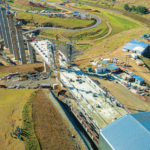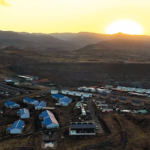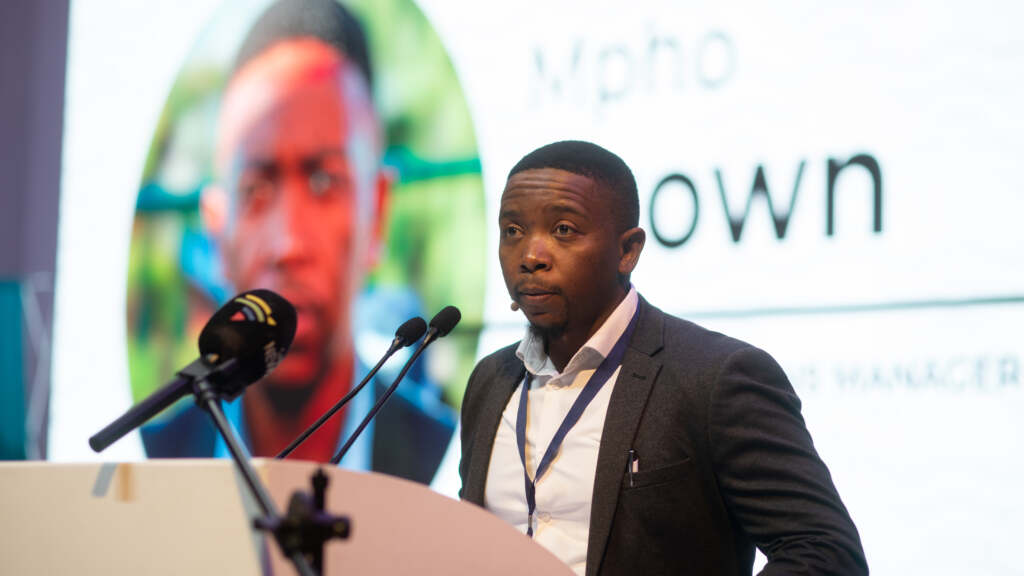

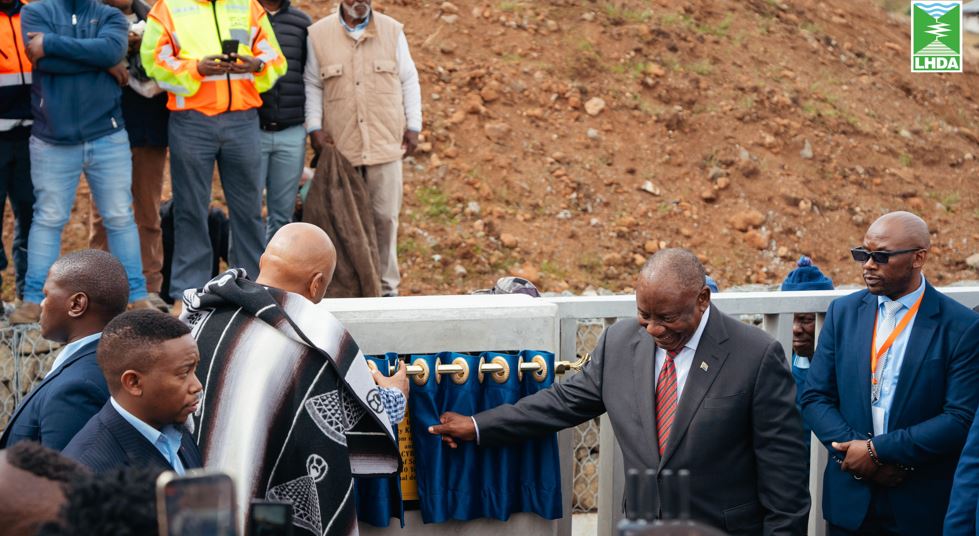
Community leaders in Mokhotlong have called for urgent access to water and electricity, saying residents living near the multi-billion maloti Lesotho Highlands Water Project (LHWP) Phase II continue to face basic service shortages despite ongoing developments.
Malingoaneng Constituency Member of Parliament, Monethi Ramakalima, urged the Ministry of Natural Resources and the Lesotho Highlands Development Authority (LHDA) to ensure that Basotho directly benefit from the country’s natural resources.
Speaking during the launch and naming ceremony of the second Tunnel Boring Machine (TBM) at Polihali this week, Ramakalima said communities were promised improved livelihoods when Phase II preparations began in 2012, a commitment he believes has yet to be fully realised.
“For our people and livestock, we hope the authorities will hear our plea. We are hopeful that soon we will have access to clean water networks for each household,” he said.
He added that while electricity infrastructure is visible at project sites, surrounding communities remain without access.
“We only see electricity at the project sites; however, we hope that communities around these areas will also benefit,” Ramakalima said.
The MP also raised concerns about high unemployment, noting that many residents are willing to acquire skills to improve their livelihoods.
“We hope that once Phase II is complete, we will see improved living conditions and sustainable means of income,” he said, while commending LHDA for infrastructure improvements such as roads.
Representing the Principal Chief of Tlokoeng, Chief Matšohlo Sekonyela acknowledged the significance of hosting one of the country’s largest infrastructure projects but said local communities continue to face serious challenges.
“We are fortunate to host such a major project, but many of our people are yet to benefit meaningfully,” he said.
Sekonyela appealed for access to water, pointing out that project water flows through their communities to South Africa while locals remain without supply.
“This water passes through our area to South Africa; we also want access to clean water in every household,” he said.
He further called for the expansion of electricity infrastructure in Tlokoeng and surrounding villages.
“We plead with LHDA and the ministry to include us in their plans,” he added.
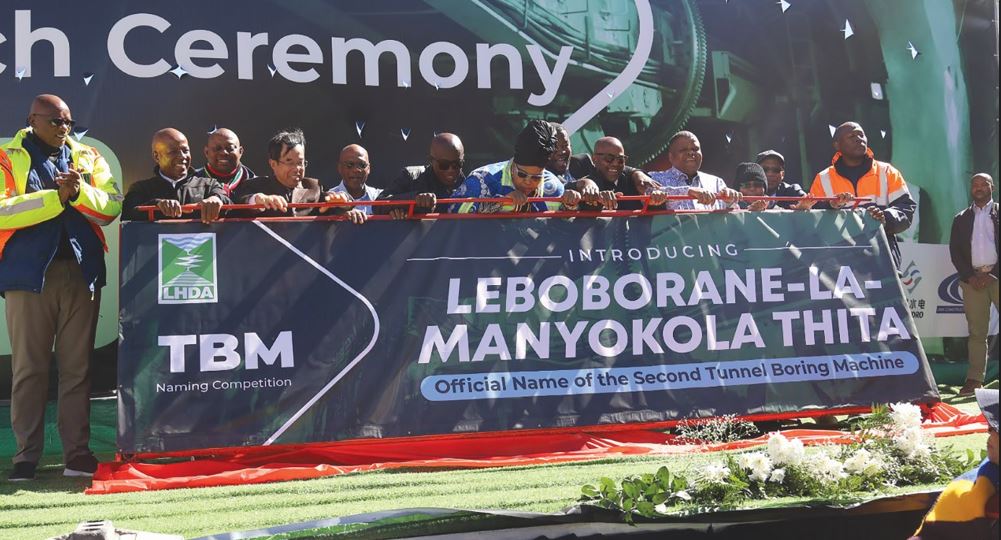
The Polihali TBM, named Leboborane la Manyokola-Thita, is the second machine working on the 38.5-kilometre tunnel linking Polihali Dam to Katse Dam.
Winners of the naming competition were announced as follows:
First prize: ‘Malira Chefa of St Paul’s High School (Botha-Bothe), receiving M12,500, with M37,500 awarded to the school for the name Leboborane la Manyokola-Thita.
Second prize: Fikile Mpopo of St Catherine’s High School, receiving M7,500, with M22,500 awarded to the school for Leboborane la Loti.
Third prize: Karabo Selebalo of Holy Family High School, receiving M5,000, with M15,000 awarded to the school for Makoanyane oa Lithaba.
Responding to the concerns, Minister of Natural Resources, Mohlomi Moleko, said the project remains a key economic driver, contributing to employment and infrastructure development.
He noted that Phase II has created more than 17,000 jobs, bringing total employment generated by the project over four decades to over 33,000.
“The project is a key economic driver and continues to create employment opportunities for Basotho,” Moleko said, adding that skills development remains a priority, with over 1,000 individuals already trained.
He emphasised that while infrastructure progress is important, improving livelihoods must remain central.
“We strongly urge LHDA to prioritise livelihood restoration and social development. We must not leave anyone behind,” he said.
South Africa’s Minister of Water and Sanitation, Pemmy Majodina, described the launch of the TBM as a major milestone in a project that will connect the Polihali and Katse dams through a 38.5-kilometre tunnel.
“This is transformative infrastructure,” she said, noting that the system will significantly increase water transfer capacity and support hydropower generation.
Acting Chairperson of the LHDA Board, Peete Molapo, said the milestone signals steady progress in Phase II of the project.
He recalled that the arrival of TBM components at the Caledonspoort border in July 2025 marked a critical step, followed by months of assembly by engineers, contractors, and workers.
“Their dedication, expertise, and resilience have made this achievement possible,” Molapo said.
He revealed that the TBM has advanced 793 metres into the mountain, describing the progress as a reflection of years of planning and technical effort.
“Each metre excavated represents progress toward connecting Polihali and Katse dams, strengthening water infrastructure, and delivering long-term benefits,” he said.
Molapo added that the project, valued at approximately M9.2 billion, has created employment for around 2,062 people, 80 percent of whom are Basotho. More than 1,100 individuals have participated in skills development programmes, with over 700 receiving certification.
He noted that community initiatives, including healthcare support, infrastructure upgrades, and environmental conservation, form part of the project’s broader impact.
“This progress reflects not only engineering success but also innovation, collaboration, and national development,” Molapo said. “The TBM is not just a machine, it is a symbol of growth and a bridge to future opportunities.”
He acknowledged the challenges of such a large-scale project but said steady progress continues.
“With every rotation of the cutterhead, we move closer to securing water resources, generating energy, and expanding development opportunities,” he said.
Molapo concluded by thanking all stakeholders for their continued support.
“Together, we are building a legacy that will benefit future generations,” he said.
The Lesotho Highlands Water Project, established through a 1986 treaty between Lesotho and South Africa, is designed to supply water to South Africa while generating hydroelectric power for Lesotho.
Summary
- Speaking during the launch and naming ceremony of the second Tunnel Boring Machine (TBM) at Polihali this week, Ramakalima said communities were promised improved livelihoods when Phase II preparations began in 2012, a commitment he believes has yet to be fully realised.
- Officials, community leaders, and students gathered at Polihali for the launch and naming of the second Tunnel Boring Machine, Leboborane la Manyokola-Thita, marking another milestone in the Lesotho Highlands Water Project Phase II as excavation of the 38.
- South Africa’s Minister of Water and Sanitation, Pemmy Majodina, described the launch of the TBM as a major milestone in a project that will connect the Polihali and Katse dams through a 38.

Senior journalist and communications professional with extensive experience in general news reporting, specializing in business and sports journalism. Skilled in public speaking, media relations, and strategic communication, with a proven ability to deliver accurate, engaging, and impactful stories.
A strong team player who thrives in collaborative environments and adapts effectively to diverse working conditions. Passionate about continuous learning, professional growth, and enhancing communication practices to meet evolving industry demands.