Ombudsman finds respiratory illnesses linked to Polihali Dam construction
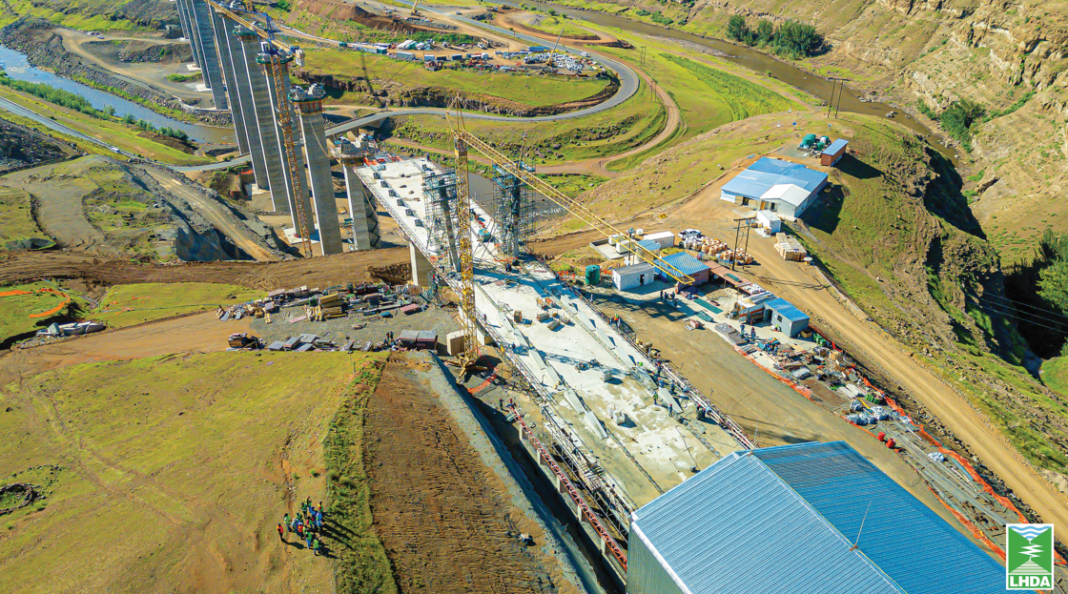
Senqu Bridge---The Lesotho Ombudsman has found that dust from blasting at the Polihali Dam construction site is contributing to respiratory illnesses among children and residents in nearby villages, prompting urgent calls for relocation, stronger dust control measures, and improved protection of affected communities in Mokhotlong district.
Ntsoaki Motaung is an award-winning health journalist from Lesotho, specializing in community health stories with a focus on sexual and reproductive health and rights, as well as HIV. She has contributed to platforms like "Be in the KNOW," highlighting issues such as the exclusion of people with disabilities from HIV prevention efforts in Lesotho.
In addition to her journalism, Ntsoaki serves as the Country Coordinator for the Regional Media Action Plan Support Network (REMAPSEN). She is also a 2023 CPHIA Journalism Fellow.
Dust from blasting at the Polihali Dam construction site has blown directly into a nearby village, causing respiratory illnesses among children and residents, the Lesotho Ombudsman has found in a new investigation into the Lesotho Highlands Water Project Phase II.
The report, released on Tuesday this week following site visits and testimony from affected communities in Mokhotlong district, documents a range of health and safety concerns linked to the multi-billion-rand project.
According to the investigation, Tsekong village faces a particularly severe situation.
The report states: “It has been established that most of the dust blew in their direction and has resulted in respiratory illnesses for some of the children and residents.”
Other villages near the construction site also reported health impacts, though to a lesser degree. While some residents indicated dust pollution “was not excessive and was manageable,” the investigation found that “noise during blasting was consistently described as unbearable.”
The investigation also examined water pollution.
The report notes that “pollution of water sources with dust and debris during construction was an anticipated impact.” Mitigation measures including silt traps and erosion control structures have been implemented.
The report states that “monitoring results to date indicate that although water in areas immediately proximal to disturbance may at times appear aesthetically unpleasing, overall quality remains within acceptable limits for relevant uses such as animal drinking.”
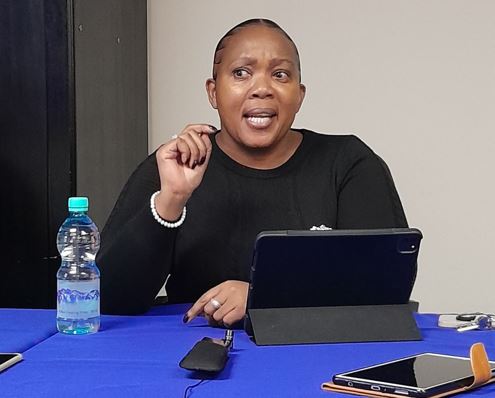
The Ombudsman Avd Tlotliso Polaki.
To prevent further health risks, the Ombudsman ordered the immediate relocation of three affected villages.
The report states: “The LHDA should relocate the three (3) villages within six (6) months following the issuance of this report to avoid unnecessary casualties given the current state of houses and proximity to construction activities.”
The report notes that Masakong, Ha Tlhakola and Tsekong were not initially scheduled for the first wave of relocation.
However, “due to complaints about disturbing dust and unbearable noise from construction works, a decision was reached that the community be relocated together with communities in the first batch.”
The Ombudsman also recommended that “professional-grade sound barriers” be installed along residential borders of the site, “particularly for villages like Masakong and Ha Tlhakola in close proximity to construction,” and that the LHDA “enforce construction hours and implement regulated periodic watering to minimise dust pollution.”
Beyond physical health, the report documents economic and social disruption affecting wellbeing. The Ombudsman ordered that “interim financial support should be provided to families whose livelihoods have been ‘suspended’ during this period so that living conditions are no lesser than prior to relocation processes.”
Summary
Dust from blasting at the Polihali Dam construction site has blown directly into a nearby village, causing respiratory illnesses among children and residents, the Lesotho Ombudsman has found in a new investigation into the Lesotho Highlands Water Project Phase II.
The report, released on Tuesday this week following site visits and testimony from affected communities in Mokhotlong district, documents a range of health and safety concerns linked to the multi-billion-rand project.
The Ombudsman also recommended that “professional-grade sound barriers” be installed along residential borders of the site, “particularly for villages like Masakong and Ha Tlhakola in close proximity to construction,” and that the LHDA “enforce construction hours and implement regulated periodic watering to minimise dust pollution.
Ntsoaki Motaung is an award-winning health journalist from Lesotho, specializing in community health stories with a focus on sexual and reproductive health and rights, as well as HIV. She has contributed to platforms like “Be in the KNOW,” highlighting issues such as the exclusion of people with disabilities from HIV prevention efforts in Lesotho.
In addition to her journalism, Ntsoaki serves as the Country Coordinator for the Regional Media Action Plan Support Network (REMAPSEN). She is also a 2023 CPHIA Journalism Fellow.
To ensure optimal experiences, we utilize technologies such as cookies to store and/or access information from your device. Granting consent to these technologies enables us to process data, including browsing habits or unique identifiers on this website. Conversely, not consenting or revoking consent may negatively impact specific features and functionalities.
Functional
Always active
The technical storage or access is strictly necessary for the legitimate purpose of enabling the use of a specific service explicitly requested by the subscriber or user, or for the sole purpose of carrying out the transmission of a communication over an electronic communications network.
Preferences
The technical storage or access is necessary for the legitimate purpose of storing preferences that are not requested by the subscriber or user.
Statistics
The technical storage or access that is used exclusively for statistical purposes.The technical storage or access that is used exclusively for anonymous statistical purposes. Without a subpoena, voluntary compliance on the part of your Internet Service Provider, or additional records from a third party, information stored or retrieved for this purpose alone cannot usually be used to identify you.
Marketing
The technical storage or access is required to create user profiles to send advertising, or to track the user on a website or across several websites for similar marketing purposes.