

Questions are mounting over the government’s commitment to maintaining Lesotho’s only railway line as prolonged delays in rehabilitating the track continue to push up food transport costs and deepen pressure on struggling households.
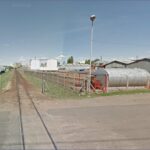
More than two years after authorities announced plans to repair part of the 2.5-kilometre railway stretch linking the Maseru Border Gate to Maseru Railway Station, there is still no visible construction activity on the ground.
The continued deterioration of the line has disrupted grain deliveries into the country, forcing major companies to shift from rail to more expensive road transport, costs that are increasingly filtering down to consumers through higher food prices.
The delays are especially affecting users like Lesotho Flour Mills (LFM), one of the country’s key suppliers of staple foods.
Since late 2023, rail operators have struggled to transport grain to the company due to the broken line.
In an exclusive interview, LFM’s Chief Executive Officer Fourie Du Plessis confirmed that the railway collapse has had direct financial consequences for the company.
“We are currently working together with the Ministry on the rail breakdown maintenance. It is true that this has significantly impacted our commodity prices,” he said.
Du Plessis said LFM initially worked closely with authorities on the rehabilitation plans, but responsibility for the project now lies with the Roads Directorate. However, he said the company has not received recent updates on progress.
According to him, a tender issued in September 2025 had still not been awarded by the time it closed in February 2026.
“Road transport is quite expensive compared to rail transport,” he said.
He warned that the prolonged delays are eroding the company’s profitability at a time when it cannot freely increase prices because of competition from South African imports.
“Imports of food products into the country are based on a free market principle… Increasing food prices will therefore not be an option,”. “We are experiencing pressure on gross margins due to the railway line not being repaired.” Du Plessis explained.
The situation has intensified concerns about whether government fully appreciates the strategic importance of the railway line to Lesotho’s food security. Lesotho imports most of its grain and other basic food commodities from South Africa, making efficient freight systems critical for keeping food prices stable.
Economists warn that when transport costs rise, the increases are eventually passed on to consumers through higher prices for bread, maize meal and other essentials.
The country is already grappling with a rising cost of living fuelled by soaring transport and fuel prices. Many Basotho households are struggling to cope with increasing expenses for food, electricity and public transport.
Against this background, the failure to urgently rehabilitate a railway that supports bulk grain imports is likely to place even more pressure on vulnerable consumers.
The Roads Directorate, which is responsible for railway infrastructure, has blamed procurement difficulties and limited technical capacity for the delays.
In a statement to Newsday, the Directorate said M10 million had been allocated for the rehabilitation project during the 2025/26 financial year.
It said a detailed railway assessment was carried out in April 2025 together with LFM and a South African engineering company called Flint.
According to the Directorate, the findings formed the basis for tender documents issued later. However, the procurement process reportedly failed after no contractor qualified for the work.
“The works were advertised and bids received. However, there was no successful bidder,” the Directorate said.
Authorities said the tender will now be re-advertised regionally because of limited local expertise.
Still, critics argue that government’s slow response reflects a broader lack of urgency around rail infrastructure despite its economic importance.
The railway line, although short, remains strategically significant because it is Lesotho’s only rail connection to South Africa and regional freight networks.
Established in 1905, the railway historically served as a key transport corridor for bulk imports into the country.
Although passenger train services stopped in 1989 following years of decline, freight operations have continued to support industries importing grain, cement and fuel.
The railway infrastructure also includes a government-owned grain depot and container handling facility leased to South African freight company Transnet.
Transport experts say neglecting rail infrastructure often leads to greater dependence on trucks, which increase road damage, transport costs and congestion.
The World Bank notes that efficient rail systems help countries lower logistics costs, strengthen trade competitiveness and improve economic resilience.
The institution also warns that overreliance on road freight increases infrastructure wear and raises transport expenses.
In Lesotho’s case, the deteriorating railway line has already forced more heavy freight trucks onto roads between the border and Maseru, further straining road infrastructure.
For ordinary Basotho consumers, however, the bigger concern remains the cost of food. With grain deliveries now relying heavily on expensive trucking, fears are growing that the continued railway delays could eventually push staple food prices even higher.
The prolonged inactivity has now left many questioning whether government is truly serious about protecting critical infrastructure that directly affects food security, business competitiveness and the cost of living.
Summary
- Questions are mounting over the government’s commitment to maintaining Lesotho’s only railway line as prolonged delays in rehabilitating the track continue to push up food transport costs and deepen pressure on struggling households.
- The continued deterioration of the line has disrupted grain deliveries into the country, forcing major companies to shift from rail to more expensive road transport, costs that are increasingly filtering down to consumers through higher food prices.
- He warned that the prolonged delays are eroding the company’s profitability at a time when it cannot freely increase prices because of competition from South African imports.

Senior journalist and communications professional with extensive experience in general news reporting, specializing in business and sports journalism. Skilled in public speaking, media relations, and strategic communication, with a proven ability to deliver accurate, engaging, and impactful stories.
A strong team player who thrives in collaborative environments and adapts effectively to diverse working conditions. Passionate about continuous learning, professional growth, and enhancing communication practices to meet evolving industry demands.