
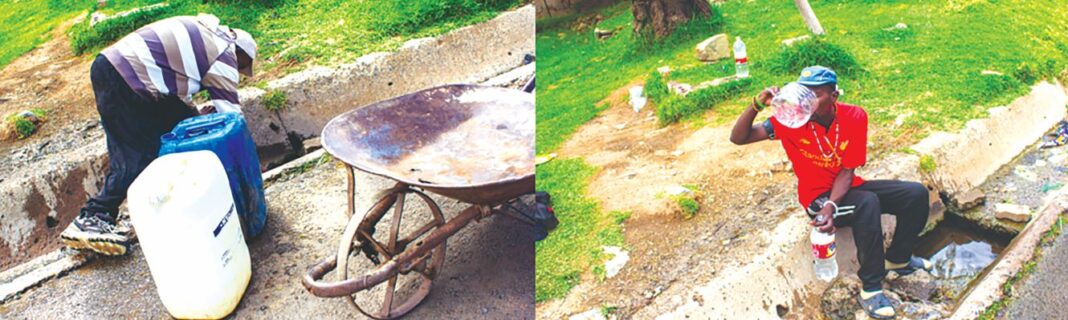
Democracy is usually judged by its elections. But between elections, it is judged by something less visible and far harder to sustain, whether the ordinary complaint of an ordinary citizen can travel from a dry tap in a rural district all the way to a cabinet minister’s decision, and come back as water. From late 2024 to early 2025, Mafeteng became an unplanned test of that circuitry. The results, while incomplete, are instructive.
The theory: three links in a chain
Strip away the technical detail of dams and dredging, and Mafeteng’s water crisis is really a case study in a simple democratic mechanism with three links. First, citizens experiencing a harm have to find a way to voice it, individually, through representatives, or through the courts. Second, that voice needs a carrier capable of putting it in front of people with power and keeping it there long enough to matter, usually the media. Third, and most decisive, the institutions on the receiving end have to actually respond – not with a statement, but with money, machinery and a timeline.
Any of the three can fail. Citizens can suffer in silence, or complain into a void. Media can ignore a rural story that has no obvious national audience. Government and utilities can absorb criticism indefinitely without changing course. Lesotho has plenty of history with each of those failure modes. What makes Mafeteng worth examining is that, this time, none of the three links broke.
Link one: citizens found their voice, formally
Mafeteng residents did not simply complain, they organised. Working with lawyer advocate Fusi Sehapi and the rights organisation Advocates for the Supremacy of the Constitution (SECTION 2), residents put their grievance on the record in writing, addressing a formal letter to the Minister of Health and the Minister of Natural Resources in December 2024, and copying the Prime Minister. They also engaged their Members of Parliament directly. When those did not produce an immediate remedy, they escalated further, petitioning the Constitutional Court on the argument that their right to water, read into the right to life under Section 5 of the Constitution, was being violated by the state’s own utility.
This is what a functioning civic channel looks like, grievance translated into legal and political language, using the institutions the Constitution provides, rather than resignation or unrest. It is worth noting that this required residents to have access to legal representation and an organised rights group willing to act, an advantage not every distressed community in Lesotho can count on.
Link two: the media stayed on the story
The second link is where Mafeteng’s case is most distinctive. Newsday’s coverage of the crisis was not a single dramatic exposé but a sustained run of reporting across months – court petitions, ministerial correspondence, WASCO’s own statements, and repeated visits to the people living the crisis day to day: a school principal describing his pupils as the first in town to lose supply, a hospital doctor detailing patients unable to get water for medication or bathing, WASCO’s caretaker chief executive acknowledging the scale of the hardship in his own words.
That sustained attention did two things a single story could not. It kept the human cost of a technical failure, siltation, storage percentages, megalitres per day, legible to a public that does not naturally engage with dam engineering. And it created a public record that made it difficult for any official response, or lack of one, to go unnoticed. When WASCO’s own chairman, Stephen Monyamane, stood at the podium this week, he explicitly credited that Newsday reporting with keeping the crisis “in the national conversation,” a rare instance of an accused institution naming its watchdog by name and thanking it, rather than treating scrutiny as hostility.
Link three: institutions moved, and said so publicly
The third link is the one democracies most often fail to close, because acknowledging a problem costs a government or utility nothing, while fixing it costs money, time and institutional humility. Mafeteng’s case shows partial success here, but success nonetheless.
The Disaster Management Authority (DMA) deployed water tankers to the hospital and schools. The Prime Minister travelled to Mafeteng in person rather than issuing a statement from Maseru, a choice WASCO’s chairman, Monyane, this week called a deliberate signal that “the people of Mafeteng would not be left behind.” WASCO issued tenders for dredging under the Public Procurement Act, moved on plans for eleven new boreholes, and, after a delay whose length is itself worth scrutinising, took delivery of the dredging equipment now assembling at Rasebala Dam. Government resources were committed to a M52-million project, and the Ministry of Natural Resources has tied the fix to the longer-term Lesotho Lowlands Water Development Project Phase II.
Just as significant as the actions is the language used to describe them. Monyamane did not simply announce a project, he offered something closer to an institutional confession, telling the audience that “the progressive siltation of the reservoir… was not countered by a systematic desiltation programme” and committing WASCO, on the record, to four specific and checkable undertakings, timely completion of the dredging, genuine community consultation, delivery of the boreholes and pipeline, and operational readiness for the Makhaleng River scheme when it arrives. A government institution publicly binding itself to measurable promises, in front of the community it failed, is not a common feature of Lesotho’s public life. It happened here because the first two links held long enough to make silence costlier than a response.
What this is not: a case for complacency
It would be a mistake to read Mafeteng as proof that the system works well. It is closer to proof that the system can work, under pressure, when every part of it functions near its best, and that this is still far too rare a combination.
The chain took the better part of two years to close, and only closed after storage capacity had already collapsed to 15 percent, children were carrying water to school, and a hospital was struggling to maintain basic hygiene. A desilting plan for Rasebala Dam had existed since 2019, costed then at roughly M29 million; by the time political and legal pressure forced action, the same job cost M52 million, and the human cost in between is not one that can be reversed by a machine. Democracy’s feedback loop, in this case, worked, but slowly, expensively, and only after avoidable damage had already been done.
There is also the question of durability. WASCO’s four commitments are promises, not outcomes. The High Court case brought by Mafeteng residents remains open, which means the community that forced this response has, sensibly, declined to treat a ceremony and a speech as a substitute for a completed remedy. And the deeper structural question Monyamane himself raised, why an ageing dam was allowed to silt down to 15 percent of capacity before “a timely and adequately resourced corrective response” arrived, has been answered so far with a promise of future vigilance, not yet with evidence of it.
Why the case still matters
None of that undercuts the value of the case study. Democracies are not judged by whether harm occurs, harm to citizens from ageing infrastructure, climate stress and institutional neglect is a near-universal feature of governance everywhere. They are judged by whether there exists a route from that harm, through voice and scrutiny, to a corrective response that is public, specific and can be measured against later. Mafeteng shows that route exists in Lesotho, that it can be walked by an under-resourced rural community with the help of civil society and a persistent local newsroom, and that it can produce a public commitment from an institution that would otherwise have had every incentive to manage the story quietly rather than fix the underlying problem.
The test now shifts from whether the system can respond to whether it can follow through, and whether the next community facing an ageing dam, a failing clinic, or a collapsing service has to wait for its own crisis to reach 15 percent before the same three links engage on its behalf.
Summary
- But between elections, it is judged by something less visible and far harder to sustain, whether the ordinary complaint of an ordinary citizen can travel from a dry tap in a rural district all the way to a cabinet minister’s decision, and come back as water.
- Working with lawyer advocate Fusi Sehapi and the rights organisation Advocates for the Supremacy of the Constitution (SECTION 2), residents put their grievance on the record in writing, addressing a formal letter to the Minister of Health and the Minister of Natural Resources in December 2024, and copying the Prime Minister.
- a school principal describing his pupils as the first in town to lose supply, a hospital doctor detailing patients unable to get water for medication or bathing, WASCO’s caretaker chief executive acknowledging the scale of the hardship in his own words.
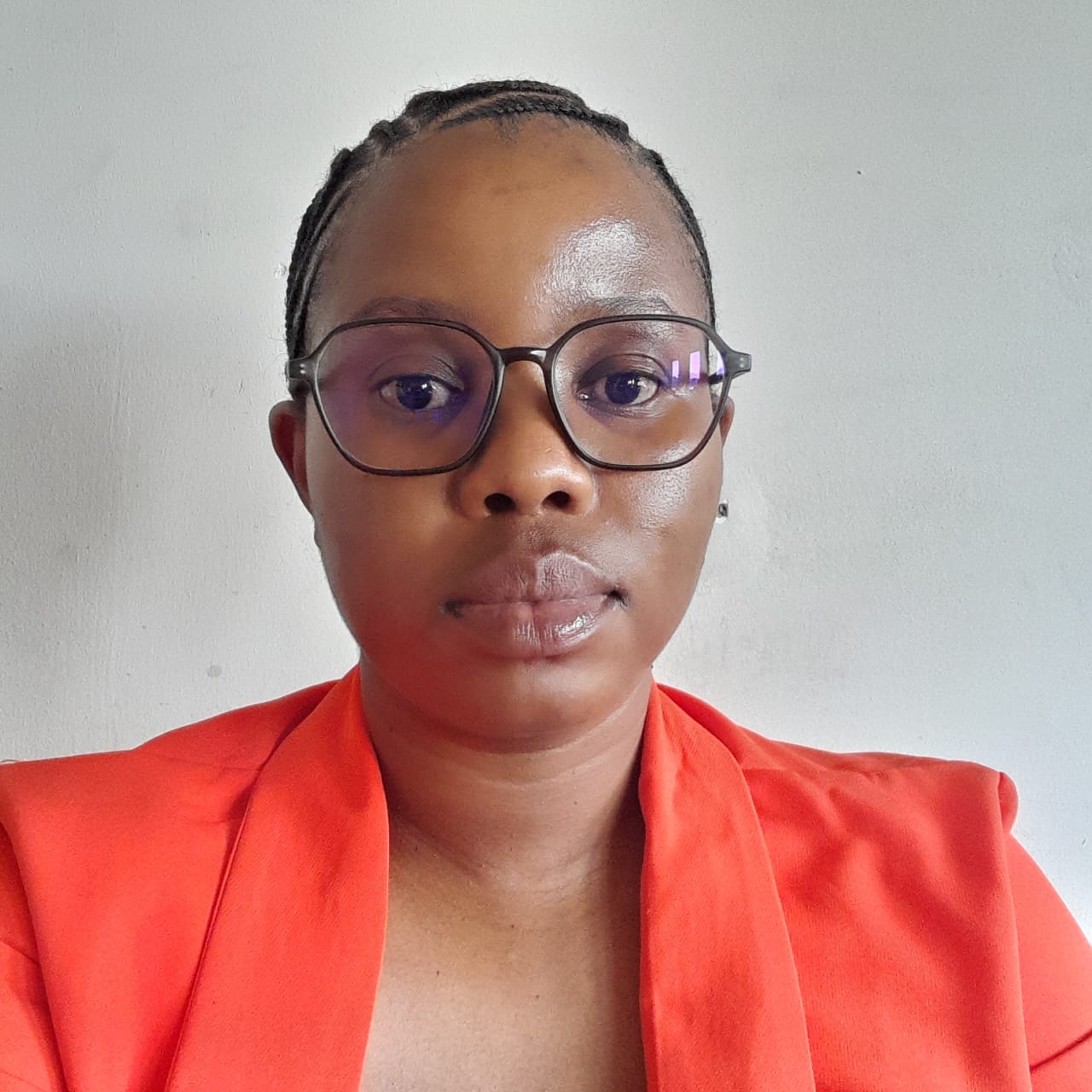
Ntsoaki Motaung is an award-winning health journalist from Lesotho, specializing in community health stories with a focus on sexual and reproductive health and rights, as well as HIV. She has contributed to platforms like “Be in the KNOW,” highlighting issues such as the exclusion of people with disabilities from HIV prevention efforts in Lesotho.
In addition to her journalism, Ntsoaki serves as the Country Coordinator for the Regional Media Action Plan Support Network (REMAPSEN). She is also a 2023 CPHIA Journalism Fellow.