
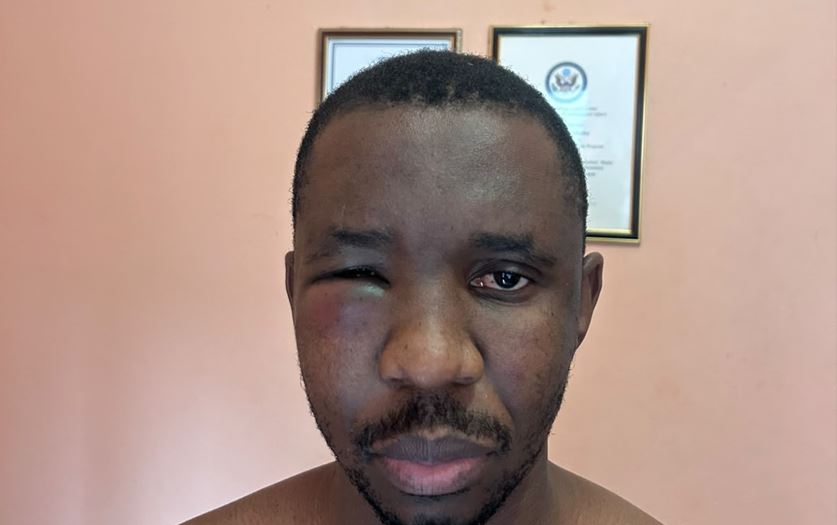
The local media industry has united to turn up the pressure on government over the unresolved abduction and assault of Newsday Media News Editor Kananelo Boloetse, demanding an independent commission of inquiry into an attack that has raised fresh fears about the safety of journalists and the state of press freedom in the country.
Nine media houses, Lesotho Tribune, MNN Centre for Investigative Journalism, MoAfrika FM, The Post, Lesotho Times, Newsday Media, Uncensored News Lesotho, Public Eye and Mapholi FM, have accused government and the police of failing to demonstrate that the attack will be investigated “independently, transparently and without fear or favour.”
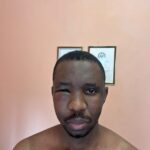
Boloetse was abducted on 5 September 2026 by three unidentified men who allegedly took him from his home in Katlehong, Maseru. He was interrogated about his journalism and human rights work, assaulted and later dumped in Thaba-Bosiu, about 20 to 25 kilometres east of Maseru.
Amnesty International has said Boloetse was also threatened with death. More than three weeks later, the suspects remain unidentified and no one has been held accountable.
The media houses say the handling of the case by government and the Lesotho Mounted Police Service (LMPS) has done little to restore confidence that the attack will be properly investigated.
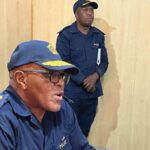
Instead, they say, statements by Chief of Police Advocate Borotho Matsoso and Home Affairs and Police Minister Voeswa Tsheka have raised further questions about the authorities’ approach to the case.
The media houses say the conduct and public statements of Matsoso and Tsheka paint a disturbing picture of a government that does not appear intent on thoroughly investigating the matter or bringing the alleged perpetrators to justice.
The government’s position is that the police should continue with the investigation. Prime Minister Samuel Matekane on Wednesday insisted that Boloetse, who remains in danger from his unknown attackers, should come out of hiding and report to the police.
Matekane made no reference to the proposed commission of inquiry and instead maintained that the LMPS should be entrusted to investigate the matter.
His position comes despite growing demands for an independent investigation and a parliamentary move to establish a commission of inquiry.
On 24 September, Matlakeng legislator and United Africans Transformation (UAT) leader Dr Mahali Phamotse filed a notice of motion in the National Assembly calling for a full commission of inquiry into the case.
Phamotse argues that the police are implicated in the ordeal and therefore cannot properly investigate the matter.
The media houses have now thrown their weight behind the call, demanding that the proposed inquiry go beyond the circumstances surrounding Boloetse’s abduction and examine the conduct of the police and the accountability of the Chief of Police.
They want an independent Commission of Inquiry into Boloetse’s abduction and assault, and other serious abuses directed at members of the media.
They also want the commission’s terms of reference, membership, proceedings and findings made public and its work conducted transparently and independently.
The demand places the government under increasing pressure to explain how an attack on a senior journalist allegedly linked to his professional work can remain unresolved weeks after the incident.
Chief of Police Matsoso told a press briefing on 10 September that investigators had made no breakthrough because they could not locate Boloetse to assist with the investigation.
He also accused Boloetse’s Newsday colleagues of concealing his whereabouts. Newsday, however, says police insisted on a physical meeting with Boloetse despite him offering alternatives.
The media houses indicated that police continue to harass Newsday management and make the investigation depend solely on the physical availability of Boloetse.
The dispute has effectively turned the police response itself into one of the central issues surrounding the case. The government has also sent mixed signals over the possibility of a commission.
When Tsheka addressed Parliament, she hinted that government could establish one but quickly raised the issue of the financial cost. She said she would approach the Ministry of Finance for a budget.
The media houses, however, want the government to move beyond assurances and take concrete steps to demonstrate that attacks on journalists will not be tolerated.
Their demands include proper investigation of all attacks, threats, arrests and acts of intimidation against journalists and accountability for those responsible.
They also want government to commit publicly and unequivocally that no journalist will be arrested, harassed, threatened or harmed because of legitimate journalistic work during the election period or at any other time.
The Boloetse case has also revived concerns over a series of unresolved or controversial incidents involving journalists in Lesotho.
On 29 August, 2025, Lesotho Times editor Mohalenyane Phakela was arrested by the Directorate on Corruption and Economic Offences (DCEO) after publishing a report alleging corruption involving the Commissioner of the Lesotho Correctional Service.
The DCEO later dropped the case, conceding that there was insufficient evidence. The media houses say the incident remains an accountability issue.
“A journalist was arrested for doing his job, and no one has answered for it,” the statement said.
In 2024, Lesotho Tribune publisher Phafane Nkotsi received threatening notes warning him against pursuing his journalism. Three notes were found on the newsroom desk, including warnings linked to his reporting on public funds.
The media fraternity also continues to point to the 2016 shooting of Lesotho Times editor Lloyd Mutungamiri. Mutungamiri was seriously injured after being shot at his Ha Thamae residence in Maseru while returning from work.
The case remains unresolved, while four members of the Lesotho Defence Force suspected in the shooting were released on bail.
The nine media houses said the incidents form a troubling backdrop to the Boloetse case.
“Taken together, these incidents raise serious questions about the safety of journalists and the environment in which independent journalism is practised in Lesotho.”
They argue that the consequences of attacks on journalists extend far beyond the individuals involved because such attacks threaten the public’s access to information and ability to scrutinise those in power.
“When journalists are attacked for doing their jobs, the damage extends beyond the newsroom. It undermines the public’s right to receive information, scrutinise those in power and hold public institutions accountable.”
The unity among the media houses is itself significant. The organisations are competitors with different editorial positions, business interests and priorities, but the Boloetse case has brought them together around the question of journalist safety.
“We do not always agree. But on this issue we speak with one voice: journalists and newsrooms must be safe and free to report without fear, and those who attack or intimidate them must be held accountable.”
They have also warned that the timing of the case cannot be ignored as Lesotho enters a sensitive period in its electoral cycle.
“Experience has shown that journalists and media houses are the first casualties when political tensions rise,” they warned.
The media houses say what is allowed to pass without challenge now could influence how journalists are treated in the months ahead. Their concerns come at a time when Lesotho has sought to project an image of democratic consolidation and institutional reform.
The media houses acknowledge the country’s reforms, including the Tenth Amendment to the Constitution and its subsequent removal from the SADC Organ Troika agenda, which were presented as milestones for peace, stability, human rights, the rule of law and democratic consolidation.
But they say the alleged abduction and assault of a journalist because of his work sits uneasily alongside those achievements.
Section 149P of the Constitution, introduced through the Tenth Amendment, recognises the media as an integral part of Lesotho’s development and democratisation.
“We call on the State to give practical effect to that commitment.”
The media houses’ demands have also received backing from rights organisations.
MISA Lesotho has called for an immediate and transparent police investigation and for all perpetrators to be held accountable. It has also demanded that government publicly disavow the violence and provide concrete safety guarantees to Boloetse, his family and the Newsday team.
Amnesty International has called on authorities to guarantee Boloetse’s safety and conduct a prompt, thorough, independent and impartial investigation.
The International Press Institute has also condemned the attack and called for a swift and thorough investigation. Information Minister Nthati Moorosi visited the Newsday offices on 7 September and assured the newsroom of government support.
The media houses said support must now be measured by action. At the heart of the dispute is a simple but consequential question: who should investigate an attack when the conduct of the police themselves has become part of the controversy?
Government insists the LMPS should handle the matter. But the media houses and supporters of the parliamentary motion want an independent commission capable of examining both the attack and the state’s response to it.
The Public Inquiries Act No. 1 of 1994 provides for the establishment, powers and procedures of commissions of inquiry. It empowers government, through the prime minister or relevant authorities, to establish formal commissions to investigate matters of public concern or specific events.
To the press, the issue has now moved beyond the fate of one journalist. It is about whether journalists can investigate corruption, scrutinise public institutions, expose wrongdoing and report on matters of public interest without becoming targets themselves.
“The freedom of the press is not a privilege granted by those in power. It is a fundamental public interest and an essential safeguard of democracy. An attack on one journalist is a warning to every journalist. An attack on one newsroom is an attack on the public’s right to know,” the media houses said.
Summary
- The local media industry has united to turn up the pressure on government over the unresolved abduction and assault of Newsday Media News Editor Kananelo Boloetse, demanding an independent commission of inquiry into an attack that has raised fresh fears about the safety of journalists and the state of press freedom in the country.
- The media houses say the conduct and public statements of Matsoso and Tsheka paint a disturbing picture of a government that does not appear intent on thoroughly investigating the matter or bringing the alleged perpetrators to justice.
- The media houses have now thrown their weight behind the call, demanding that the proposed inquiry go beyond the circumstances surrounding Boloetse’s abduction and examine the conduct of the police and the accountability of the Chief of Police.
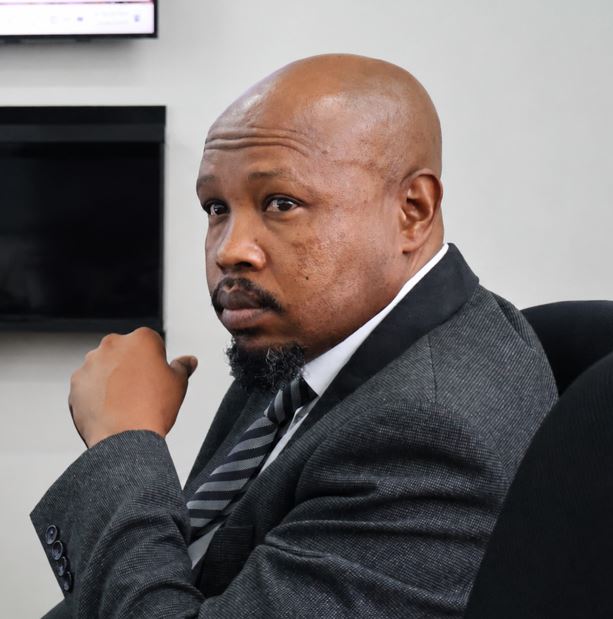
I am a journalist based in Maseru, Lesotho, renowned for investigative reporting. Over the years, my work has been published both locally and internationally, including in South Africa through the Amabhungane Centre for Investigative Journalism and the Daily Maverick, among other publications.
In Lesotho, I have served as a senior reporter for several leading weekly newspapers, including the Lesotho Times, Public Eye, and Sunday Express. My reporting has focused on uncovering issues of public interest, promoting accountability, and giving voice to underreported stories.
In 2016, I co-founded the MNN Centre for Investigative Journalism in Maseru, an initiative dedicated to strengthening investigative journalism and fostering a culture of transparency and public-interest reporting in Lesotho.