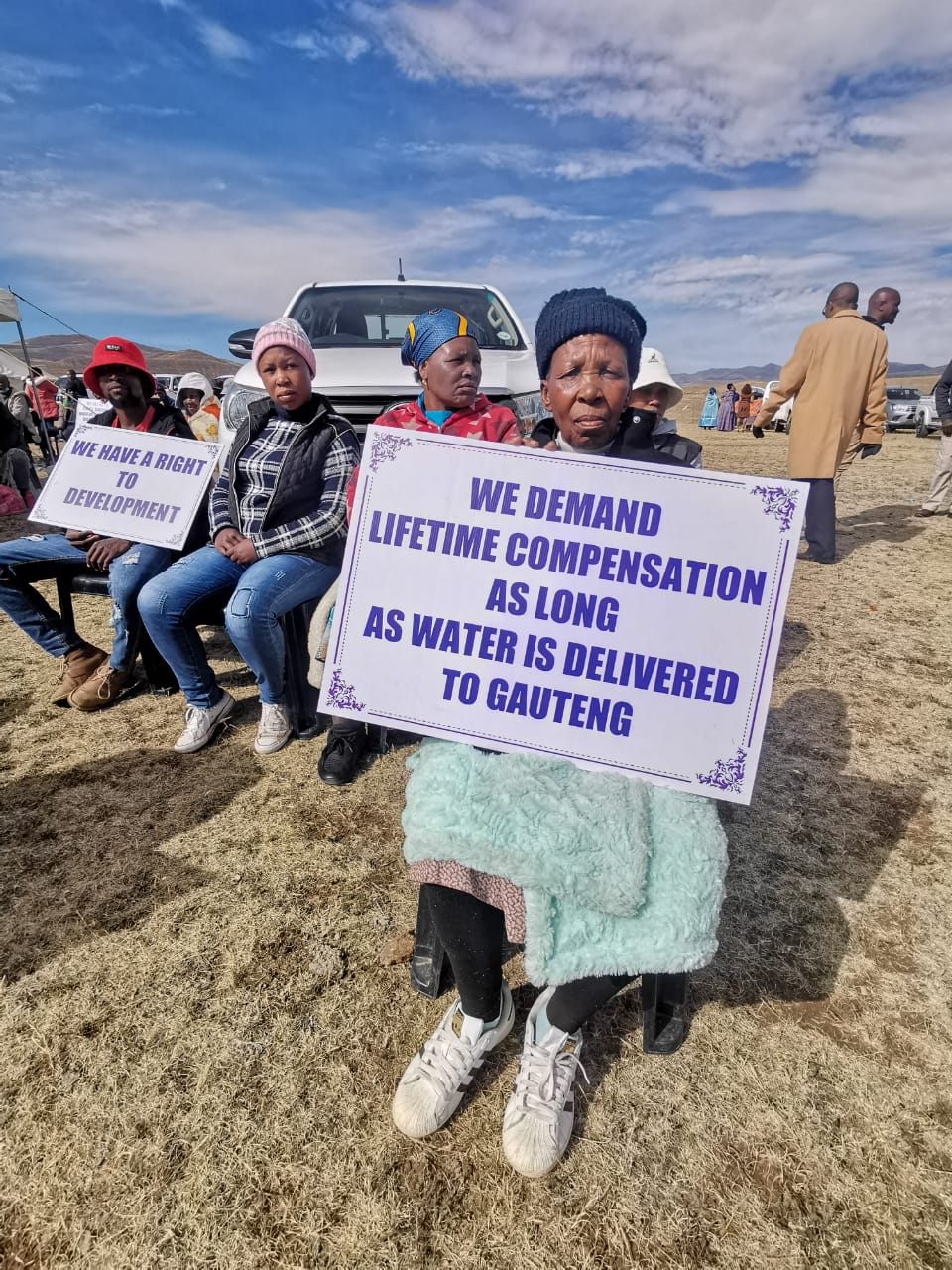


The High Court is on 17 November expected to the case in which Seinoli Legal Center(Seinoli) sues the Lesotho Highlands Development Authority(LHDA) over the latter’s refusal to provide information requested by Seinoli concerning communities and households affected by the Lesotho Highlands Water Project (LHWP).
The requested information relates principally to socioeconomic conditions, standards of living, properties and assets, compensation, and the social, health, cultural and environmental impacts of the LHWP.
On 17 November, the court is expected to determine whether Seinoli has the right to access the information in the public interest, or whether the grounds relied upon by the LHDA for refusing access are legally valid, or whether the refusal should be reviewed and set aside.
Seinoli relies principally on Section 14of the Constitution of Lesotho (1993), which protects freedom of expression, “including the freedom to receive ideas and information without interference”.
The Center also base their argument in the application on applicable principles of administrative law, international and regional of human rights law, and the LHDA’s own statutory and policy obligations concerning transparency, stakeholder engagement, environmental and social impact assessment and access to relevant information.
Seinoli’s position is that any limitation on access to information must have a lawful basis and must be justifiable in a
democratic society.
The LHDA, on the other hand, opposes the application and maintains that it was entitled to rrefuse the Seinoli’s request.
According to Seinoli’s heads, the initial refusal communicated on 22 June 2023 was based on the LHDA’s position that it periodically conducts socioeconomic studies of affected communities and households, and that the collected and synthesised information becomes the intellectual property of the Authority.
In its subsequent reasons and Answering Affidavit, the LHDA relied additionally on confidentiality, protection of third party privacy, protection of household safety, and the Applicant’s alleged lack of authority or consent to represent or obtain personal information concerning the affected communities. The LHDA also relied on the Data Protection Act of 2011, particularly in resisting the disclosure or processing of what the Authority characterised as private personal information, and alleged that Seinoli had not obtained the necessary consent or authorisation from the affected persons.
Seinoli disputes LHDA’s grounds and argues that the information sought is firmly in the public interest, given the impact of the Project on affected communities and Seinoli’s role in receiving and addressing complaints from the communities.
Seinoli also argues that the LHDA’s reliance on confidentiality, privacy and the Data Protection Act cannot justify a blanket refusal, “particularly because personal information can be anonymised or redacted where necessary.”
Seinoli further contends that the LHDA, as a public body responsible for implementing the LHWP, has obligations to provide relevant information and engage affected stakeholders.
The Center also argues that the refusal failed to take into account the public interest and the LHDA’s own obligations under its Environmental Policy “and other applicable legal frameworks”.
Seinoli, therefore, submits that the LHDA’s refusal constitutes an unlawful and irrational exercise of public power, and that the reasons advanced by the Authority do not provide a valid legal basis for withholding the requested information.
It seeks an order reviewing and setting aside the refusal, “together with consequential relief requiring the LHDA to provide the requested information”.
The matter has been set down for hearing on 17 November, 2026.
Summary
- On 17 November, the court is expected to determine whether Seinoli has the right to access the information in the public interest, or whether the grounds relied upon by the LHDA for refusing access are legally valid, or whether the refusal should be reviewed and set aside.
- According to Seinoli’s heads, the initial refusal communicated on 22 June 2023 was based on the LHDA’s position that it periodically conducts socioeconomic studies of affected communities and households, and that the collected and synthesised information becomes the intellectual property of the Authority.
- The LHDA also relied on the Data Protection Act of 2011, particularly in resisting the disclosure or processing of what the Authority characterised as private personal information, and alleged that Seinoli had not obtained the necessary consent or authorisation from the affected persons.

I am a journalist based in Maseru, Lesotho, renowned for investigative reporting. Over the years, my work has been published both locally and internationally, including in South Africa through the Amabhungane Centre for Investigative Journalism and the Daily Maverick, among other publications.
In Lesotho, I have served as a senior reporter for several leading weekly newspapers, including the Lesotho Times, Public Eye, and Sunday Express. My reporting has focused on uncovering issues of public interest, promoting accountability, and giving voice to underreported stories.
In 2016, I co-founded the MNN Centre for Investigative Journalism in Maseru, an initiative dedicated to strengthening investigative journalism and fostering a culture of transparency and public-interest reporting in Lesotho.