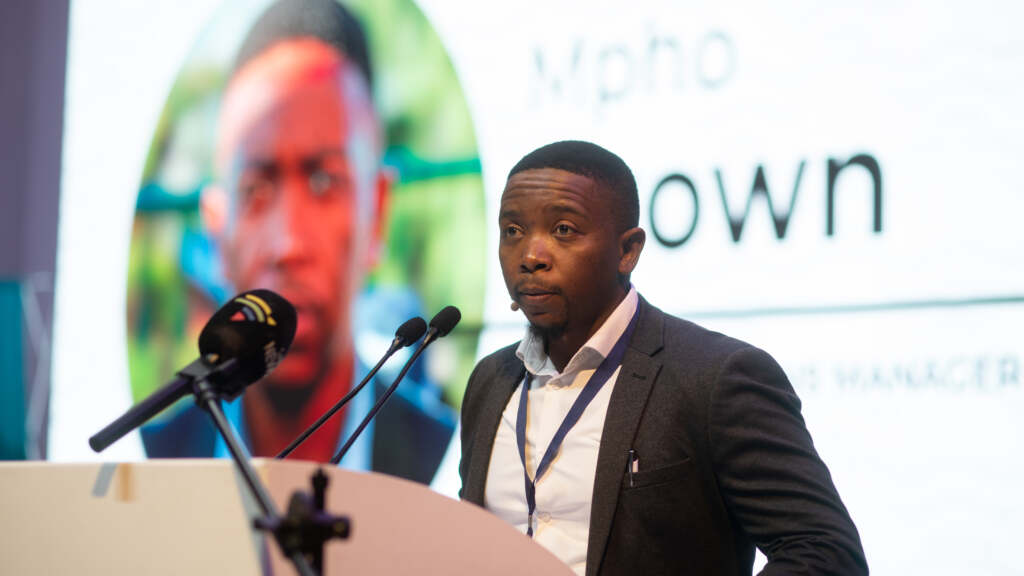


Thoboloko Ntšonyane and Seabata Mahao
Communities affected by the Lesotho Highlands Water Project (LHWP) have used the Lesotho Highlands Development Authority (LHDA)’s annual stakeholder conference to call for changes to compensation arrangements, stronger environmental protection, greater transparency in procurement and better support for the people who live alongside the project’s dams, roads and reservoirs.
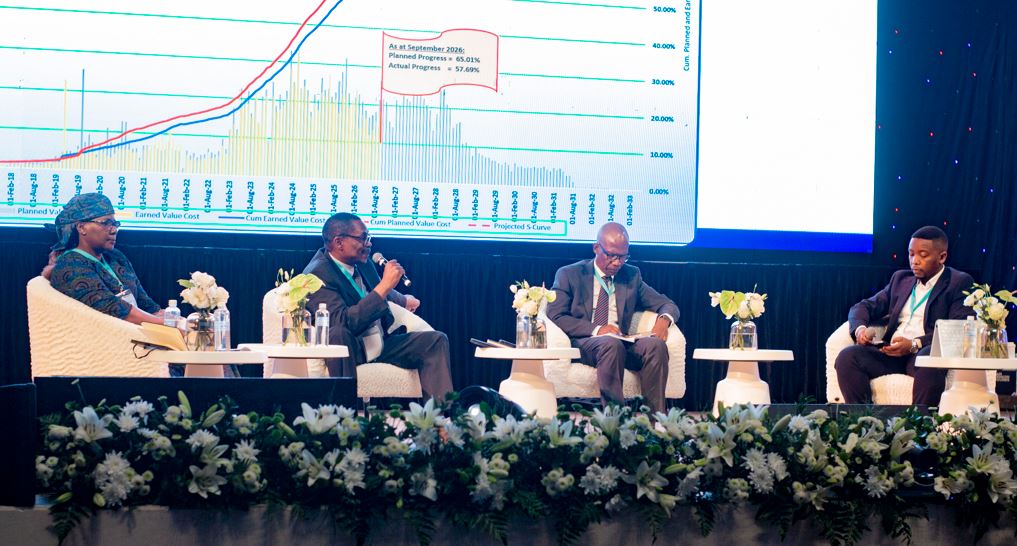
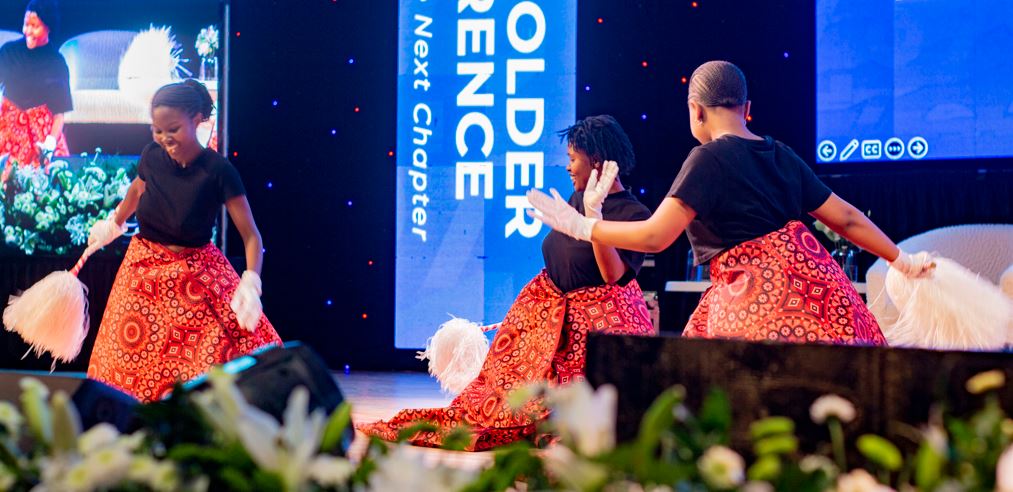
The LHDA at 40 Stakeholder Conference is being held at the ‘Manthabiseng Convention Centre in Maseru from 21 to 23 October under the theme “Co-creating the Next Chapter”. Over the three days, residents, business owners and civil society representatives put their grievances directly to LHDA officials and board members. The officials in turn explained why some arrangements are the way they are and what the authority says it is doing about outstanding claims.
Forty years, and unfinished business
The conference comes as the LHDA marks four decades of implementing the binational project, which sells water to South Africa and generates hydropower for Lesotho. Phase II is designed to raise the water supplied from 780 million cubic metres a year to more than 1.27 billion.
The project is reported to be 56.7% complete, with R24 billion of the R53 billion allocated spent and the 38 km transfer tunnel 58% complete. The Polihali dam itself passed the 50% mark in July and is on track for impoundment in the 2027/28 rainy season.
That progress sits alongside a growing record of unresolved complaints. A report by the Ombudsman, Adv Polaki, found that by 31 December 2025 compensation arrears under Phase I exceeded M142 million, while Phase II arrears stood at about M6.7 million.
The report followed a call from His Majesty King Letsie III for the LHDA to compensate affected communities effectively, noting that some people affected during the first phase more than 30 years ago were still waiting. It is against this backdrop that stakeholders took the floor.
Compensation: duration, form and fairness
The most persistent grievance was compensation. Boeang Khatleli, a resident of Mokhotlong near Polihali Dam, called for legal reforms, saying that the authority’s response to complaints was always the same.
“Every time we mention compensation, the Project (LHDA) refers us to the law,” he said.
Khatleli objected to compensation being paid for 50 years, arguing that future generations should also be compensated, and asked for the arrangement to be reviewed. The 50-year period comes from the LHDA’s 2017 Compensation Policy, amended in 2022, which provides for annual cash payments, while residents have argued for a lifetime or 99-year entitlement.
Lenka Thamae of Survivors of Lesotho Dams (SOLD) made the same case, proposing compensation for 99 years or for the lifetime of those affected. He added that people relocated to Thetsane should be treated like everyone else, and that affected communities should receive funds relating to natural resources.
Tšepo Mosala, from Khokhoba in Katse, raised a different problem on the form the compensation takes. He said grazing land in the area had been substantially affected, and that compensation had been paid in money, but “animals don’t eat money”. Livestock, he said, now had a smaller area of mountain pasture available to them.
A further concern was the lump-sum payment. A speaker identified only as Tumelo said some people become overwhelmed when they receive compensation in one payment, and that prospective recipients should be better prepared to use the funding sustainably.
The LHDA says it already does this. Before compensation is disbursed, it holds discussions with recipients and prepares them, and invites experts to advise on how to sustain their livelihoods.
LHDA board member Dr Taelo Letšela offered the authority’s explanation of the rates. He said they are adjusted annually using consumer index tools to keep pace with inflation, and that there had been calls for them to be revised upwards. The board, he added, was examining the assumptions and underlying factors that shape public perceptions of the compensation policy. He also said that, because of the late timing, the number of affected communities was now limited.
The reasoning behind the 50-year period has been put forward before. The LHDA has previously said it would compensate for 50 years at market rates in line with statutory requirements. It has also argued that lump-sum community payments to individuals proved unaccountable under Phase I, and that it now holds communal compensation in trust for projects such as clinics and schools.
Claims that are still open
On the second day, the LHDA’s Divisional Manager for Social Development and Environment (SDE), Ntaoleng Mochaba, acknowledged that outstanding claims from Phases I and II remain. She said the authority is working with District Administrators, Principal Chiefs, Area Chiefs and, where necessary, the Master of the High Court to resolve disputes so that affected individuals and communities are paid.
“There are different groups within the communities that might have property that were affected and did not get their rights in compensation,” Mochaba said, acknowledging that the process had not always been completed within the required timeframes.
She explained that the authority is guided by national laws, compensation policies, international standards and agreements governing the rights of communities affected by major development projects. It also relies on the guidelines of its funders, whom she identified as the NTB and the AFTB.
Mochaba pointed to two causes of delay: disputes over family leases, and missing documents, including national identity documents, which have complicated the processing of some claims. She said the Authority had received 410 compensation claims referred by the Ombudsman, of which 359 had been resolved, leaving 51 outstanding. It had also received approximately 779 individual complaints, 329 of which had been addressed. The two sets of figures reflect different categories of claims.
Two groups, she said, are still waiting for payment. They are people whose property was damaged during road construction in the Makokobane area between 2002 and 2005, and communities in Masalang affected during the pre-construction phase. She assured them the Authority was already working on the matters and that compensation would be provided in due course.
Pastures, penalties and the environment
Environmental protection was the second major theme. Khatleli warned that the project would fail if the environment was not protected. He said a problem persisted in Motšeremeli, Mokhotlong, where the area remained closed, which he attributed to the laws. Protection efforts, he argued, must take residents into account. Even when communities are relocated, he said, their animals can die of starvation if the environment is not properly cared for.
The penalties for straying livestock also drew criticism, but from opposite directions. Khatleli said the M4.00 penalty for grazing in marked areas was too low to deter trespassing and should be revised. Mosala said the M500 penalty owners pay when animals stray onto protected land and graze there was high and unaffordable for many people, and also called for a review.
Letšela said the project had taken away pasture and that the aim was to restore it to its original state so animals could graze, adding that environmental restoration had multiple objectives. He acknowledged, however, that preventing environmental deterioration was not simple. Reducing animal numbers so they do not overwhelm the environment might seem an appealing solution, he said, but it could lead some people to increase their herds once they realised others were reducing theirs.
Who gets the contracts?
Business owners and economic development specialists raised concerns about inclusion. Mafoka Mofihli of Botho University identified three challenges, the first being the lack of inclusive procurement. He said there was little transparency in LHDA procurement affecting residents of Mokhotlong, and that some businesses struggled to have their services considered. He alleged there appeared to be “favouritism”, with some businesses repeatedly being selected.
Mofihli also turned some of the criticism back on communities, saying communities around the project were not working together to raise their concerns, which made it harder to persuade the authority to respond. He encouraged them to approach the LHDA as a team and present the goods and services they offer. He called on the LHDA to produce a report showing what it had procured locally, what had been purchased and why particular suppliers were chosen.
Lebusa Leteke raised related concerns about differences in income from work opportunities, and said businesses lacked information about how contracts could affect them or how to position themselves to benefit. He called for roadshows to communicate opportunities, a database of job skills overseen by the LHDA, and close LHDA oversight of the MSKC so local businesses benefit. He also urged the authority to follow up with beneficiaries of project-sponsored training, including by helping them partner with institutions that could assist in marketing their products.
Conference reports do not record a direct LHDA reply to the favouritism allegation. For context, the project has reportedly spent a further R218.2 million with Lesotho-based suppliers and subcontractors. By the end of April 2026, the Polihali dam construction programme had employed 2,709 people. Those figures do not address the question of how contracts are awarded, which is what the speakers asked about.
LHDA Chief Executive Tente Tente said the conference exists so that stakeholders can raise such issues. When the authority revived it in 2024, he said, the intention was clear.
“When we revived this conference in 2024, our intention was clear, to create a platform where we could listen to stakeholders, shape our development programmes together and, most importantly, give stakeholders an opportunity to hold us accountable,” Tente said.
Legacy projects and the parks left behind
Several speakers said earlier investments had not endured. Mofihli raised concerns about legacy projects that had become “white elephants”, citing roads that had become inaccessible and were hampering tourism opportunities. He said the LHDA should have a programme setting out how it will help communities around its projects, including training in skills such as operating boats, and proposed that royalties of at least 1 per cent be used to build and maintain legacy projects.
Velaphe Seqhibi, who lives in Katse and is also affected by the project, said the ‘Muela parks, including Liphofung and Tšehlanyane, appeared to have lost value. He attributed this to their handover to government and to the responsible entities not taking care of them, which he said had compromised tourism and cost the country revenue. He asked the LHDA to ensure the parks were properly used and managed, and to develop business plans if problems persisted. Participants went further, calling on the LHDA to reclaim the parks it had handed to government.
Seqhibi also said trading at Polihali was difficult. The LHDA runs an innovation hub where it trains people to produce pigs and grow moroho, he said, but heavy competition has pushed some producers to sell at reduced prices.
The LHDA says it partners with communities in project areas to improve livelihoods, sharing profits on a 70:30 basis, with 70 per cent going to the community and 30 per cent to the authority. The initiative has enabled farmers to cultivate on a larger scale.
Water for communities beyond the pipes
Water access was the other grievance to surface, and the LHDA has responded with plans. Thamae pointed out that some villages continue to experience shortages of drinking water, and said he hoped collaboration between the authority and communities would help address this.
Reentseng Molapo, the LHDA’s Divisional Manager for Development and Operations, said communities around Katse, ’Muela and Mohale already benefit from clean water sourced from LHDA reservoirs, and that the authority was conducting a study into how communities farther from the existing facilities could also benefit. Mochaba added that approximately 20 villages in the Mohale area and 17 villages in ’Muela are expected to benefit from integrated water system maintenance.
Why change is slow, according to the authority
Asked about the delay in reviewing the treaty, Letšela said it was “not technically accurate” to say that the LHDA had not reviewed its treaty. The treaty between Lesotho and South Africa, he said, provides for a review every 12 years. The review should have taken place around 2022 or 2023, he said, but did not happen because elections were held in the country. He added that the Phase II treaty had also addressed some of the issues raised. He described the board as one of the measures intended to ensure implementation, and noted that the structure had previously consisted of senior public servants.
LHDA Board Chairperson Peete Molapo asked stakeholders to view the project as a whole, not only through the experience of affected communities, because it is a national and binational project. The nation should not shy away from identifying challenges, he said, but because the project is binational, some things do not move as quickly as stakeholders wish.
“It is a must to cooperate,” he stressed.
Molapo called on everyone to take care of the project and urged stakeholders to connect with one another in line with their roles and relationship to it.
Mochaba said the project had brought roads, infrastructure and electricity and improved the lives of affected communities, but acknowledged that challenges remain. She called on all stakeholders to follow up on the recommendations they had agreed to, and stressed that the LHDA was responsible for ensuring affected communities were not worse off.
“We need to share the success of the project for Lesotho and Basotho. It is important that the recommendations from this engagement find expression,” she said.
From dialogue to delivery
In his keynote address, Minister of Natural Resources Mohlomi Moleko said the anniversary was a chance to reflect on the Authority’s achievements over four decades while identifying areas that need improvement. He described the LHDA as having grown from an ambitious vision into one of Africa’s significant water and infrastructure development institutions, and credited the governments of Lesotho and South Africa, communities, development partners, contractors, consultants, civil society and the private sector.
“The purpose of this conference is therefore not only to celebrate what has been accomplished but also to create a platform for honest reflection and forward-looking discussions,” he said.
He stressed that the participation of affected communities was essential if development projects were to respond to their needs.
“Sustainable development can only be achieved when those affected by development are active participants in shaping its outcomes,” Moleko said.
The conference ended with a pledge. The stakeholders signed a commitment to “honest dialogue, shared responsibility, practical collaboration and transparent monitoring”.
Whether the pledge becomes practice will be measured by the same yardsticks the speakers raised. These include whether the 51 outstanding Ombudsman-referred claims are settled, whether the 50-year compensation period is reviewed, whether villages beyond the reservoirs get clean water, and whether local businesses and herders see the benefits of a project they have lived beside for forty years.
Summary
- Communities affected by the Lesotho Highlands Water Project (LHWP) have used the Lesotho Highlands Development Authority (LHDA)’s annual stakeholder conference to call for changes to compensation arrangements, stronger environmental protection, greater transparency in procurement and better support for the people who live alongside the project’s dams, roads and reservoirs.
- The LHDA at 40 Stakeholder Conference is being held at the ‘Manthabiseng Convention Centre in Maseru from 21 to 23 October under the theme “Co-creating the Next Chapter”.

Welcome to Newsday Media – Your Trusted Source for News and Insights in Lesotho!
At Newsday Media, we are passionate about delivering accurate, timely, and engaging news and multimedia content to our diverse audience. Founded with the vision of revolutionizing the media landscape in Lesotho, we have grown into a leading hybrid media company that blends traditional journalism with innovative digital platforms.
Our mission is simple: to inform, inspire, and empower our readers by providing comprehensive coverage of local and global events, current affairs, and cultural happenings. Whether you’re looking for breaking news, in-depth analysis, or captivating storytelling, Newsday Media is your go-to destination for all things news-related.
With a dedicated team of journalists, editors, and multimedia experts, we are committed to upholding the highest standards of journalistic integrity and professionalism. We pride ourselves on delivering content that not only informs but also sparks conversation, fosters understanding, and drives positive change in our society.
From our flagship newspaper to our dynamic digital platforms, we offer a wide range of multimedia content to cater to the diverse interests and preferences of our audience. Whether you prefer to stay informed through print, online articles, videos, or podcasts, Newsday Media has something for everyone.
We believe in the power of storytelling to connect people, bridge divides, and inspire action. That’s why we’re dedicated to providing a platform for voices from all walks of life, championing diversity, inclusion, and authenticity in everything we do.
Thank you for visiting Newsday Media. We invite you to explore our website, engage with our content, and join us on our journey to inform, inspire, and empower our community. Together, let’s shape the future of media in Lesotho.