
Lesotho has called for stronger and more resilient Development Finance Institutions (DFIs) to mobilise investment, support industrialisation and accelerate economic transformation across Africa, as development finance leaders gather in Maseru for the 2026 CEO Forum of African Development Finance Institutions (AADFI).
The three-day forum, held under the theme “Resilient DFIs for Stronger African Economies”, brings together chief executive officers from across the continent. They are discussing how to strengthen institutional resilience, mobilise capital, improve governance and enhance the role of development finance in economic growth.
For Lesotho, the gathering is a chance to attract investment and forge partnerships that could help address unemployment, limited industrial capacity, infrastructure gaps and constrained public resources.
The country is working towards a productive, diversified and inclusive economy in line with the National Strategic Development Plan II (NSDP II), which prioritises inclusive growth, job creation, poverty reduction and better living standards.
Speaking at the forum, the Minister of Trade, Industry and Business Development, Motlatsi Maqelepo, said African countries were at a critical point in their development and needed stronger collaboration to expand productive capacity, create jobs and improve livelihoods.
He noted that government resources alone could not address these challenges, and that commercial financial institutions could not be expected to take on investment risks without adequate compensation.
Maqelepo called for a development finance architecture that brings together governments, DFIs, commercial banks, institutional investors, development partners and the private sector. Such collaboration, he stressed, was essential to unlocking investment opportunities and ensuring that financing delivered tangible economic benefits.
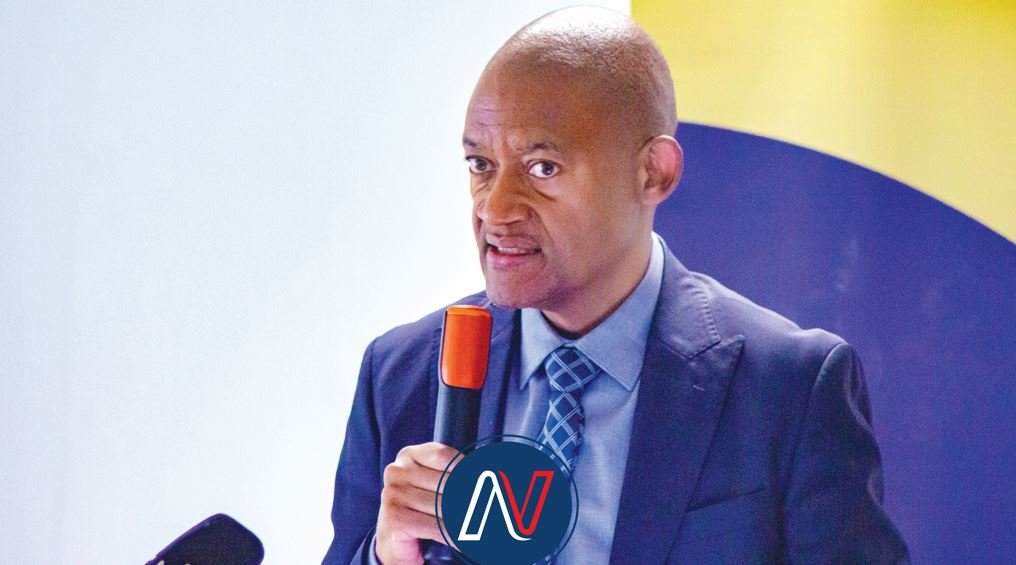
Lesotho National Development Corporation (LNDC) Chief Executive Officer, Thabo Khasipe, said the forum came at an opportune time for African DFIs to reflect on their resilience amid an increasingly unpredictable global economy.
He described the environment as VUCA, an acronym for volatility, uncertainty, complexity and ambiguity, marked by geopolitical tensions, erratic global economic conditions, climate change and rapid technological change.
These pressures bear directly on African economies, Khasipe observed. Many remain exposed to external shocks because they depend on commodity exports and on imported energy, food, technology and manufactured goods. Limited fiscal space, substantial infrastructure gaps and high borrowing costs further constrain the continent’s ambitions.
According to Khasipe, DFIs were established to fill financing gaps that conventional markets cannot adequately serve. They support long-term development priorities, finance productive sectors, promote industrialisation, facilitate infrastructure development and contribute to job creation.
Their mandate becomes harder in uncertain times, he said, when investors grow cautious, commercial banks tighten lending and governments face competing demands on limited resources. This often raises the cost of capital and leads to projects being delayed or abandoned, putting additional pressure on DFIs to sustain financing.
DFIs therefore need to do more than withstand economic shocks, Khasipe said. They must strengthen their balance sheets, governance structures, leadership and institutional capacity. He added that the forum offered African development finance leaders a platform to deepen collaboration and set standards that would improve their contribution to economic development.
The Chairperson of the Association of African Development Finance Institutions (AADFI), Dr Patricia Ojangole, also stressed institutional resilience, sound governance and financial sustainability. She noted that African economies faced mounting pressures, including macroeconomic shocks, currency fluctuations, infrastructure deficits and climate-related vulnerabilities, all of which called for stronger DFIs.
Traditional banking systems alone could not provide the long-term financing needed to meet the continent’s development challenges, Ojangole said, making collaboration between DFIs and other financial players increasingly important.
“We cannot drive sustainable development externally if we are weak internally,” she said.
She identified capital mobilisation as a key priority of the forum, noting that African DFIs must become more effective at attracting private and institutional investment as traditional sources of development finance continue to shrink.
Ojangole also highlighted the emerging New African Financial Architecture for Development (NAFAD), championed by the African Development Bank, as an important initiative for mobilising domestic resources and strengthening Africa’s financial capacity.
DFIs, she said, have a critical role in financing industrialisation, supporting small and medium enterprises (SMEs), empowering women and young entrepreneurs, and developing climate-resilient infrastructure.
She urged member institutions to strengthen governance, adopt common operational standards and improve their capacity to mobilise domestic capital. Resilience begins at board level, Ojangole said, because strong governance contributes to better performance and healthier operational fundamentals. She also encouraged members to adopt the modernised Peer Review Guidelines (PRGs) to improve performance and build confidence in African DFIs.
“This is the challenge before us. How do we mobilise capital at scale? But for us to do that, can we deliver on this in our current forms?” she asked.
Meanwhile, the LNDC and the Development Bank of Southern Africa (DBSA) have strengthened their partnership by signing an enhanced Memorandum of Understanding (MoU) to promote investment, research and capacity building. The agreement builds on an initial MoU signed in 2024 and sets out more focused areas of collaboration.
Speaking at the signing ceremony, LNDC General Manager for Development Finance, Marina Bizabani, said the revised agreement would prioritise research, capacity building and co-investment in projects of mutual interest. She said the partnership would focus on major infrastructure and industrial initiatives, with emphasis on climate change mitigation and adaptation.
Dr Zephania Nhleko of the DBSA highlighted the bank’s role in financing major infrastructure projects, including the Polihali Dam. He said the partnership would also promote knowledge sharing and capacity building, which were important for strengthening institutions and ensuring enterprises remain sustainable.
The agreement is expected to give the two institutions a framework for combining their expertise and resources in support of development initiatives.
Summary
- Lesotho has called for stronger and more resilient Development Finance Institutions (DFIs) to mobilise investment, support industrialisation and accelerate economic transformation across Africa, as development finance leaders gather in Maseru for the 2026 CEO Forum of African Development Finance Institutions (AADFI).
- Speaking at the forum, the Minister of Trade, Industry and Business Development, Motlatsi Maqelepo, said African countries were at a critical point in their development and needed stronger collaboration to expand productive capacity, create jobs and improve livelihoods.
- She identified capital mobilisation as a key priority of the forum, noting that African DFIs must become more effective at attracting private and institutional investment as traditional sources of development finance continue to shrink.

Senior journalist and communications professional with extensive experience in general news reporting, specializing in business and sports journalism. Skilled in public speaking, media relations, and strategic communication, with a proven ability to deliver accurate, engaging, and impactful stories.
A strong team player who thrives in collaborative environments and adapts effectively to diverse working conditions. Passionate about continuous learning, professional growth, and enhancing communication practices to meet evolving industry demands.