
…Continuation
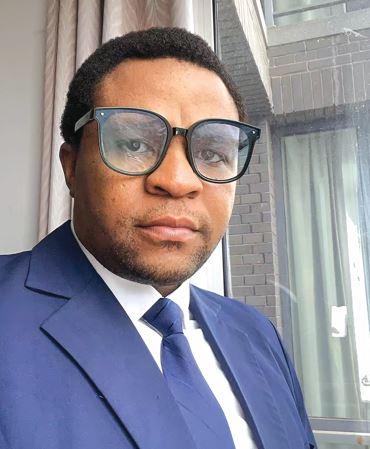
Dr Theko Tlebere
This week I want to continue where we left it off by noting that even though my uncle in Ha Khohlopo seems to like dictatorships, its one of the most dangerous ways of ruling a country.
For us to understand the danger we need to look to the most dangerous feature of dictatorship., and that is, “ nobody can safely correct the ruler”. So, the underlying factor that I am pushing in today’s piece is make sure that we can comprehend the fact that one of dictatorship’s greatest dangers is not merely that a ruler might make a bad decision. Leaders in every political system can make mistakes. The deeper problem is what happens when the ruler cannot be effectively challenged or corrected.
Lets consider a simple example that shall hit home even with an elector at Ha Matjalo-tjalo. Suppose government decides to spend substantial public funds on a project that has been poorly assessed. Technical officers identify serious weaknesses, but they fear losing their jobs if they disagree. Members of the public question the expenditure, but their concerns are dismissed. Oversight institutions cannot compel the government to explain its decisions. The project fails, public money is lost and essential services remain underfunded. Yet those responsible face no meaningful consequences. Under such conditions, the problem is not only a bad policy. It is a system that prevents society from correcting bad policy.
Allow me to break it down more by referring to one political scientist Gordon Tullock, in Autocracy (1987), where he examines the incentives and constraints associated with autocratic government. He says, dictators may have reasons to maintain order or pursue particular objectives, but their interests do not automatically coincide with those of the population. A ruler’s priority may be staying in power rather than improving the lives of citizens. This creates a serious problem of incentives. If the people who advise the ruler are rewarded for agreement, they have less reason to provide honest information. If officials fear punishment for reporting failure, the government may receive distorted information about the economy, public services and the actual conditions facing ordinary families. A ruler can therefore possess enormous authority while becoming increasingly isolated from reality. The more power depends on pleasing one person, the more dangerous it becomes to tell that person the truth.
Lesotho’s own history makes this discussion more than a theoretical exercise. We call remember that in January 1986, the military overthrew the government of Prime Minister Leabua Jonathan. A Military Council was established, and the country entered a period of military rule that lasted until the political transition of 1991–1993. During this period, political-party activities were banned under the military authorities, and the regime governed through decrees rather than an ordinary system of constitutional civilian government. Matlosa and Pule (2001), in their study The Military in Lesotho, have examined the politicization of the military and its intervention in the country’s political affairs. Their analysis highlighted the importance of establishing institutions and practices that prevent the armed forces from becoming instruments of partisan political competition. Similarly, the historical analysis of Lesotho’s military rule shows that the military takeover did not automatically produce a lasting solution to the country’s political difficulties. The military itself experienced internal power struggles, and a further military takeover occurred in 1991 before the 1993 elections restored elected civilian government (Matlosa & Pule, 2001).
The lesson here is not that every government decision made during that period was necessarily wrong, nor that every military officer has the same political intentions. Such sweeping claims would be historically irresponsible. The lesson is that removing one set of political leaders and concentrating authority in another group does not, by itself, resolve the institutional problems that make government ineffective. A country cannot assume that those who seize power in the name of discipline will always remain disciplined themselves. For a small, landlocked country such as Lesotho, where livelihoods are closely connected to public administration, employment opportunities, regional economic relationships and the quality of essential services, the consequences of arbitrary government can reach deeply into ordinary life. A politically connected individual may enjoy privileged access to opportunities, while an ordinary citizen who questions an unfair decision may have little practical recourse.
Imagine a young Mosotho from Ha Rankakala seeking employment, or a family from Sebera trying to obtain justice, or even a journalist investigating public expenditure or a business owner challenging an unfair government decision. Under an unchecked ruler, the outcome of these situations can depend less on the merits of each case and more on whether the people involved enjoy the ruler’s favour. That is why dictatorship should concern not only politicians and academics but also the farmer like my uncle in Ha Khohlopo, the market vendor in Ha Mafafa, the teacher in a rural school and the young person searching for work. It affects the ordinary citizen’s ability to live without fear that a disagreement with someone powerful could threaten their livelihood or security.
At this point I want us to take a right turn and look deeper into the myth of the benevolent dictator. Supporters of authoritarian government sometimes point to leaders who appear to have delivered economic growth, infrastructure or administrative efficiency. This argument deserves serious examination, rather than dismissal through slogans. However, even if an authoritarian ruler achieves certain developmental successes, that does not establish that dictatorship is a reliable or desirable system for another country. Economic outcomes depend on many factors, including state capacity, historical circumstances, investment, public administration and international economic conditions.
More importantly, a system that depends heavily on the wisdom and integrity of one individual creates a succession problem. What happens when the ruler becomes incompetent, corrupt, ill or excessively suspicious? What happens when a successor lacks the same abilities? What happens when the ruler’s personal interests begin to conflict with the national interest? Geddes, Wright and Frantz (2018) demonstrate that dictatorships have different structures and that the personification of power can generate serious instability. A ruler who accumulates power at the expense of other institutions may also weaken the very mechanisms needed to ensure continuity and sound decision-making. The idea of a benevolent dictator therefore rests on a fragile assumption: that the country can trust not only the present ruler but also the future individuals who may inherit unchecked authority.
Basotho must reject the normalisation of dictatorship, because no nation should make its future dependent on such an uncertain promise. In this case I want to be emphatic to the point that, political language matters because it influences what a society comes to regard as acceptable. When people repeatedly describe repression as discipline, unchecked authority as decisive leadership and political silence as national unity, the boundaries of acceptable government begin to shift. And I am cautious of the fact that this does not mean that anyone who expresses frustration with the country’s leadership is advocating dictatorship. Citizens have legitimate reasons to demand better public services, greater accountability, economic opportunities and more effective administration. Those concerns should be taken seriously.
But there is a profound difference between demanding that leaders govern competently and suggesting that citizens should surrender the means of holding those leaders accountable. Basotho should therefore judge political proposals by asking what happens to the ordinary person when the ruler makes a mistake, abuses authority or acts against the public interest. Can that person seek justice without fear? Can public officials disclose wrongdoing? Can institutions investigate the government independently? Can the people who exercise power be held responsible for their actions? These are not abstract academic questions. They concern the practical protection of citizens from arbitrary authority.
The central danger of dictatorship is that it turns public power into something citizens must endure rather than something rulers must exercise responsibly. Once the state becomes identified with the preferences of one individual or a small ruling group, questioning that authority can be treated as an offence against the nation itself. Yet a country is not the private property of its Prime minster or President, its army, its ruling party or any political faction. It’s institutions and resources exist for the public, including citizens who disagree with those currently in power.
I want to conclude by indicating that for Lesotho, dictatorship should never be romanticised as a shortcut to national progress. Its promise of order can conceal the concentration of power; its promise of efficiency can silence the information needed to correct mistakes; and its promise of strong leadership can leave citizens dependent on the goodwill of those who govern them. The fundamental issue is not whether Basotho need better leadership. They unquestionably deserve leadership that is capable, ethical, disciplined and committed to the public good. The issue is whether such leadership should be entrusted with power that it cannot be effectively required to justify. The answer should be clear: no individual should be trusted with political power so extensive that the people they govern lose the practical ability to challenge its abuse. The Future is NOW!
.
Summary
- This week I want to continue where we left it off by noting that even though my uncle in Ha Khohlopo seems to like dictatorships, its one of the most dangerous ways of ruling a country.
- So, the underlying factor that I am pushing in today’s piece is make sure that we can comprehend the fact that one of dictatorship’s greatest dangers is not merely that a ruler might make a bad decision.
- Matlosa and Pule (2001), in their study The Military in Lesotho, have examined the politicization of the military and its intervention in the country’s political affairs.

Welcome to Newsday Media – Your Trusted Source for News and Insights in Lesotho!
At Newsday Media, we are passionate about delivering accurate, timely, and engaging news and multimedia content to our diverse audience. Founded with the vision of revolutionizing the media landscape in Lesotho, we have grown into a leading hybrid media company that blends traditional journalism with innovative digital platforms.
Our mission is simple: to inform, inspire, and empower our readers by providing comprehensive coverage of local and global events, current affairs, and cultural happenings. Whether you’re looking for breaking news, in-depth analysis, or captivating storytelling, Newsday Media is your go-to destination for all things news-related.
With a dedicated team of journalists, editors, and multimedia experts, we are committed to upholding the highest standards of journalistic integrity and professionalism. We pride ourselves on delivering content that not only informs but also sparks conversation, fosters understanding, and drives positive change in our society.
From our flagship newspaper to our dynamic digital platforms, we offer a wide range of multimedia content to cater to the diverse interests and preferences of our audience. Whether you prefer to stay informed through print, online articles, videos, or podcasts, Newsday Media has something for everyone.
We believe in the power of storytelling to connect people, bridge divides, and inspire action. That’s why we’re dedicated to providing a platform for voices from all walks of life, championing diversity, inclusion, and authenticity in everything we do.
Thank you for visiting Newsday Media. We invite you to explore our website, engage with our content, and join us on our journey to inform, inspire, and empower our community. Together, let’s shape the future of media in Lesotho.