
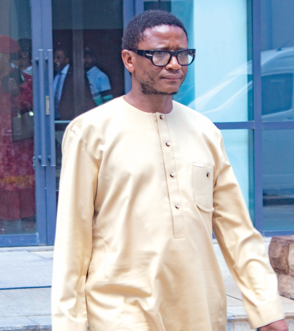
Dr Tšeliso Moroke
Every change of political party and every transition of administration in this country is presented to the people as a renewal. We are told that a new government means a new direction, a clean break from the past, a fresh commitment to serve the public good. Yet time and again, the opposite happens. The very moment power changes hands is where our system begins to crumble, not from transition risks, but from empty promises.
We do not experience democratic transformation; rather, we experience elite rotation.
Our political system does not dismantle extractive institutions when incumbents fall. It simply reallocates control of those institutions to new hands. The old rulers are challenged and sometimes displaced, but the machinery that enabled abuse, exclusion, and enrichment remains untouched. Newcomers break through under the same weakly constrained political architecture, and once inside, they quickly learn that the system rewards continuity, not reform.
This is the fatal flaw in how our country moves.
The system enables those in power to repeat past abuses. Lax constraints on executive authority and weak oversight ensure failures are reproduced and passed off as governance.
New administrations see extractive institutions as sources of resources and influence. Instead of reforming them, leaders entrench these structures, viewing reform as a threat.
This is not accidental. It is structural.
Power in our country rests with a few, unchecked. When the executive faces little parliamentary, judicial, or civic restraint, politics becomes absolute. Absolutism does not require a dictator, only unchecked power.
Such institutions let those in charge enrich themselves, block opportunities, and profit at society’s expense. Access to markets, jobs, and justice depends on proximity to power, not merit. The economy becomes political, politics transactional.
Economic resources are wasted, not to grow the economy, but to reward elite loyalty. Leaders promise development, but practice extraction. The state becomes a tool for private gain.
This reality stands in direct contradiction to the Constitution.
The Constitution of Lesotho is clear: sovereignty belongs to the people. Government must serve the public, not parties or individuals. Parliament oversees the executive. Independent bodies restrain leaders. Separation of powers is fundamental, not decorative.
Yet in practice, constitutional principles are treated as inconveniences, not commands.
Parliament’s oversight is often undermined, politicised, or ignored. When Parliament tries to hold the executive or civil servants accountable, the answer is not to comply, but to resist. We now accept a culture where civil servants rush to court to avoid scrutiny, pretending it is about rights. Yes, access to the courts is a democratic right, but the courts were not meant to shield public officials from accountability.
Worse still is the silence, and at times, complicity, of parliamentarians. Party loyalties and personal interests divide them. Many fail to defend the very institution that empowers them, instead benefiting from the corruption they should fight.
This is a constitutional crisis disguised as political disagreement.
The Constitution does not allow an executive that acts without limits, a Parliament that avoids oversight, or powerless institutions. It expects balanced power, shared accountability, and strict adherence to the rule of law. When these fall apart, democracy becomes little more than a set of procedures. Elections bring no accountability; power has no responsibility.
Our challenge is not just poor leadership; the system is engineered to produce poor outcomes regardless of who leads. The flaw is structural, not personal.
As long as institutions remain extractive, each administration adopts the same behaviours. Changes in language, faces, or slogans are superficial; system incentives drive persistent cycles of extraction and resistance to reform.
This is why political change feels empty. Voters see that their choices do not bring real change. Cynicism rises, trust fades, and participation declines. Democracy becomes something done to people, not with them.
That is a dangerous place for any country to be.
To achieve real progress, we must actively demand and support changes in how power is structured, constrained, and distributed. Engage with parliamentary processes, advocate stronger oversight, insist on institutional independence, and push for the enforcement of constitutional limits. Challenge and help dismantle economic incentives that reward abuse. Only through collective action can we shift the system from elite rotation to genuine democratic transformation.
Until then, we will continue to rotate elites while the country stagnates.
That is how the country moves, not forward, but in circles.
Summary
- Every change of political party and every transition of administration in this country is presented to the people as a renewal.
- We are told that a new government means a new direction, a clean break from the past, a fresh commitment to serve the public good.
- Yes, access to the courts is a democratic right, but the courts were not meant to shield public officials from accountability.

Welcome to Newsday Media – Your Trusted Source for News and Insights in Lesotho!
At Newsday Media, we are passionate about delivering accurate, timely, and engaging news and multimedia content to our diverse audience. Founded with the vision of revolutionizing the media landscape in Lesotho, we have grown into a leading hybrid media company that blends traditional journalism with innovative digital platforms.
Our mission is simple: to inform, inspire, and empower our readers by providing comprehensive coverage of local and global events, current affairs, and cultural happenings. Whether you’re looking for breaking news, in-depth analysis, or captivating storytelling, Newsday Media is your go-to destination for all things news-related.
With a dedicated team of journalists, editors, and multimedia experts, we are committed to upholding the highest standards of journalistic integrity and professionalism. We pride ourselves on delivering content that not only informs but also sparks conversation, fosters understanding, and drives positive change in our society.
From our flagship newspaper to our dynamic digital platforms, we offer a wide range of multimedia content to cater to the diverse interests and preferences of our audience. Whether you prefer to stay informed through print, online articles, videos, or podcasts, Newsday Media has something for everyone.
We believe in the power of storytelling to connect people, bridge divides, and inspire action. That’s why we’re dedicated to providing a platform for voices from all walks of life, championing diversity, inclusion, and authenticity in everything we do.
Thank you for visiting Newsday Media. We invite you to explore our website, engage with our content, and join us on our journey to inform, inspire, and empower our community. Together, let’s shape the future of media in Lesotho.