

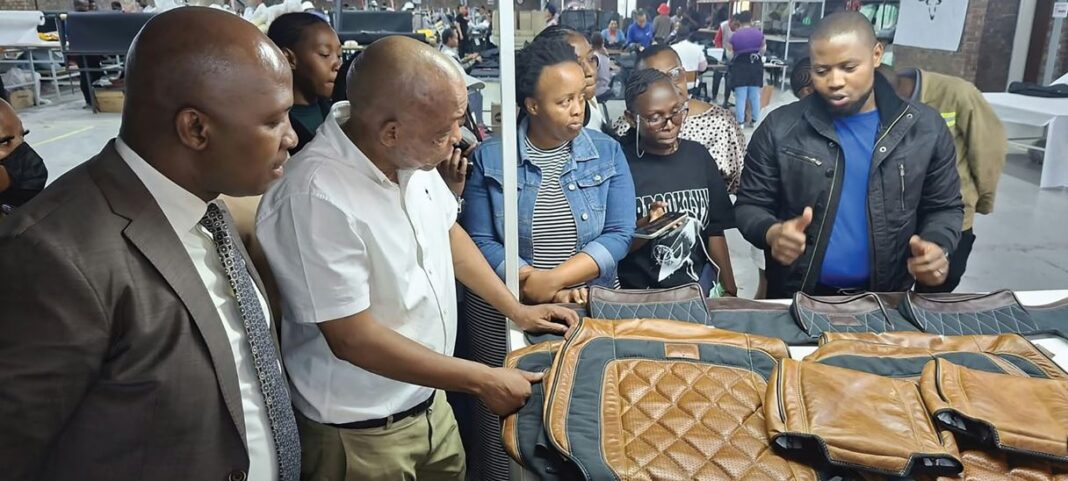
Minister of Trade, Industry and Business Development Motlatsi Maqelepo this week toured three factories that have broken away from the garment and textile products that dominate Lesotho’s manufacturing sector, offering a glimpse of how the country could widen its narrow industrial base and become more resilient to external shocks.
The factories are Adient Lesotho, which makes automotive seating and trim components, including seat covers for Ford vehicles; Zeri Leather, which produces a range of leather bags; and Beesdam, another producer of car seat covers.
Together, they demonstrate that Lesotho’s manufacturing activity is more varied than is often assumed, and that local industries can contribute to economic growth through production, investment and exports.
For a sector heavily reliant on garments, such diversification is a source of hope that the more products Lesotho makes and sells, the less exposed it is when demand, trade conditions or policy shifts hit a single industry.
Maqelepo said the visits were meant to give the government first-hand insight into factory operations and help identify where practical interventions could support industrial growth.
He made the remarks on Wednesday during a ministerial factory tour in Ha Tikoe and Ha Thetsane, Maseru, where he met factory management to assess operations, progress and challenges facing the sector.
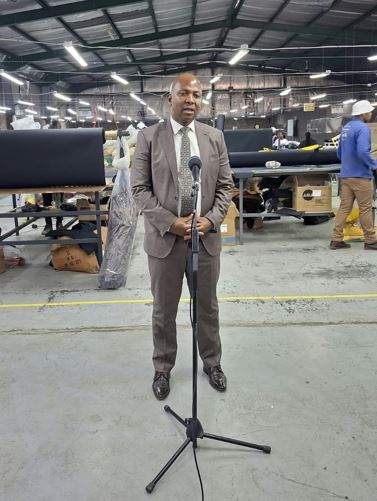
“Our ministry has been entrusted by the government with the responsibility of driving industrialisation. As a ministry, we have realised that industries play a huge part in growing Lesotho’s economy,” he said.
He added that direct engagement with manufacturers would help the government better understand their concerns and work with them to find solutions.
“Today, the ministry, together with its stakeholders, decided to tour our factories to take a peek at the progress, challenges faced by factories and how the government can work hand in hand with the factories to grow the industry,” Maqelepo said.
One of the major challenges identified during the tour was a shortage of skilled workers. Maqelepo stressed the need to build a workforce with the technical skills industries require, noting that closing the skills gap would take cooperation among the government, manufacturers and other stakeholders.
Skilled workers are important for maintaining productivity, improving the quality of locally made products and keeping factories competitive in regional and international markets. This matters all the more for newer, more technical industries such as automotive components, where quality standards are demanding.
The tour also highlighted the sector’s contribution to employment and exports, particularly through its links with industries in neighbouring South Africa.
Maqelepo reiterated that the ministry remained committed to creating a conducive environment for businesses to operate, attract investment and expand. He called for closer cooperation between government and the manufacturing sector to tackle industry challenges, improve productivity and create sustainable jobs for Basotho, stressing that factories must be able to grow and keep creating employment.
The tour forms part of the ministry’s efforts to promote industrial development, expand exports and advance inclusive economic growth through closer engagement with the private sector.
Addressing skills shortages, strengthening partnerships and supporting local manufacturers will be key to improving the sector’s competitiveness, broadening its product range and expanding employment opportunities as Lesotho continues to pursue industrialisation.
Summary
- For a sector heavily reliant on garments, such diversification is a source of hope that the more products Lesotho makes and sells, the less exposed it is when demand, trade conditions or policy shifts hit a single industry.
- He made the remarks on Wednesday during a ministerial factory tour in Ha Tikoe and Ha Thetsane, Maseru, where he met factory management to assess operations, progress and challenges facing the sector.
- “Today, the ministry, together with its stakeholders, decided to tour our factories to take a peek at the progress, challenges faced by factories and how the government can work hand in hand with the factories to grow the industry,” Maqelepo said.

A passionate and dedicated journalism practitioner with an interest in telling stories that inform, educate and give people a voice.
Committed to producing credible and meaningful journalism while continuously improving research, writing and communication skills. Eager to learn from experienced media professionals, take on new challenges and grow into a well-rounded journalist who makes a positive contribution to society through responsible reporting.