… Where is the self-sufficiency Lesotho was seeking in 2016?
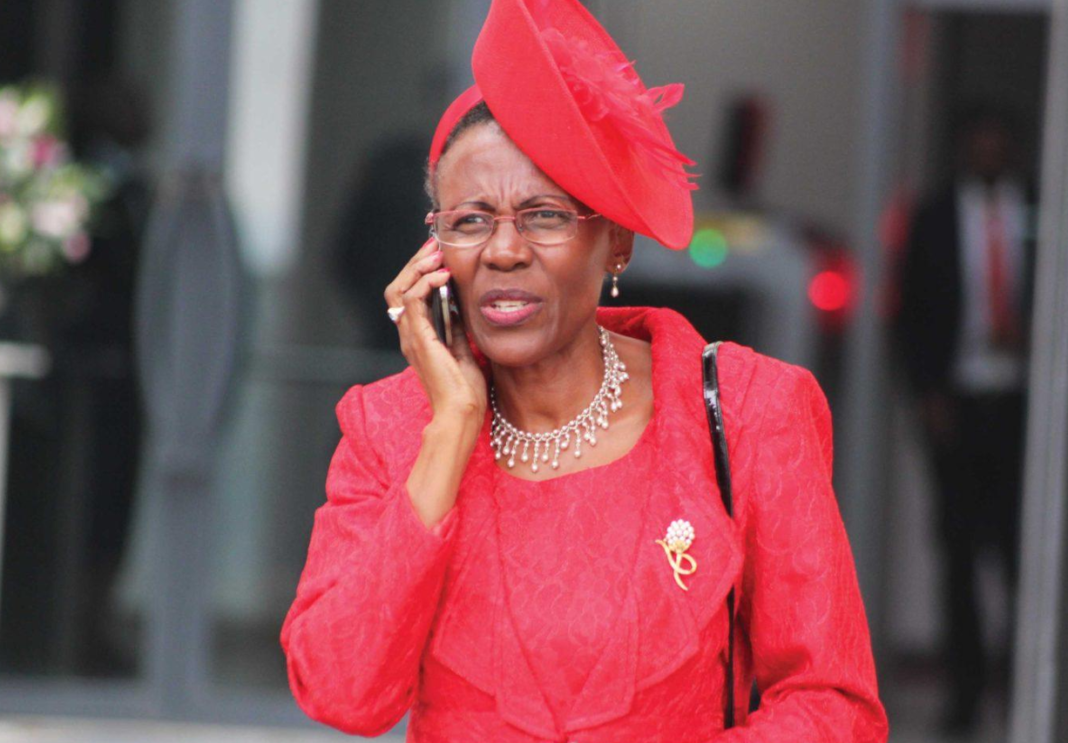
In February 2016, Dr. ‘Mamphono Khaketla stood before a joint sitting of Parliament to deliver a budget speech defined by crisis.
The theme was “Seeking Self-sufficiency,” a response to a devastating drought, a looming fiscal crunch from declining Southern African Customs Union (SACU) revenues, and the embarrassing revelation of millions in unpaid government debt to the private sector.
It was a budget of pragmatism, of clearing the decks, and of hoping for better.
Ten years later, in February 2026, Dr. Retšelisitsoe Matlanyane presented her budget under a different, yet eerily resonant, theme: “Accelerating Economic Transformation; Building Resilience.”
The immediate crisis is no longer a drought, but a “hostile” global trade environment threatening the very fabric of the nation’s industrial base.
A decade of budgets, totaling hundreds of billions of maloti, has passed. The question that emerges from a comparison of these two fiscal blueprints is not whether Lesotho has progressed, it has, in many ways, but whether it has fundamentally transformed.
The answer, painted in the stark figures of the budgets themselves, is a complex and sobering one. Lesotho has built a far larger fiscal ship, but it is still navigating the same treacherous and unpredictable waters.
Part I: The scale of government – from pragmatism to ambition
The most immediate observation when comparing the 2016/17 and 2026/27 budgets is the sheer expansion of the state’s financial footprint. The total proposed budget has nearly doubled, from M15.5 billion to M29.4 billion, a nominal increase of approximately 90 percent.
This growth reflects a combination of inflation, population pressure, and an ambitious government seeking to invest its way out of underdevelopment.
Capital expenditure, in particular, has been turbocharged.
In 2016, the government proposed M5.1 billion for development projects. For 2026, that figure has leaped to M9.0 billion. This is a tangible sign of progress.
The massive Lesotho Highlands Water Project (LHWP) Phase II, investments in renewable energy, and road infrastructure are now central pillars of the economy, driving what little growth exists . The 2026 budget is not one of a state in retreat, but of one actively trying to build the future.
However, this expansion has a costly partner. Recurrent expenditure, the day-to-day cost of running the government, primarily salaries, has ballooned from M11.5 billion to a staggering M21.9 billion.
This 91 percent increase is the “bloated wage bill” that Finance Minister Matlanyane explicitly warns against in her 2026 speech, noting it “crowds out spending on the most essential growth inducing infrastructure.”
The “albatross” identified in 2016 has grown heavier.
Part II: The revenue trap – the more things change…
The most telling indictment of Lesotho’s stalled transformation lies in the composition of its revenue. In 2016, the government was acutely aware of its vulnerability to the volatile SACU receipts, which made up 34 percent of government revenue. The goal was to diversify.
A decade later, the SACU dependency is frozen in time. In 2026, despite all the talk of reform, SACU revenue still accounts for exactly 34 percent of the government’s income.
The amount has more than doubled in nominal terms to M10.1 billion, but the structural vulnerability remains untouched . The risk is now far greater in absolute terms.
As one 2025 analysis noted, Lesotho remains one of the members “most dependent on SACU transfers and, consequently, the most vulnerable to the current downward trend in SACU revenue”.
This fear is not abstract. South Africa has already signaled its desire to renegotiate the revenue-sharing formula to secure a “bigger slice of the customs union cake,” a move that would be catastrophic for Maseru.
The one significant change in the revenue mix is the emergence of water royalties as a major pillar, contributing a projected 17 percent of revenue in 2026, up from a negligible line-item a decade ago. This is a genuine success story, transforming a natural resource into a strategic national asset.
However, as the 2026 budget itself notes, this is still a volatile and project-specific revenue stream. Furthermore, the Lesotho Highlands Development Authority (LHDA) is currently facing potentially significant financial exposure from multi-million dollar compensation claims by communities displaced by the dams, creating a new and unforeseen fiscal risk .
Most worryingly, the share of domestic taxes in the government’s coffers has actually shrunk from 47 percent in 2016 to 38 percent in 2026. This reveals a failure to broaden the tax base. The private sector, which both budgets champion as the “engine of growth,” is not generating enough activity to support the expanding state.
Part III: From climate shock to trade shock – the new reality
The nature of the external shocks battering the economy has evolved. In 2016, the enemy was the weather. In 2026, it is geopolitics.
The 2016 budget was a response to a declared drought emergency. The 2026 budget is a response to a world of protectionism and trade wars. The immediate crisis is the fragility of the African Growth and Opportunity Act (AGOA).
The textile industry, the backbone of Lesotho’s manufacturing and formal employment, was thrown into chaos in 2025 when AGOA expired and the US imposed swingeing tariffs of up to 50 percent on Lesotho’s exports which were revised down to 15 percent.
While AGOA was extended at the last minute to the end of 2026, the damage has been done. The budget speech itself notes the “deterioration in AGOA related firms,” with factories operating at reduced capacity and job losses mounting.
The 2016 speech worried about the future erosion of trade preferences. The 2026 speech is managing the present collapse of an industry. The crisis has shifted from a one-off weather event to a systemic challenge to the country’s industrial survival.
Part IV: Fiscal health – the mirage of the surplus
At first glance, Lesotho’s fiscal health appears to have improved dramatically. In 2016, the country was staring at a gaping deficit of nearly nine percent of GDP. By 2024, it recorded a remarkable surplus of 8.4 percent of GDP.
But the 2026 budget speech and recent data expose this surplus for what it is. It is a cyclical mirage, not a structural victory. The surplus was driven by exceptional, one-off revenues, a perfect storm of high SACU receipts and massive water royalty inflows.
As these windfalls recede, the underlying structural deficit is exposed. Growth projections for 2025 and 2026 have been slashed to around one percent, a figure that is essentially population-growth-plus-zero.
As the local media reported just this week, the economy is expected to grow “sluggishly” for the foreseeable future.
Furthermore, the fiscal surplus masks a critical failure, which is the under-execution of the capital budget. As one mid-term report noted, the projected surplus was “driven by halted projects rather than improved efficiency”. Money allocated for building the future is not being spent, a problem that dogged the 2016 budget as well.
A bigger ship, same storm
The journey from the 2016 budget to the 2026 budget is one of a nation that has scaled up its ambitions and its resources. The government now manages a budget twice the size, invests in monumental infrastructure, and has unlocked significant value from its water.
The policy conversation has matured, now focusing on fiscal rules, debt anchors, and structural balances.
However, the core mission of 2016, to achieve self-sufficiency and reduce vulnerability, remains tragically incomplete. The fundamental structure of the economy is unchanged.
It remains dangerously dependent on a handful of volatile, externally-controlled revenue streams: SACU, textiles under AGOA, and now, water royalties.
The private sector, still the “primary engine” in theory, has not grown enough to broaden the tax base or provide sustainable jobs for the nation’s youth, a crisis now described as a “National State of Disaster”.
The 2026 budget is a sophisticated and ambitious plan to fight the battles of the future. But a hard look at the numbers reveals a country that has spent a decade building a bigger ship, only to find itself still caught in the same storm. The quest for transformation, it seems, has only just begun.
Summary
- The theme was “Seeking Self-sufficiency,” a response to a devastating drought, a looming fiscal crunch from declining Southern African Customs Union (SACU) revenues, and the embarrassing revelation of millions in unpaid government debt to the private sector.
- The 2026 budget is not one of a state in retreat, but of one actively trying to build the future.
- The one significant change in the revenue mix is the emergence of water royalties as a major pillar, contributing a projected 17 percent of revenue in 2026, up from a negligible line-item a decade ago.

Authored by our expert team of writers and editors, with thorough research.