
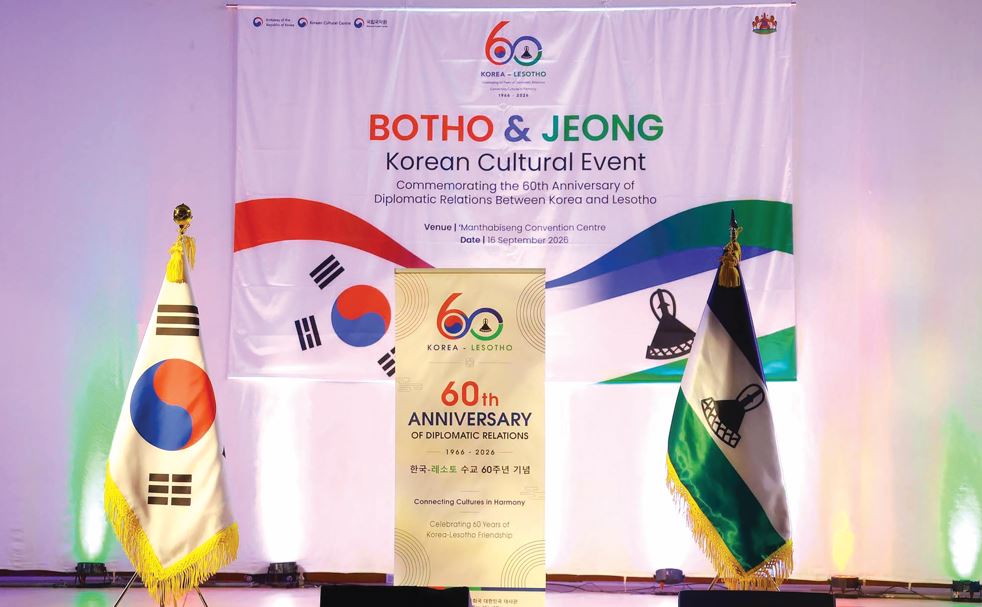
Lesotho and South Korea this week celebrated the 60th anniversary of their diplomatic relations with a colourful cultural event in Maseru.
South Korea was among the countries that established diplomatic relations with Lesotho in 1966, following the country’s independence.
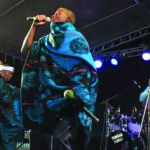
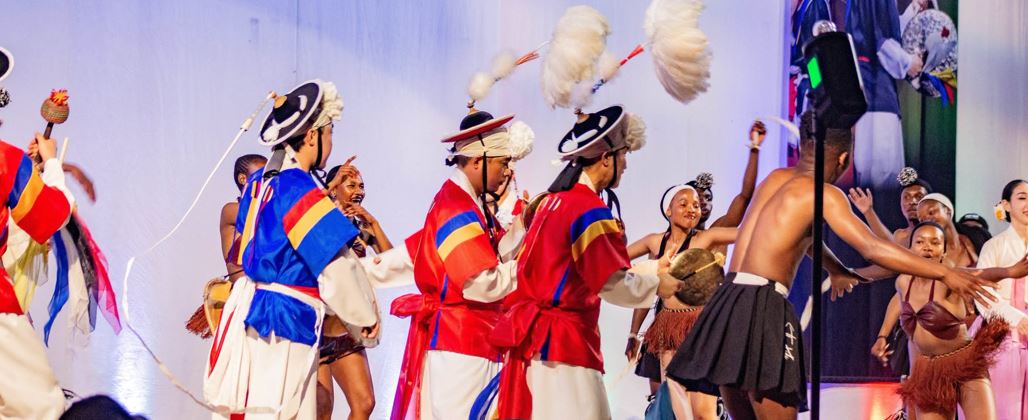
The celebration featured lively Sesotho traditional dances alongside Korean traditional dances and musical performances, entertaining guests throughout the event with a vibrant display of culture and the spirit of friendship between the two nations.
Speaking on the occasion, South Korea’s Chargé d’Affaires, Sang Uk Yoon, highlighted the longstanding relationship between the two countries, noting that it provides an opportunity for people from both nations to appreciate and celebrate their cultural traditions.
Yoon commended the peace in Lesotho and paid tribute to the country’s leaders for choosing sovereignty.
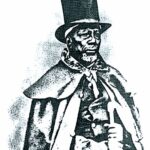
“Peace is the rain that makes the grass grow, and war is the wind that dries it up. Just as King Moshoeshoe I forged the very foundation of the Lesotho people through compromise and persuasion 200 years ago,” he said.
The Chargé d’Affaires went on to commend Lesotho’s forebears for resisting incorporation into South Africa and seeking sovereignty. He noted that Korea feels a profound sense of empathy and kinship with Lesotho’s history of national growth, adding that Korea has delivered over $2.2 million (about M35 million) in aid over the past four years to advance agriculture and protect the country’s forests.
He also announced that Korea will donate mobile X-ray diagnostic units to Lesotho. Prime Minister Ntsokoane Matekane led Lesotho’s delegation to South Korea at the 2024 Korea-Africa Summit, and Korea was also present to witness Lesotho’s bicentennial celebrations that year.
Finance Minister Dr Retšelisitsoe Matlanyane attended the 8th Korea-Africa Economic Cooperation (KOAFEC) Ministerial Conference, held in Seoul from 8 to 11 September 2026.
At the conference, Korea and African governments adopted a joint declaration and agreed on a 2027/28 Action Plan to guide cooperation over the next two years.
Lesotho and Korea agreed to strengthen cooperation in artificial intelligence, digitalisation, healthcare, education, agriculture, climate change, critical minerals and infrastructure. Matlanyane said Korea is contributing to the world through culture, technology and the arts.
Representing government, Minister of Labour and Employment Tšeliso Mokhosi noted that since establishing bilateral relations six decades ago, ties between the two nations have grown from strength to strength.
“We have successfully built these relations on the solid foundation of mutual respect. We have successfully built these relations on the solid foundation of mutual respect, win-win cooperation, and sovereign equality.
“As a result we have witnessed cooperation with tangible results in many areas, including human resource development and capacity building. While in this sector, we feel particularly appreciative of the Korean Government’s relentless efforts in assisting Lesotho to build strong human resource capital through training our youth and civil servants in different programs in prestigious institutions in Korea, under the Korean International Cooperation Agency (KOICA),” Mokhosi said.
The Minister also commended Korea’s transformation from a country once facing development challenges into a globally recognised centre of technology, innovation and industrial advancement, describing it as an inspiring example of what can be achieved through resilience, determination, investment in human capital, innovation and strong national institutions.
“For Lesotho, Korea’s development journey and experience offer valuable lessons. Without replicating all what Korea has achieved, we are ready to learn from its outstanding socio-economic development programs and adapt relevant lessons suitable for our own local conditions and development priorities,” he continued.
Lesotho has received agricultural equipment from Korea, including tractors and implements essential for productivity and food security, alongside assistance in health, education and digital transformation.
Mokhosi noted that as Lesotho places great importance on deepening economic relations with Korea, the Prime Minister is keen to see increased Korean investment in the country, particularly in sectors capable of creating employment for Basotho, transferring skills and technology, and expanding opportunities for young people.
“As we commemorate these sixty years of warm diplomatic relations, we should ask ourselves not only what we have achieved but also what more we can accomplish together,” said the Minister.
Summary
- While in this sector, we feel particularly appreciative of the Korean Government’s relentless efforts in assisting Lesotho to build strong human resource capital through training our youth and civil servants in different programs in prestigious institutions in Korea, under the Korean International Cooperation Agency (KOICA),” Mokhosi said.
- The Minister also commended Korea’s transformation from a country once facing development challenges into a globally recognised centre of technology, innovation and industrial advancement, describing it as an inspiring example of what can be achieved through resilience, determination, investment in human capital, innovation and strong national institutions.
- Mokhosi noted that as Lesotho places great importance on deepening economic relations with Korea, the Prime Minister is keen to see increased Korean investment in the country, particularly in sectors capable of creating employment for Basotho, transferring skills and technology, and expanding opportunities for young people.
Thoboloko Ntšonyane is a dedicated journalist who has contributed to various publications. He reports on accountability, human rights, exposes corruption and wrong doing by those in power. He reports have exposed corruption, abuse of power, fraud, misconduct and negligence. He subscribes to evidence-based reporting. He reports on governance, parliament, courts, climate change, human rights, sexual and reproductive health rights (SRHR), health, business and agriculture. He gives a voice to the marginalised while also demanding accountability. His work inspires change, triggers dialogue and also promote transparency in a society.