
Lesotho has delivered an extraordinary volume of water to South Africa, amounting to the equivalent of ten completely full Katse Dams, according to figures released by the Lesotho Highlands Development Authority (LHDA).
The data, published on October 23, 2025, and covering transfers up to March 2025, shows that Lesotho has exported a cumulative 19,580 million cubic metres (MCM) of water to its neighbour since the Lesotho Highlands Water Project (LHWP) began operating.
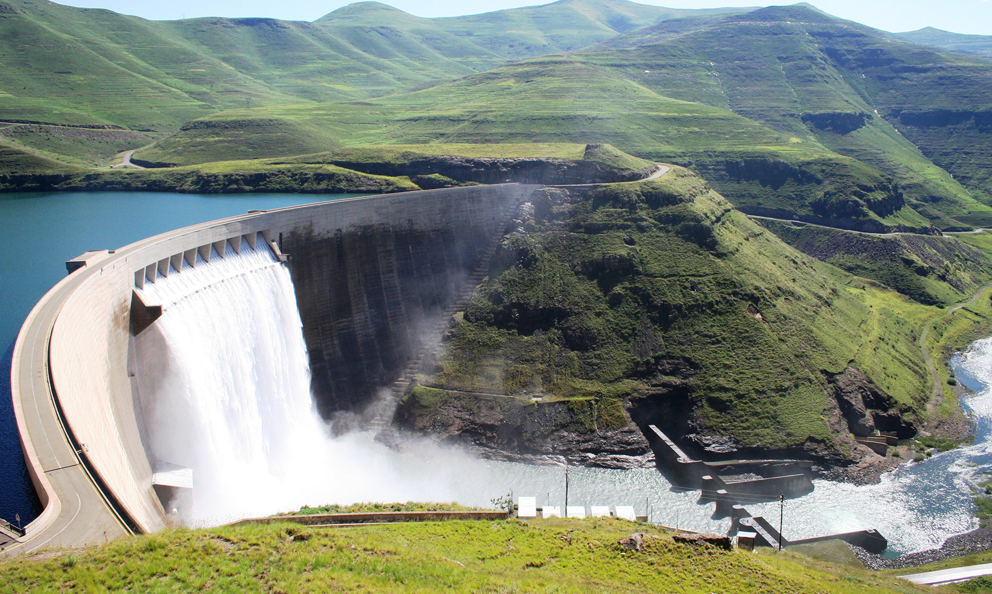
To put this in perspective, Katse Dam, Lesotho’s largest reservoir and the centrepiece of Phase I of the LHWP, stores about 1,950 MCM when full. This means the total water exported so far is equal to draining, filling, and re-draining Katse Dam ten times over.
In simple terms, about 306 Metolong Dams would be needed to hold the same amount of water as 10 full Katse Dams.
The LHWP was conceived as a mutual-benefit scheme. Lesotho provides South Africa with high-quality water from the Orange–Senqu Basin, and in return receives royalties that contribute significantly to the national purse.
Transfers began cautiously in the late 1990s but accelerated over the years as infrastructure was completed and water demand in Gauteng, South Africa’s economic heartland, increased.
What began as a bold binational engineering vision has evolved into one of the most transformative undertakings in Lesotho’s modern history.
The latest LHDA report confirms that by March 2025, the cumulative delivery had reached its highest milestone yet, demonstrating the long-term consistency and reliability of the project’s engineering and operations.
Billions earned for Lesotho
Alongside the water volumes, the data shows that Lesotho has earned over M19 billion in royalties since the start of the transfers. These payments remain a crucial revenue stream for the country, supporting national development priorities from infrastructure to public services.
Economists often highlight the LHWP as one of Lesotho’s most stable sources of foreign income, especially during periods of economic uncertainty.
A strategic asset amid climate pressure
The milestone comes at a time when climate variability continues to pressure water security across southern Africa. South Africa’s reliance on Lesotho’s high-altitude catchment areas, which receive more consistent rainfall and snowmelt, has only grown.
Experts have noted that as South Africa experiences more frequent drought cycles, the LHWP acts as a buffer that protects millions of households and industries from severe water shortages.
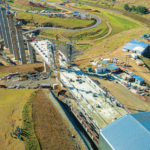
For Lesotho, the achievement also underscores the strategic value of its water resources. With Phase II of the LHWP under construction, including Polihali Dam, the volume of water exported is expected to increase in future years and boost royalty revenues even further.
While the image of “ten full Katse Dams” captures the scale in simple terms, the milestone is also a reminder of Lesotho’s unique hydrological position in the region. The Mountain Kingdom, despite its modest size, plays a massive role in sustaining water supply to Africa’s most urbanised and industrialised corridor.
Katse and Mohales dam reach rare simultaneous full capacity very early
Meanwhile, in a rare hydrological event for the Lesotho Highlands Water Project (LHWP), both Katse and Mohale dams simultaneously reached or exceeded full supply capacity in November, several weeks earlier than is typical even in wet summers.
According to the latest figures released by the Lesotho Highlands Development Authority (LHDA) on December 7, 2025, Katse Dam, the larger of the two reservoirs, stood at 100.84 percent while Mohale Dam registered exactly 100.00 percent.
Newsday has learned that the last time both reservoirs were simultaneously full this early in the summer rainy season was more than a decade ago.
In most years, even during above-average rainfall periods, Katse Dam, with its 1.519 billion m³ capacity, tends to lag behind the smaller Mohale Dam (843 million m³) and only reaches 100 percent from mid-December onward.
In 2022, after years of severe drought that left Katse Dam critically low, dipping below 15 percent capacity at times between 2015 and 2021, the reservoir finally filled enough to begin overspilling on December 15, 2022, the first such event in over a decade, marking the end of the prolonged dry spell’s grip on the system.
This came as a relief for both hydropower generation in Lesotho and water transfers to South Africa, though levels had fluctuated in the intervening wetter years without quite reaching spill point until then.
This year, the dam started spilling on November 15.
“The management of the Lesotho Highlands Development Authority – LHDA Katse, informs the public of the spilleage of Katse Dam that started on 15th November 2025 due to current rains,” LHDA said in a statement.
“The spillage will likely keep happening while the heavy rain continues. We therefore encourage people to use bridges at all times when crossing these rivers within this period,” it added.
The Lesotho Highlands Water Project was originally conceived as a way to monetise Lesotho’s comparative advantage, abundant high-altitude water, while providing South Africa with a reliable source of clean water to support its economic powerhouse, Gauteng.
For Lesotho, the project was also designed to deliver long-term dividends through royalties, infrastructure upgrades, local job creation and the construction of roads, bridges and electricity systems in areas that previously had little access to development.
Over the decades, the LHWP has reshaped the physical and economic landscape of the highlands. Entire communities gained road networks where there had been none.
Hydropower generation at ‘Muela strengthened Lesotho’s energy security, and reduced dependence on imports. Royalty flows became one of the country’s most stable sources of revenue, and cushioned the economy during downturns and supporting national development priorities.
While the project has not been without controversy, including displacement, resettlement challenges, environmental impacts and governance questions, it remains one of the few large-scale initiatives that consistently brings in foreign income while strengthening cross-border cooperation.
As Phase II progresses, with the construction of Polihali Dam set to expand both storage and delivery capacity, the next chapter of the LHWP promises even greater regional integration and potentially higher financial returns for Lesotho.
Summary
- The data, published on October 23, 2025, and covering transfers up to March 2025, shows that Lesotho has exported a cumulative 19,580 million cubic metres (MCM) of water to its neighbour since the Lesotho Highlands Water Project (LHWP) began operating.
- While the image of “ten full Katse Dams” captures the scale in simple terms, the milestone is also a reminder of Lesotho’s unique hydrological position in the region.
- Meanwhile, in a rare hydrological event for the Lesotho Highlands Water Project (LHWP), both Katse and Mohale dams simultaneously reached or exceeded full supply capacity in November, several weeks earlier than is typical even in wet summers.

Authored by our expert team of writers and editors, with thorough research.