Parly staff put through paces to sharpen evidence-based debates
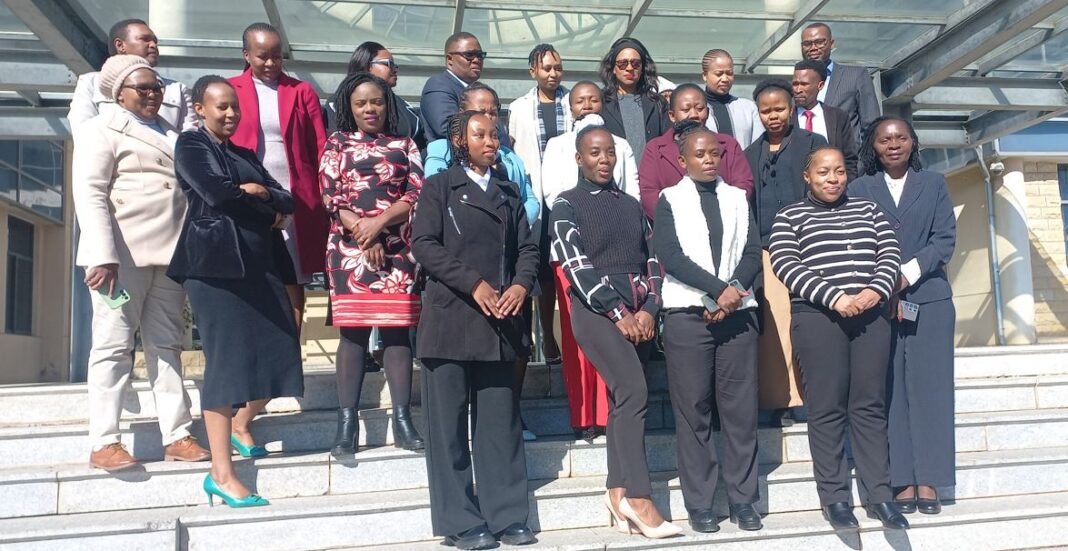
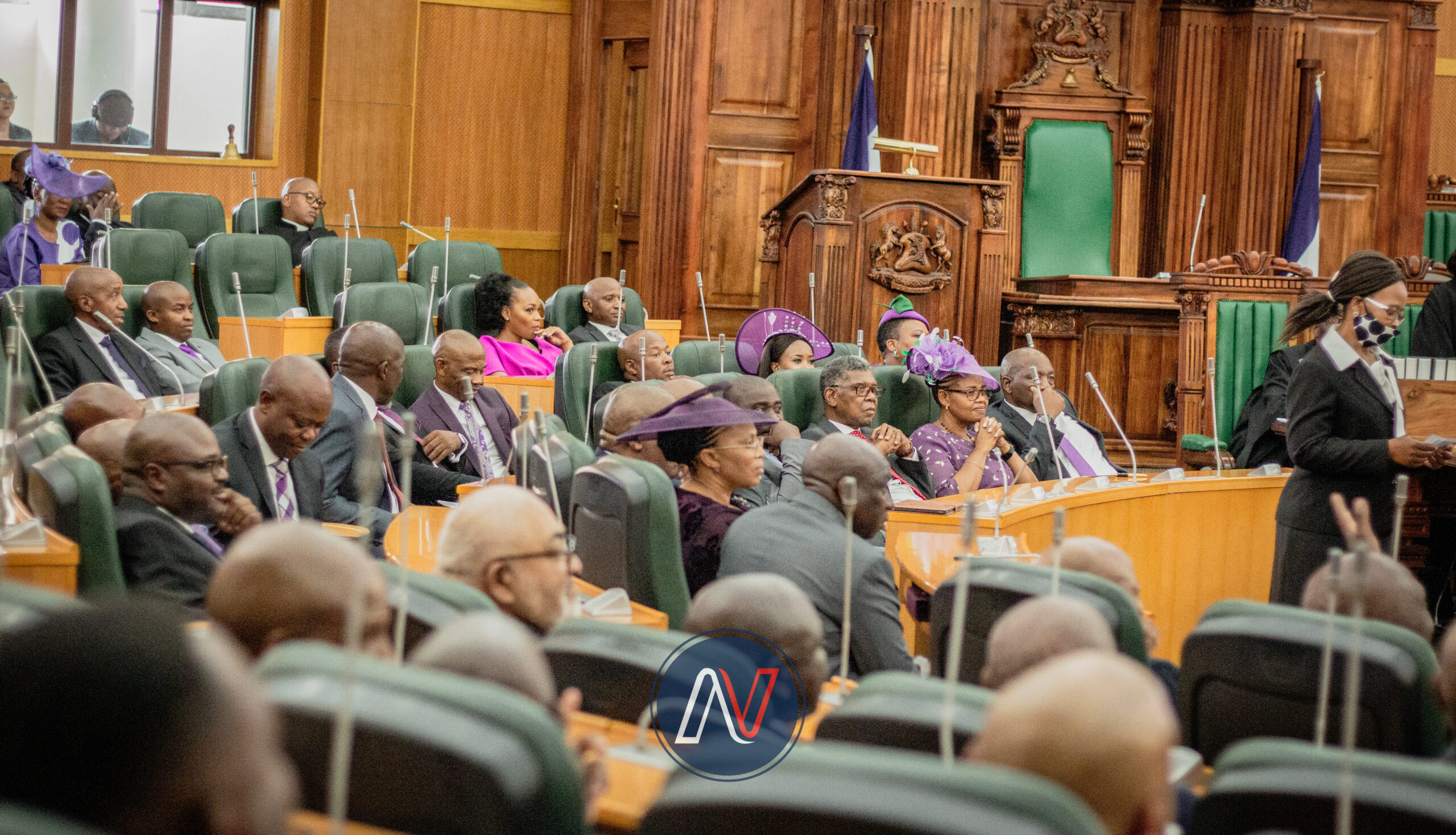
Parliamentary staff are undergoing specialised training to strengthen research, policy analysis and evidence-based reporting, aimed at improving the quality of legislative debates, oversight and decision-making in Lesotho's Parliament.
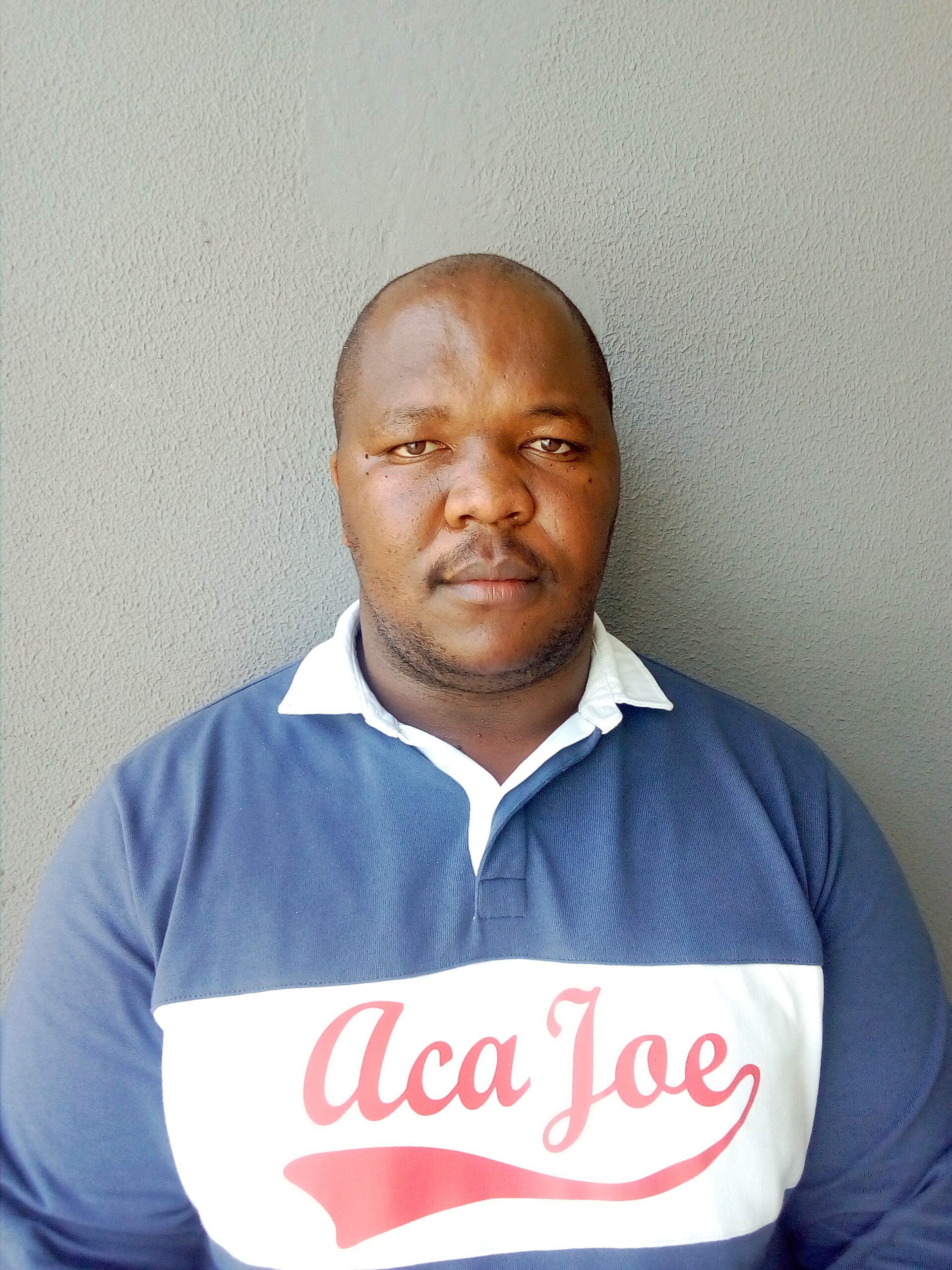
Thoboloko Ntšonyane is a dedicated journalist who has contributed to various publications. He reports on accountability, human rights, exposes corruption and wrong doing by those in power. He reports have exposed corruption, abuse of power, fraud, misconduct and negligence. He subscribes to evidence-based reporting. He reports on governance, parliament, courts, climate change, human rights, sexual and reproductive health rights (SRHR), health, business and agriculture. He gives a voice to the marginalised while also demanding accountability. His work inspires change, triggers dialogue and also promote transparency in a society.
Targeted training aims to break cycle of weak briefings that leave MPs flying blind
Parliament has launched a targeted training programme for its support staff, acknowledging that weak research capacity has left legislators ill-equipped to scrutinise policy, debate budgets, or hold the executive to account.
The intervention follows a blunt internal assessment: clerks lacked the skills to produce evidence-based briefs and reports, undermining MPs’ constitutional functions of law-making, oversight, and representation.
‘Mammehela Matame, the SADC Parliamentary Forum focal person in the Lesotho Parliament, said the gaps became impossible to ignore as cross-cutting issues such as sexual and reproductive health and rights (SRHR) demanded timely, credible, policy-relevant evidence.
“We needed to act,” she said.
The result is a training course delivered by the African Population and Health Research Center (APHRC), a pan-African research-to-policy organisation. Participants from both houses of Parliament are being taught how to locate, evaluate, and present reliable sources, distil complex evidence into concise briefings, and prepare evidential packs for questions, motions, and committee work.
“The evidence from research is used in decisions that directly or indirectly impact lives,” said Professor Marcella Mwaka of APHRC. “But research findings are of little use unless they are shared with the people who consume that output.”
She offered a characteristically sharp metaphor saying that MPs are the visible vehicles of democracy, but parliamentary staff are the engine. “A broken engine gets nobody anywhere.”
Dr Anthony Idowu Ajayi, also from APHRC, cautioned against naïve notions of evidence-based policy. “Evidence-informed decision making must acknowledge values, feasibility and political realities,” he told trainees. “This is a more realistic and honest framing for parliaments.”
He drew a clear line between academic research and parliamentary work. “Academics have the luxury of time. Parliamentary research has immediate use to inform debates, budgets and policy. It is a synthesis of many sources, translated quickly and clearly.”
The training exposed a long-simmering problem, limited capacity among some parliamentary staff to translate technical data into policy briefs and technical papers continues to hamstring evidence-informed engagement. The result, insiders say, is that MPs often enter debates without robust backing, leaving Parliament vulnerable to capture by poorly tested claims.
Mosito Lelimo, Senior Research Officer at the National Assembly, described a tiny research facility with just three staff serving 120 MPs. “We hope to reach wingspans that we were unable to achieve owing to a lack of capacity,” he said. “Any information imparted in Parliament must be concrete, genuine and verified by people who have been capacitated with the tools of trade.”
Ntšepase Lehloenya, Committee Clerk at the Senate, noted that committees are the engine of Parliament – echoing Prof Mwaka’s machinery metaphor – “and must be capacitated to carry out their mandates”. She said the workshop offered writing skills for research briefs that staff had never previously been given.
Clerk of the National Assembly, Advocate Lebohang Fine Maema KC, said the training arrives at a critical moment, with Parliament seized by reforms. “For now, we really need to ensure that the staff of Parliament are capacitated to serve the institution.”
Summary
Parliament has launched a targeted training programme for its support staff, acknowledging that weak research capacity has left legislators ill-equipped to scrutinise policy, debate budgets, or hold the executive to account.
‘Mammehela Matame, the SADC Parliamentary Forum focal person in the Lesotho Parliament, said the gaps became impossible to ignore as cross-cutting issues such as sexual and reproductive health and rights (SRHR) demanded timely, credible, policy-relevant evidence.
“We hope to reach wingspans that we were unable to achieve owing to a lack of capacity,” he said.
Thoboloko Ntšonyane is a dedicated journalist who has contributed to various publications. He reports on accountability, human rights, exposes corruption and wrong doing by those in power. He reports have exposed corruption, abuse of power, fraud, misconduct and negligence. He subscribes to evidence-based reporting. He reports on governance, parliament, courts, climate change, human rights, sexual and reproductive health rights (SRHR), health, business and agriculture. He gives a voice to the marginalised while also demanding accountability. His work inspires change, triggers dialogue and also promote transparency in a society.
To ensure optimal experiences, we utilize technologies such as cookies to store and/or access information from your device. Granting consent to these technologies enables us to process data, including browsing habits or unique identifiers on this website. Conversely, not consenting or revoking consent may negatively impact specific features and functionalities.
Functional
Always active
The technical storage or access is strictly necessary for the legitimate purpose of enabling the use of a specific service explicitly requested by the subscriber or user, or for the sole purpose of carrying out the transmission of a communication over an electronic communications network.
Preferences
The technical storage or access is necessary for the legitimate purpose of storing preferences that are not requested by the subscriber or user.
Statistics
The technical storage or access that is used exclusively for statistical purposes.The technical storage or access that is used exclusively for anonymous statistical purposes. Without a subpoena, voluntary compliance on the part of your Internet Service Provider, or additional records from a third party, information stored or retrieved for this purpose alone cannot usually be used to identify you.
Marketing
The technical storage or access is required to create user profiles to send advertising, or to track the user on a website or across several websites for similar marketing purposes.