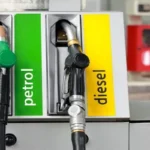

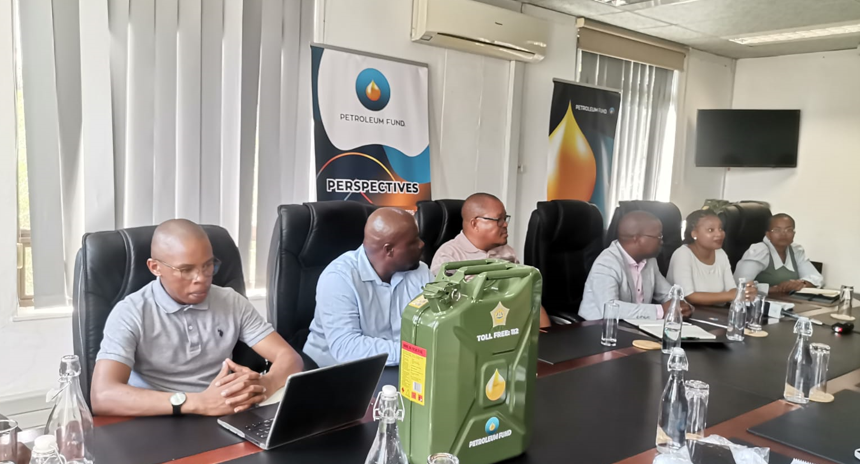
The Petroleum Fund has donated 90 metal jerry cans to filling stations across the country and launched a formal petroleum products safety training programme for fuel attendants.
The initiative, which aims to reduce fire hazards and professionalise service delivery, comes amid growing concern over motorists’ widespread use of plastic containers to transport fuel.
Petroleum Fund’s Interim Chief Executive Officer (CEO) Advocate ‘Makananelo Kome said the donation was a practical intervention to address an immediate safety risk.
“Fuel is a very dangerous resource. As part of our efforts to ensure user safety, we have donated jerry cans to all filling stations after noticing that motorists often use plastic containers, which is extremely unsafe because fuel in plastic containers can easily explode and cause damage,” Kome said.
Under the programme, each of Lesotho’s 90 filling stations will receive two metal jerry cans, one designated for petrol and the other for diesel. The cans will be available for motorists to borrow in emergency situations and must be returned immediately after use.
“This is an emergency tool, so it always has to be available. Users will borrow the can, collect fuel and return it immediately after use,” Kome explained.
To support compliance, the Petroleum Fund has signed a Memorandum of Understanding (MoU) with the Lesotho Mounted Police Service (LMPS) and has also engaged filling station operators on the initiative. While there is currently no law enforcing the use of approved containers, Kome said discussions are underway to introduce legislation.
“We are hoping that very soon there will be a law enforcing compliance with this initiative. People are not forced to use the filling station cans, as everyone is free to buy their own. What we are trying to do is to meet those who do not have containers halfway and ensure safety. We also hope that these cans will not be misused,” she said.
The jerry can handover coincided with the Petroleum Fund’s announcement of a new partnership with the Institute of Development Management (IDM), focused on training and certifying fuel attendants in the safe handling of petroleum products.
Through a two-year MoU, the Petroleum Fund will sponsor the first cohort of trainees, expected to comprise about 90 fuel attendants, one from each filling station in the country.
“Health and safety are our priority because we are dealing with very dangerous products. That is why we decided to push for filling stations to have certified workers who are properly trained in handling petroleum products,” Kome said at the signing ceremony.
She noted that while the Petroleum Fund had previously conducted ad hoc training sessions, the absence of a local institution offering specialised petroleum handling training had been a major constraint.
“As we were training petrol attendants in different filling stations, we noticed that there is a gap because we do not have an institution that offers such training. We were often forced to outsource these services from South Africa,” Kome said.
She added that IDM’s involvement marks a significant step towards building local capacity, with the MoU running for two years and carrying an option for renewal.
“For this agreement, we will pay for the first cohort of 90 people. This will be a very practical programme, and we are expecting participants who are ready to work,” she said.
Kome further encouraged filling station owners to prioritise the hiring of trained and certified attendants, arguing that improved skills would translate into better service standards.
“We all know that the service one gets at filling stations in South Africa is different from what we experience here, largely because attendants there receive proper training. With the introduction of this programme, we are saying let us also improve our services,” she said.
IDM Acting Country Director Thibeli Molapo welcomed the partnership, saying the institution will offer short courses structured into three phases: introductory, intermediate and advanced.
“The programme will be delivered in three categories: introductory, intermediate and advanced,” Molapo said.
He explained that the introductory phase will run for three days, the intermediate course for five days, and the advanced phase for seven days.
“The programme will focus mainly on the safe handling of fuel to minimise risks. What is important is avoiding danger when dealing with fuel, and we also want to professionalise the service at filling stations,” Molapo said.
Summary
- As part of our efforts to ensure user safety, we have donated jerry cans to all filling stations after noticing that motorists often use plastic containers, which is extremely unsafe because fuel in plastic containers can easily explode and cause damage,” Kome said.
- To support compliance, the Petroleum Fund has signed a Memorandum of Understanding (MoU) with the Lesotho Mounted Police Service (LMPS) and has also engaged filling station operators on the initiative.
- The jerry can handover coincided with the Petroleum Fund’s announcement of a new partnership with the Institute of Development Management (IDM), focused on training and certifying fuel attendants in the safe handling of petroleum products.

Seabata Mahao is a general news reporter with special focus on Business and Sports. Started working at Newsday in 2021. Working in a team with a shared goal is what I enjoy most and that gives me the motivation to work under any environment leading to growth.