
… Utility makes four promises after Lesotho’s worst urban water crises
“WASCO acknowledges that a more proactive, better-resourced maintenance and monitoring regime was required. We say today — that standard will now be the baseline across every asset in our portfolio.”
For the first time since Mafeteng’s devastating water crisis erupted, the Water and Sewerage Company (WASCO) has publicly acknowledged that the collapse of the district’s main water source was not an unavoidable natural disaster but the result of years of inadequate infrastructure management.
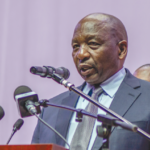
Speaking at the ceremony marking the arrival of long-awaited dredging equipment, WASCO Board Chairperson Thabo Stephen Monyamane told an audience that included Minister of Natural Resources Mohlomi Moleko, that the warning signs had accumulated over many years and that the utility had learned a painful institutional lesson.
“We must be honest about what happened to Rasebala Dam,” Monyamane said.
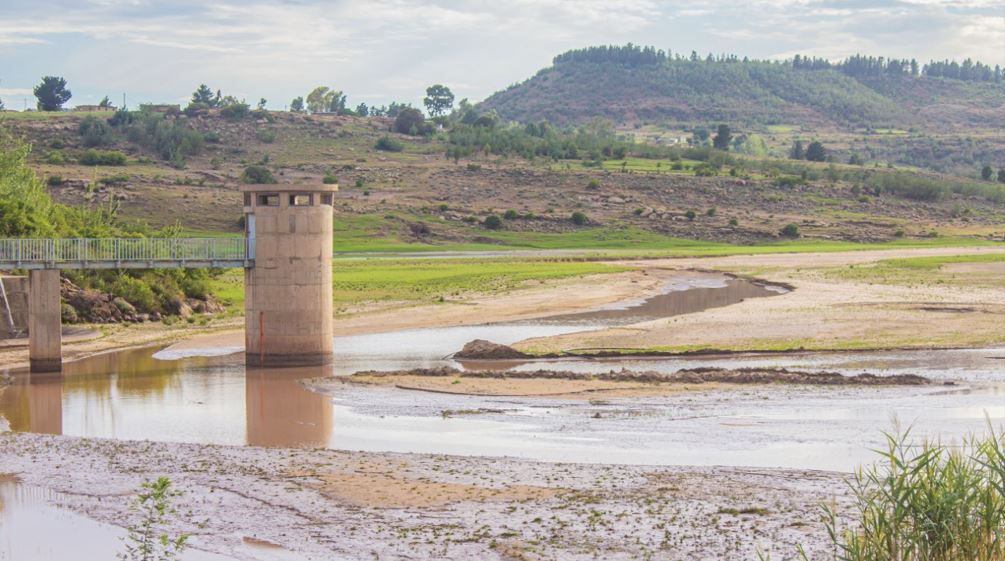
“It was not a sudden failure. It developed progressively through a combination of factors: the growing burden of climate-induced drought on a reservoir system designed for different hydrological conditions; the absence of a systematic silt management programme commensurate with the dam’s age and service life; and constraints in the financial and technical resources needed to address these challenges as they compounded over time,” he added.
It is the clearest admission yet that Mafeteng’s prolonged water shortages cannot be explained by drought alone.
In January 2025, WASCO attributed the crisis primarily to extreme weather and dwindling water levels. But the chairman’s speech acknowledged that Rasebala Dam’s decline was gradual, foreseeable and insufficiently addressed.
“The silt did not arrive overnight. It accumulated over years, driven by sediment loads from degraded catchments, intensified by drought, and not sufficiently countered by the technical interventions that the dam’s age and condition required,” Monyamane.
A crisis that was seen coming — and left to grow
Rasebala Dam has supplied Mafeteng town since 1993. It was upgraded once, in 2012, and never comprehensively serviced again. By the time WASCO went public with the numbers in January last year, the dam’s storage capacity had collapsed to just 15 percent of its design volume, and the treatment plant built to produce 3.3 megalitres a day was managing barely 1.8.
Newsday’s reporting through early 2025 documented what that shortfall meant on the ground.
At Mafeteng High School, principal Ramahetlana ‘Matli told the paper his 120 pupils were among the first in town to lose supply whenever a shortage. At Mafeteng Hospital, District Medical Officer Dr Mpho Seleke reported patients unable to get water for bathing or taking medication, and credited emergency tanker deliveries from WASCO and the Disaster Management Authority (DMA) for keeping the hospital functioning at all.
By December 2024, residents had run out of patience. Acting through lawyer Fusi Sehapi and the rights group Advocates for the Supremacy of the Constitution (SECTION 2), they wrote to the Minister of Health and the Minister of Natural Resources demanding action, and later petitioned the Constitutional Court, arguing their right to water was being violated. That case is still before the courts.
What the chairman’s speech now confirms is that the technical warning signs were old news inside WASCO long before the public pressure arrived.
A desilting plan for Rasebala existed as far back as 2019, costed then at roughly M29 million. Six years, a drought and an inflation cycle later, the same job is costing the state M52 million, nearly double, and the dam had to be starved down to 15 percent capacity, and Mafeteng along with it, before the money and the machine materialised.
Four commitments, made in public
Facing that record, Monyamane used the platform to bind WASCO to four specific undertakings, commitments the utility will now be judged against.
First, WASCO committed to finishing the Rasebala dredging, under tender RFP No. WASCO 02 (2025), without delay. “We will not allow this project to drift,” Monyamane said, adding that it would not be “undermined by poor supervision.”
Second, the utility promised what it called full transparency, including genuine engagement with communities around the dam through the stakeholder process already under way. “Consultation is not a box to be ticked,” Monyamane said. “It is how institutional trust is rebuilt.”
Third, WASCO committed to completing eleven new boreholes across four villages, Matholeng, Motlere, Thabaneng and Ha Seitlheko/Phahameng, within the stated timeframe, alongside progress on the Morija-Mafeteng transmission pipeline.
Fourth, looking further out, WASCO pledged to be technically and institutionally ready to take over and run the Lesotho Lowlands Water Development Project Phase II once government hands it over, the Makhaleng River scheme billed as Mafeteng’s eventual permanent water source.
Monyamane capped the four with a broader institutional promise: “No WASCO asset will again reach the condition of Rasebala Dam without triggering a timely and adequately resourced corrective response.”
The lesson WASCO says it has learned
The chairman went further than committing to fix one dam. He framed Rasebala as proof that WASCO’s whole approach to maintaining ageing infrastructure had failed, and promised that would change. “Ageing water infrastructure demands sustained investment and proactive management,” he said. “That lesson is now written in the experience of Mafeteng, and we carry it forward without reservation.”
WASCO says it will now roll out a nationwide asset management plan, treating preventive maintenance “not as a cost to be avoided but as the very foundation of service delivery,” with regular condition checks on every dam, treatment plant and distribution network the utility runs, and an “early-warning culture” meant to ensure no other district is left to discover its water security has quietly fallen to 15 percent before anyone acts.
Why the scepticism is warranted
WASCO’s own account gives Mafeteng residents good reason to withhold applause. This is a utility that, on its own telling, had a fix identified in 2019 and did not fund or execute it until the crisis had already forced schoolchildren to carry water to class and put hospital hygiene at risk. The M52-million project now under way is arriving roughly six years, one Constitutional Court case and one public reckoning later than it needed to.
The Chief Executive, Mpeke Lebohang Makara, described the dredging machine, which WASCO says will also be used at Metolong and Katse dams, as “a smart long-term investment.” General Manager for Projects, Lehlohonolo Ncheke, has put the volume of silt to be removed at roughly 900 cubic metres.
Assembly of the machine is expected to take about two weeks, after which the dredging itself is due to run for around six months, with WASCO maintaining it has a contingency plan to keep water flowing to Mafeteng households in the meantime, details of which the utility says will only be released once the Prime Minister formally launches the works.
Monyamane closed his speech by inviting the sector regulator, the Lesotho Electricity and Water Authority (LEWA), to hold WASCO to its word: “We welcome your oversight. Hold us to account.”
Summary
- Speaking at the ceremony marking the arrival of long-awaited dredging equipment, WASCO Board Chairperson Thabo Stephen Monyamane told an audience that included Minister of Natural Resources Mohlomi Moleko, that the warning signs had accumulated over many years and that the utility had learned a painful institutional lesson.
- Acting through lawyer Fusi Sehapi and the rights group Advocates for the Supremacy of the Constitution (SECTION 2), they wrote to the Minister of Health and the Minister of Natural Resources demanding action, and later petitioned the Constitutional Court, arguing their right to water was being violated.
- Six years, a drought and an inflation cycle later, the same job is costing the state M52 million, nearly double, and the dam had to be starved down to 15 percent capacity, and Mafeteng along with it, before the money and the machine materialised.

Authored by our expert team of writers and editors, with thorough research.