Welcome to Newsday Media – Your Trusted Source for News and Insights in Lesotho!
At Newsday Media, we are passionate about delivering accurate, timely, and engaging news and multimedia content to our diverse audience. Founded with the vision of revolutionizing the media landscape in Lesotho, we have grown into a leading hybrid media company that blends traditional journalism with innovative digital platforms.
Our mission is simple: to inform, inspire, and empower our readers by providing comprehensive coverage of local and global events, current affairs, and cultural happenings. Whether you’re looking for breaking news, in-depth analysis, or captivating storytelling, Newsday Media is your go-to destination for all things news-related.
With a dedicated team of journalists, editors, and multimedia experts, we are committed to upholding the highest standards of journalistic integrity and professionalism. We pride ourselves on delivering content that not only informs but also sparks conversation, fosters understanding, and drives positive change in our society.
From our flagship newspaper to our dynamic digital platforms, we offer a wide range of multimedia content to cater to the diverse interests and preferences of our audience. Whether you prefer to stay informed through print, online articles, videos, or podcasts, Newsday Media has something for everyone.
We believe in the power of storytelling to connect people, bridge divides, and inspire action. That’s why we’re dedicated to providing a platform for voices from all walks of life, championing diversity, inclusion, and authenticity in everything we do.
Thank you for visiting Newsday Media. We invite you to explore our website, engage with our content, and join us on our journey to inform, inspire, and empower our community. Together, let’s shape the future of media in Lesotho.
Tanki Kotelo
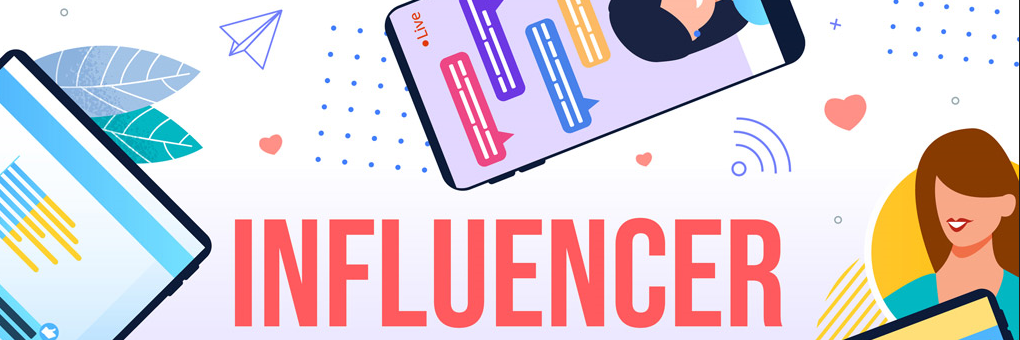
The burgeoning reach and use of social media have undoubtedly changed the way brands and organisations communicate with their populace. And with the youth possessing more buying power year-on-year, many have had to find demographically applicable ways of meeting this group, ultimately birthing what is today called an influencer. But what exactly is an influencer? In an era of instant fame where ordinary people can shoot straight to celebrityhood in a flicker of an eye and where people are desperately craving gratification from their online idols, where do we draw the line between ‘real’ influencers and chancers? Let’s explore.
So what is influencer culture? Initially, the term was coined to describe individuals with a sizeable social media presence and impact on different platforms such as YouTube, Facebook, and Instagram, as well as those having the ability to sway the decisions of their followers, especially when it comes to lifestyles and financial spending. At the outset, influencership was regarded as a legitimate and respected form of opinion leadership, as those who were deemed as such had intently earned the status by consuming loads of information, scrutinising it, and then decoding it into modest and digestible bits for the rest of the masses. As such, they were revered experts and trusted springs of information and advice in particular fields.
However, of late the term has drastically changed, and now anybody can be regarded as an influencer as long as they have a big platform, exemplifying the very phenomenon known as the ‘cult of personality’—where the masses will often uncritically consume misinformation just because they are drawn to the source of the information and not its validity. Whereas the community was geared towards knowledge-sharing and connection or patronage, today the influencer industry is anything but that, and monetisation, bullying, and exploitation are at the centre stage. Regardless, that is no way an indication that the industry is dying, as according to Influencer Marketing Hub, the global industry was worth at least $21 billion, just that it’s facing an eminent existential crisis and that those within the profession have a mammoth task and responsibility of looking in and reimagining a different trajectory.
More harm than good: what is the industry getting wrong in recent times? As opposed to earlier years where influencership was about inspiration and not about aspiration, today the industry overly encourages consumerism, capitalism, and materialism, often pressuring social media users to have dissatisfaction about their lives. Ultimately leading them down a path of mental illness, self-consciousness, compulsive buying, and debt—in the chase for a sense of inclusion and comfort. Moreover, it has birthed an environment of superficiality where popularity is given merit over expertise, an apparently dangerous and irresponsible idea if the USA politics are anything to go by, for instance.
Additionally, the industry today sets unrealistic and distorted standards, far opposite from what society has always accepted to be the way of life. For instance, through their promotion of ‘size zero’ and ‘wrinkle-free’ bodies and extravagant spending lifestyles. Again, faced with the pressure to consistently produce content for the masses and maintain a certain image or demeanour, many influencers silently suffer emotionally and mentally behind the closed doors of fame. Some usually obsess over building more following, leading to a sense of inauthenticity and a lack of personal fulfilment.
While it’s crucial to remain vigilant about the pitfalls of the modern influencer landscape, in the same breath, it’s important to acknowledge that, when wielded with care and responsibility, influence can be a powerful force for good. In a world where social media users are bombarded with messages from all directions, influencers have the opportunity to use their platforms to promote kindness, inclusivity, and self-acceptance, as well as to advocate for important causes.
Bloom Communications is a Lesotho-based consultancy, specialising in best-in-class media-driven communications, professional writing, public relations, social media management, and marketing for individuals, corporates, and micro, small, and medium-sized brands. For feedback contact: info@bloomcommunications.co.ls
Summary
At the outset, influencership was regarded as a legitimate and respected form of opinion leadership, as those who were deemed as such had intently earned the status by consuming loads of information, scrutinising it, and then decoding it into modest and digestible bits for the rest of the masses.
Of late the term has drastically changed, and now anybody can be regarded as an influencer as long as they have a big platform, exemplifying the very phenomenon known as the ‘cult of personality’—where the masses will often uncritically consume misinformation just because they are drawn to the source of the information and not its validity.
Regardless, that is no way an indication that the industry is dying, as according to Influencer Marketing Hub, the global industry was worth at least $21 billion, just that it’s facing an eminent existential crisis and that those within the profession have a mammoth task and responsibility of looking in and reimagining a different trajectory.
Welcome to Newsday Media – Your Trusted Source for News and Insights in Lesotho!
At Newsday Media, we are passionate about delivering accurate, timely, and engaging news and multimedia content to our diverse audience. Founded with the vision of revolutionizing the media landscape in Lesotho, we have grown into a leading hybrid media company that blends traditional journalism with innovative digital platforms.
Our mission is simple: to inform, inspire, and empower our readers by providing comprehensive coverage of local and global events, current affairs, and cultural happenings. Whether you’re looking for breaking news, in-depth analysis, or captivating storytelling, Newsday Media is your go-to destination for all things news-related.
With a dedicated team of journalists, editors, and multimedia experts, we are committed to upholding the highest standards of journalistic integrity and professionalism. We pride ourselves on delivering content that not only informs but also sparks conversation, fosters understanding, and drives positive change in our society.
From our flagship newspaper to our dynamic digital platforms, we offer a wide range of multimedia content to cater to the diverse interests and preferences of our audience. Whether you prefer to stay informed through print, online articles, videos, or podcasts, Newsday Media has something for everyone.
We believe in the power of storytelling to connect people, bridge divides, and inspire action. That’s why we’re dedicated to providing a platform for voices from all walks of life, championing diversity, inclusion, and authenticity in everything we do.
Thank you for visiting Newsday Media. We invite you to explore our website, engage with our content, and join us on our journey to inform, inspire, and empower our community. Together, let’s shape the future of media in Lesotho.
To ensure optimal experiences, we utilize technologies such as cookies to store and/or access information from your device. Granting consent to these technologies enables us to process data, including browsing habits or unique identifiers on this website. Conversely, not consenting or revoking consent may negatively impact specific features and functionalities.
Functional
Always active
The technical storage or access is strictly necessary for the legitimate purpose of enabling the use of a specific service explicitly requested by the subscriber or user, or for the sole purpose of carrying out the transmission of a communication over an electronic communications network.
Preferences
The technical storage or access is necessary for the legitimate purpose of storing preferences that are not requested by the subscriber or user.
Statistics
The technical storage or access that is used exclusively for statistical purposes.The technical storage or access that is used exclusively for anonymous statistical purposes. Without a subpoena, voluntary compliance on the part of your Internet Service Provider, or additional records from a third party, information stored or retrieved for this purpose alone cannot usually be used to identify you.
Marketing
The technical storage or access is required to create user profiles to send advertising, or to track the user on a website or across several websites for similar marketing purposes.