
… High Court hears chilling account of the police headquarters attack
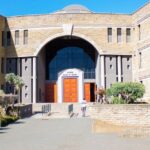
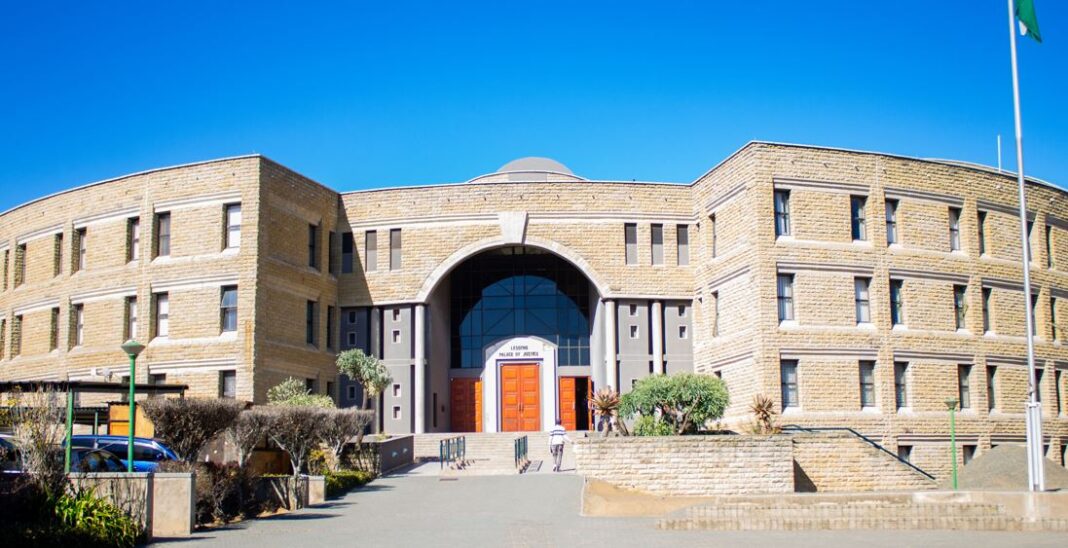
The High Court this week heard details about how members of the Lesotho Defence Force (LDF) invaded the Lesotho Mounted Police Service headquarters on the fateful night of 29–30 August 2014.
In an attempted coup, the army ambushed police officers deployed at the police headquarters in Maseru, resulting in the fatal shooting of Sub-Inspector Mokheseng Ramahloko.
Several LDF members, including their then Army Commander, Lieutenant General Tlali Kamoli, are now facing treason and related charges before the High Court.
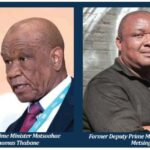
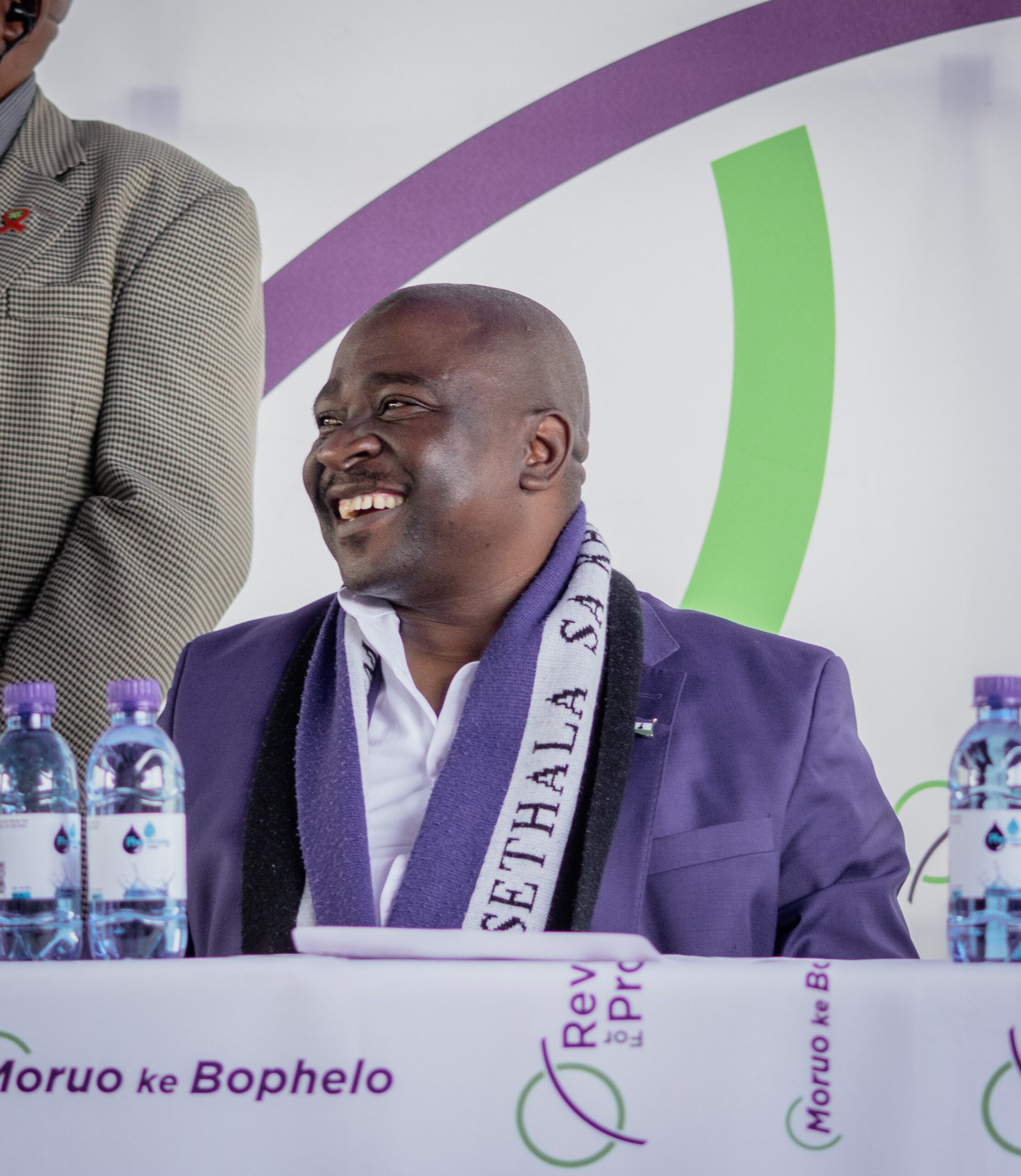
Political party leaders Mothetjoa Metsing and Selibe Mochoboroane of the Lesotho Congress for Democracy (LCD) and Movement for Economic Change (MEC), respectively, are also joined as accused in the trial.
Other LDF members accused in the trial are Captain Litekanyo Nyakane, as well as Lance Corporals Motloheloa Ntsane and Leutsoa Motsieloa.
They are facing multiple charges, including murder, attempted murder, risk of injury or death, and aggravated assault, all of which they have pleaded not guilty to.
One of the police officers who were on duty at police headquarters on the fateful night told the court on Wednesday how a heavily armed group of soldiers stormed their office and unleashed their anger on the officers on duty.
“We were made to roll while we were kicked and beaten with sticks and rifles by the soldiers,” Sergeant Mokete Litulo said.
Litulo noted that while they were being assaulted, the army had inquired whether the police officers knew that their boss, Police Commissioner Khothatso Tsooana, had allegedly connived with then Prime Minister Dr Motsoahae Thomas Thabane to dismiss their commander, Lieutenant General Tlali Kamoli, from his duties.
“They referred to him as ‘this recruit’. One of the soldiers said ‘this recruit is violating the constitution,’” Litulo told the court.
Litulo said he understood that the soldiers were referring to the police commissioner when they said “this recruit”. The soldiers, he said, argued that Tsooana was violating the constitution.
Further expressing their frustration against the commissioner of police, Litulo said the soldiers accused Tsooana of allegedly sending police officers in grey blankets (likobo tse thokoa) to deliver letters of dismissal of the then Director of Public Prosecutions (DPP), Leaba Thetsane, as well as the Attorney General (AG), Tsokolo Makhethe, from their duties.
The soldiers had also inquired about the whereabouts of police spokesperson Lebona Mohloboli and other senior detective officers, including Makharilele and Chechile, the court heard.
Prime Minister Thabane had fired Kamoli as Army Commander earlier in August, citing insubordination. It was this dismissal that seemed to have triggered a major political and military crisis in Maseru, sparking an attempted coup.
Following his dismissal, Kamoli had refused to step down, and Thabane had temporarily fled to South Africa and sought refuge.
A SADC commission of inquiry, set up by the Southern African Development Community (SADC) to investigate political instability in Lesotho, recommended Kamoli’s ouster.
On Tuesday and Wednesday this week, the High Court heard from crown witnesses — Sub-Inspector Mahanetsa and Sergeant Litulo, both from the LMPS — how the angry soldiers tormented police officers before fatally shooting Ramahloko.
Sgt Litulo told the court that he was stationed at the radio room, “an office within the headquarters building responsible for handling all official telecommunications between police officials on police business.” The office was equipped with telephones, fax machines and computers, he said.
On the evening of 29 August 2014, he said he was working a night shift commencing at 6:00pm until 6:00am the next morning (30 August).
He indicated that he was on duty with Lance Sergeant Thamae when Sub-Inspector Ramahloko arrived in the office to request a telephone.
Ramahloko was deployed at the Special Operations Unit (SOU) and during that particular night he was working a shift at the headquarters guardroom to control movement in and out of the police headquarters, Litulo explained.
The guardroom is situated close to the main gate so that police officers on duty there are able to control movement through the gate.
At the time Ramahloko had come to request a telephone from the radio room, Litulo said they received a telephone call around the same time from Assistant Commissioner of Police (ACP) Loke, who requested to speak to Ramahloko urgently. Ramahloko was already in the same office to receive the call from ACP Loke, Litulo said.
According to Litulo, ACP Loke had called the radio room to inform Ramahloko that the army was on its way to the police headquarters.
It remains unclear how ACP Loke knew about the alleged army attack plan on the police and why he called the radio room to inform Ramahloko specifically. It is also unclear whether it was a coincidence that Loke called at the exact moment Ramahloko was in the room to receive the call.
Ramahloko then, after receiving the call and communicating with Loke, rushed back towards the guardroom, “but he returned quickly to inform us that the soldiers were already at the main gate,” Litulo said.
Litulo added that Ramahloko also indicated that soldiers were already assaulting a group of police officers deployed with him at the main gate/guardroom. Litulo was being led by prosecutor Advocate Rethabile Setlojane in his testimony.
Asked how they knew that the intruders were soldiers, Litulo said they were in army uniform, “although they all covered their faces with scarves and black hats,” he said.
While they were still in the radio room, Litulo said he was with Thamae and Ramahloko when they were joined by Mahanetsa, accompanied by two soldiers.
“He (Mahanetsa) stormed into the radio room with soldiers. With him were two soldiers armed with AK-47 rifles. They were on both his sides, left and right, and their rifle muzzles were pointed at us in the radio room. The rifle muzzles were visible from Mahanetsa’s shoulders as the two soldiers drove him inside the radio room,” Litulo told the court.
He said the four of them — Ramahloko, Thamae, Mahanetsa and himself — were ordered by the soldiers to walk out of the radio room and join other police officers at the main gate. They were made to walk through the entire headquarters building until they were outside.
“Immediately when we were outside the building, we were ordered to stop walking and forced to roll on our bodies while we were being kicked and beaten at the same time,” Litulo narrated.
When they neared the main gate in the same fashion, Litulo said that was when he realised there were many soldiers inside the headquarters yard, “heavily armed with AK-47 rifles but covering their faces with scarves and black hats”.
They were made to join other police officers seated in a line along the walls of the guardroom.
“There was a private car that moved from the BNP Centre direction towards the main gate, but when it arrived at the gate, it was reversed speedily by its driver,” he said.
As the car reversed, the soldiers swiftly approached the driver and instructed him to drive into the yard as was his original intention.
It appeared, Litulo explained, the driver was a police officer reporting for duty at the police headquarters, “but he reversed abruptly from the gate upon realising the situation in the yard. He reversed speedily for fear of his life,” Litulo said.
At this time, Litulo estimated it was around 4:00am, “and there were already passersby visible from outside the yard.”
The soldiers were asking the police officers held hostage to identify almost everyone who was passing by, Litulo said.
The intention of the soldiers was to arrest every police officer who happened to be around the headquarters at that moment, he explained.
The police officer who attempted to reverse his car from the gate in an effort to flee for his life was later identified by Litulo as Police Constable Nkhabu. Nkhabu, too, was ordered by the soldiers to alight from his car and join other police officers in the yard.
For his part, Mahanetsa testified about the fatal shooting of Ramahloko in the radio room. He detailed how Ramahloko was fatally shot by the soldiers, who then dragged his body from the radio room to the main gate.
Litulo said he later noticed Ramahloko’s lifeless body at the main gate before he, Nkhabu and Thamae were instructed to lift the body into a car boot.
Summary
- One of the police officers who were on duty at police headquarters on the fateful night told the court on Wednesday how a heavily armed group of soldiers stormed their office and unleashed their anger on the officers on duty.
- Further expressing their frustration against the commissioner of police, Litulo said the soldiers accused Tsooana of allegedly sending police officers in grey blankets (likobo tse thokoa) to deliver letters of dismissal of the then Director of Public Prosecutions (DPP), Leaba Thetsane, as well as the Attorney General (AG), Tsokolo Makhethe, from their duties.
- Ramahloko was deployed at the Special Operations Unit (SOU) and during that particular night he was working a shift at the headquarters guardroom to control movement in and out of the police headquarters, Litulo explained.
I am a journalist based in Maseru, Lesotho, renowned for investigative reporting. Over the years, my work has been published both locally and internationally, including in South Africa through the Amabhungane Centre for Investigative Journalism and the Daily Maverick, among other publications.
In Lesotho, I have served as a senior reporter for several leading weekly newspapers, including the Lesotho Times, Public Eye, and Sunday Express. My reporting has focused on uncovering issues of public interest, promoting accountability, and giving voice to underreported stories.
In 2016, I co-founded the MNN Centre for Investigative Journalism in Maseru, an initiative dedicated to strengthening investigative journalism and fostering a culture of transparency and public-interest reporting in Lesotho.