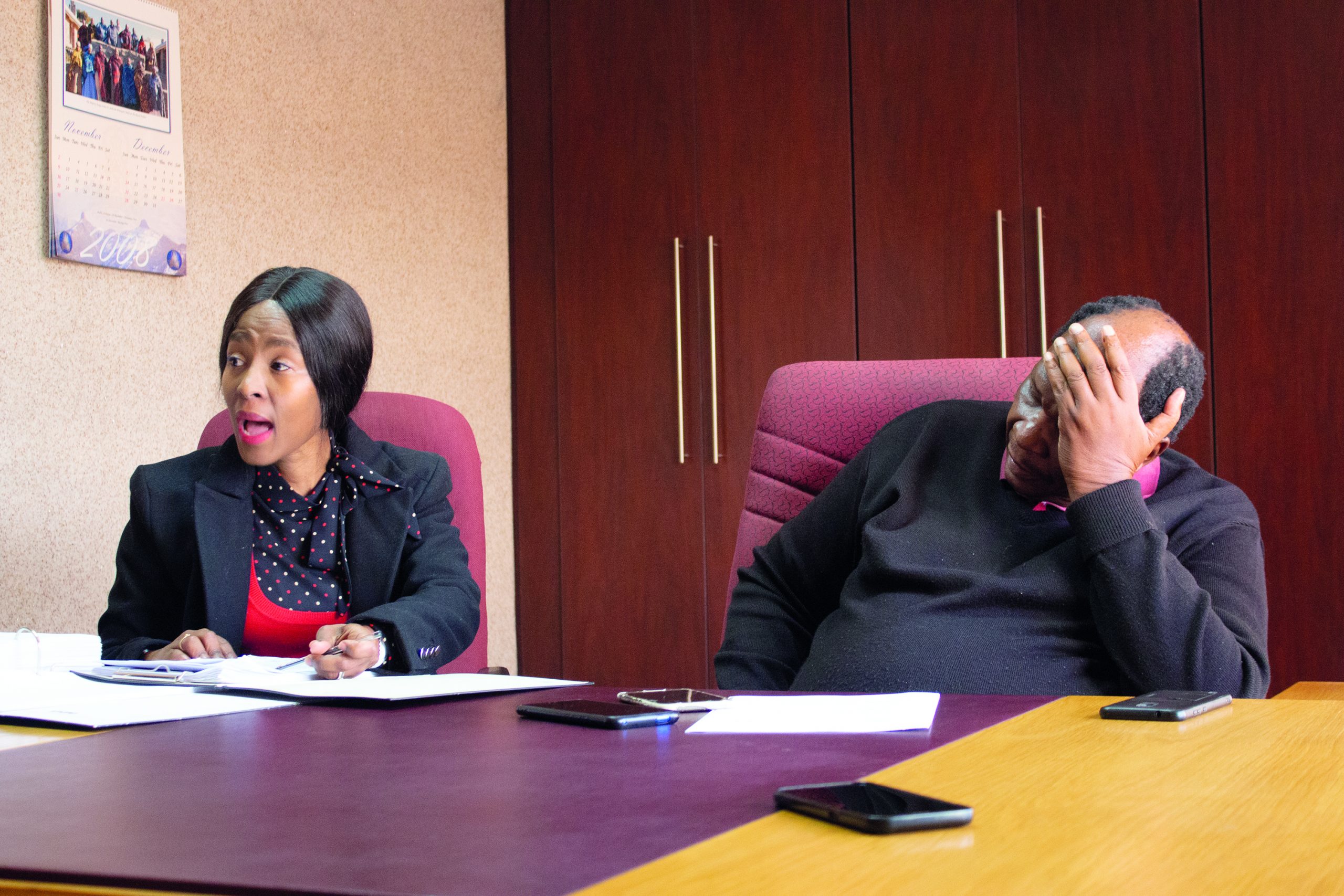

After a brief period of calm following the resolution of a high-profile criminal case in early 2024, Afriski Mountain Resort, Lesotho’s only ski facility, is once again facing legal turmoil.
This time, the challenge comes from within its own ranks: one of its key creditors and shareholders, South African businessman Oliver Roman Schwarnkhart, has filed a court application seeking to place the resort under judicial management.
Schwarnkhart, together with his company White Magnolia Holdings (PTY) Ltd, has lodged the application before the High Court’s Northern Region Division in Tšifa li Mali, Leribe district.
In his filing, he cites mismanagement and financial irregularities at the mountain resort as grounds for the court to intervene and place the business under judicial supervision.
The fresh legal action comes just over two years after the resort appeared to have turned a corner. In January 2024, this publication reported that Afriski’s Board of Directors had announced the resolution of a year-long police investigation and court case at the Magistrate Court of Botha-Bothe.
That earlier ordeal had seen director and legal representative Advocate Thabo Lerotholi, along with 14 employees, arrested on charges of property theft. However, the case was voluntarily withdrawn by the complainant following what the board described as “amicable discussions,” paving the way for the resort to resume full operations.
“We are thrilled to share that preparations for the winter 2024 season are already underway, marking a promising comeback after challenges faced during the 2023 season,” the board had stated at the time.
The resort had been forced to close its doors during the peak winter season in 2023 due to disputes exacerbated by load shedding from South Africa, resulting in limited operations. But with those legal matters resolved, the board had assured visitors of a vibrant and fully operational winter season in 2024, with all restaurant facilities functioning at their best.
Crucially, no staff or management were ever found guilty of theft, and the board had expressed unwavering support for its loyal and dedicated team, “many of whom have been with Afriski since its inception.”
Now, barely two years later, the mountain resort finds itself back in legal crosshairs, this time from within its own shareholder ranks.
In his founding affidavit, Schwarnkhart alleges that Afriski’s management has failed to provide audited annual financial reports to shareholders and the board of directors since 2021. He further claims the resort is struggling to pay its debts, including amounts owed to him personally as a creditor.
The legal action is brought under section 156 of the Companies Act No. 18 of 2011, which allows for judicial management when a company is unable to pay its debts due to mismanagement, and there exists a reasonable probability that judicial management could restore the company to financial health.
The Act states: “(a) By reason of mismanagement or for any other cause, the company is unable to pay its debts or is probably unable to meet its obligations, and has not become or is prevented from becoming a successful concern; and (b) there is a reasonable probability that, if placed under judicial management, the company will be able to pay its debts or meet its obligations and become a successful concern, the court may, if it is just and equitable, grant a judicial management order.”
Schwarnkhart, described in court documents as a South African adult male from Morningside, Sandton, holds approximately 13.4 percent shareholding in Jala Holdings Limited and serves as a director and shareholder of White Magnolia Holdings. He is also a former director of the First Respondent, Jana Holdings Limited.
“I am a significant creditor of First and Fourth Respondents (Jala Holdings Limited and Afriski Mountain Resort), having advanced substantial working capital funding during the Covid-19 pandemic which remain unpaid despite demand,” Schwarnkhart states in his affidavit.
The application names five respondents: Jala Holdings, Afriski and Leisure, Jala Investment Network, Afriski Mountain Resort, and Jala Utilities.
Schwarnkhart is seeking the court to appoint Phahlani Mkhombo as judicial manager in terms of Section 157(1) of the Companies Act.
In arguing against liquidation, Schwarnkhart emphasises the resort’s national significance as a tourism asset, noting that it “enjoys the confidence of His Majesty King Letsie III.”
The resort, situated at Mahlasela Pass in Botha-Bothe, employs over 150 people during peak winter months and generates more than 85 percent of its annual revenue during the three-month winter season when properly managed, according to court papers.
“The underlying business remains viable and profitable when Afriski is properly managed,” Schwarnkhart contends, attributing the current distress to mismanagement and mala fides rather than inherent business failure.
He warns that liquidation would result in “catastrophic consequences for employees, creditors, the local community and the Lesotho tourism industry.”
The application also provides historical context, noting that Afriski’s origins trace back to the Maloti Ski Club founded near Mahlasela Pass in the 1960s. The resort was officially established in 2002 and has since built an international reputation as a premier alpine destination in Lesotho.
“The early pioneers of the Ski Club laid the foundation for what would become Afriski Mountain Resort,” Schwarnkhart said. “Its reputation has been built on the back of its unique alpine experience, resort infrastructure, stunning mountain views combined with a range of winter and summer activities.”
In many respects, he added, the resort has become “a brand that has become synonymous with tourism in Lesotho.”
Déjà Vu for Resort Management
The fresh legal battle echoes previous turbulence at the resort. In October 2023, this publication had reported that the fight for ownership of Afriski took a nasty turn as director and legal representative Advocate Thabo Lerotholi and 14 resort employees appeared before the Botha-Bothe Magistrate Court charged with property theft.
Lerotholi, who had penned an explosive letter to the registrar of the High Court whistleblowing on possible corruption involving the Botha Bothe police CID, accused the police at the time of unduly interfering in a civil claim they had no business in.
“I believe they are abusing their powers by being involved in what is supposed to be a civil matter between Afriski and Mr Bosman,” he said then, warning that dragging the name of the resort into more legal issues would negatively affect the country’s economy.
Those warnings now appear prophetic, though the nature of the legal threat has shifted from criminal proceedings to corporate governance concerns.
The applicants argue that judicial management is the appropriate remedy rather than liquidation, citing the resort’s viability when properly managed and the severe economic consequences of closure.
Schwarnkhart asserts that his status as a shareholder entitles him to pose questions to the Board, particularly regarding “the lack of audited annual financial statements since 2021.”
The High Court is expected to hear the matter on August 3, 2026.
Summary
- In his filing, he cites mismanagement and financial irregularities at the mountain resort as grounds for the court to intervene and place the business under judicial supervision.
- “(a) By reason of mismanagement or for any other cause, the company is unable to pay its debts or is probably unable to meet its obligations, and has not become or is prevented from becoming a successful concern.
- And (b) there is a reasonable probability that, if placed under judicial management, the company will be able to pay its debts or meet its obligations and become a successful concern, the court may, if it is just and equitable, grant a judicial management order.
I am a journalist based in Maseru, Lesotho, renowned for investigative reporting. Over the years, my work has been published both locally and internationally, including in South Africa through the Amabhungane Centre for Investigative Journalism and the Daily Maverick, among other publications.
In Lesotho, I have served as a senior reporter for several leading weekly newspapers, including the Lesotho Times, Public Eye, and Sunday Express. My reporting has focused on uncovering issues of public interest, promoting accountability, and giving voice to underreported stories.
In 2016, I co-founded the MNN Centre for Investigative Journalism in Maseru, an initiative dedicated to strengthening investigative journalism and fostering a culture of transparency and public-interest reporting in Lesotho.