
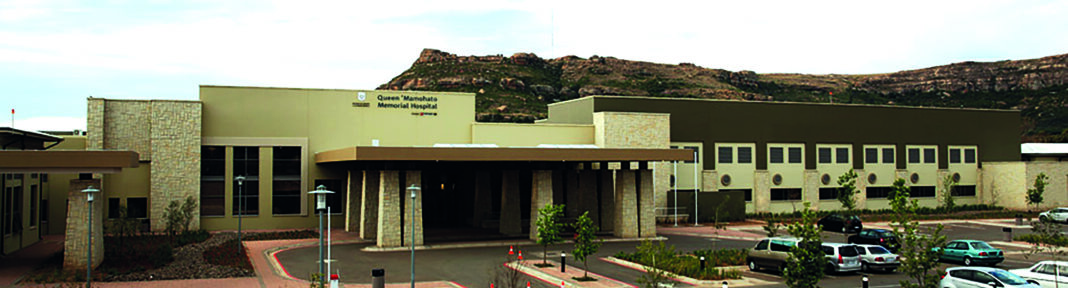
A senior Queen ‘Mamohato Memorial Hospital (QMMH) official has been unable to provide clear documentation showing he was authorised to spend nearly M8 million from patient revenue accounts.
Tšele Sehlabo, Finance Manager for QMMH, appeared before the Public Accounts Committee (PAC) on Monday this week to answer queries raised during an internal audit. The audit revealed that Sehlabo used approximately M8 million from the hospital’s revenue account for daily operations, without what the committee described as proper written authorisation.
This was not the first time Sehlabo had faced scrutiny over financial decisions. Just last week, he admitted to the same committee that he had single-handedly decided to redirect staff pension contributions, money meant for the Lesotho National Insurance Group (LNIG), to pay hospital suppliers instead. That admission had already raised alarms about internal controls.
During Monday’s hearing, committee members pressed Sehlabo for written proof that he had been given the green light to tap into the M8 million from the revenue account. He was unable to produce any such document.
“According to my knowledge, it was authorised,” Sehlabo told the committee.
But the committee chairperson, ‘Machaba Lemphane Letsie, pushed back sharply: “When the auditor queries something, you have to convince them with documents, not just with knowledge. Knowledge without documents is not enough.”
Sehlabo insisted that hospital regulations allow revenue funds to be used for operational costs. However, he acknowledged that such decisions normally involve his immediate supervisor, the Managing Director, who at the time was Moleboheng Tau.
Tau, however, painted a different picture when she testified. She recalled that on March 28, 2025, Sehlabo came to her office warning that operational funds were running low. She said she advised him to formally request permission from the Ministry’s Principal Secretary (PS) and to attach a detailed statement showing remaining balances and outstanding expenses.
According to Tau, Sehlabo later submitted figures showing M10 million in available revenue. But she told the committee that he then appeared to have bypassed her entirely and approached the Principal Secretary directly.
“From there, I was not part of the decisions taken,” she said.
Sehlabo defended his actions by claiming that the Principal Secretary had told him QMMH did not need formal PS approval to use revenue funds, and that informing the PS was merely a courtesy.
He also noted that this was the first time he had seen a letter from the Managing Director explicitly refusing to grant authorisation without a full expenditure report. He further explained that in March 2026, when a similar funding shortage occurred, he again approached the Managing Director, who then consulted the legal office and the PS. Once more, Sehlabo said, the PS reaffirmed that no formal approval was required.
“In my line of work, there is no written document from my superiors every day saying I am allowed to use a certain amount of money. There is no documentation,” Sehlabo told the committee.
The PAC made it clear that it is not interested in seeing lists of individual payments made in March. Rather, the committee wanted proof that Sehlabo had the legal authority to move money from the hospital’s revenue account in the first place.
“We do not want March payments. We want the authority,” Chairperson Letsie emphasised.
The committee also pointed out that, even if revenue and government subvention funds were combined in the hospital’s accounts, Sehlabo should have been able to track how much came from each source, and should therefore know exactly what portion of the remaining balance was revenue.
This case goes beyond accounting technicalities. Hospital revenue accounts typically come from patient fees and other service charges. When such funds are used without clear authorisation, it can undermine the hospital’s ability to track its true financial position, potentially affecting procurement of medicines, equipment, and staff salaries.
The PAC hearings are part of Parliament’s oversight role, ensuring that public funds, and funds generated by public institutions, are spent transparently and lawfully.
Summary
- He also noted that this was the first time he had seen a letter from the Managing Director explicitly refusing to grant authorisation without a full expenditure report.
- He further explained that in March 2026, when a similar funding shortage occurred, he again approached the Managing Director, who then consulted the legal office and the PS.
- The committee also pointed out that, even if revenue and government subvention funds were combined in the hospital’s accounts, Sehlabo should have been able to track how much came from each source, and should therefore know exactly what portion of the remaining balance was revenue.
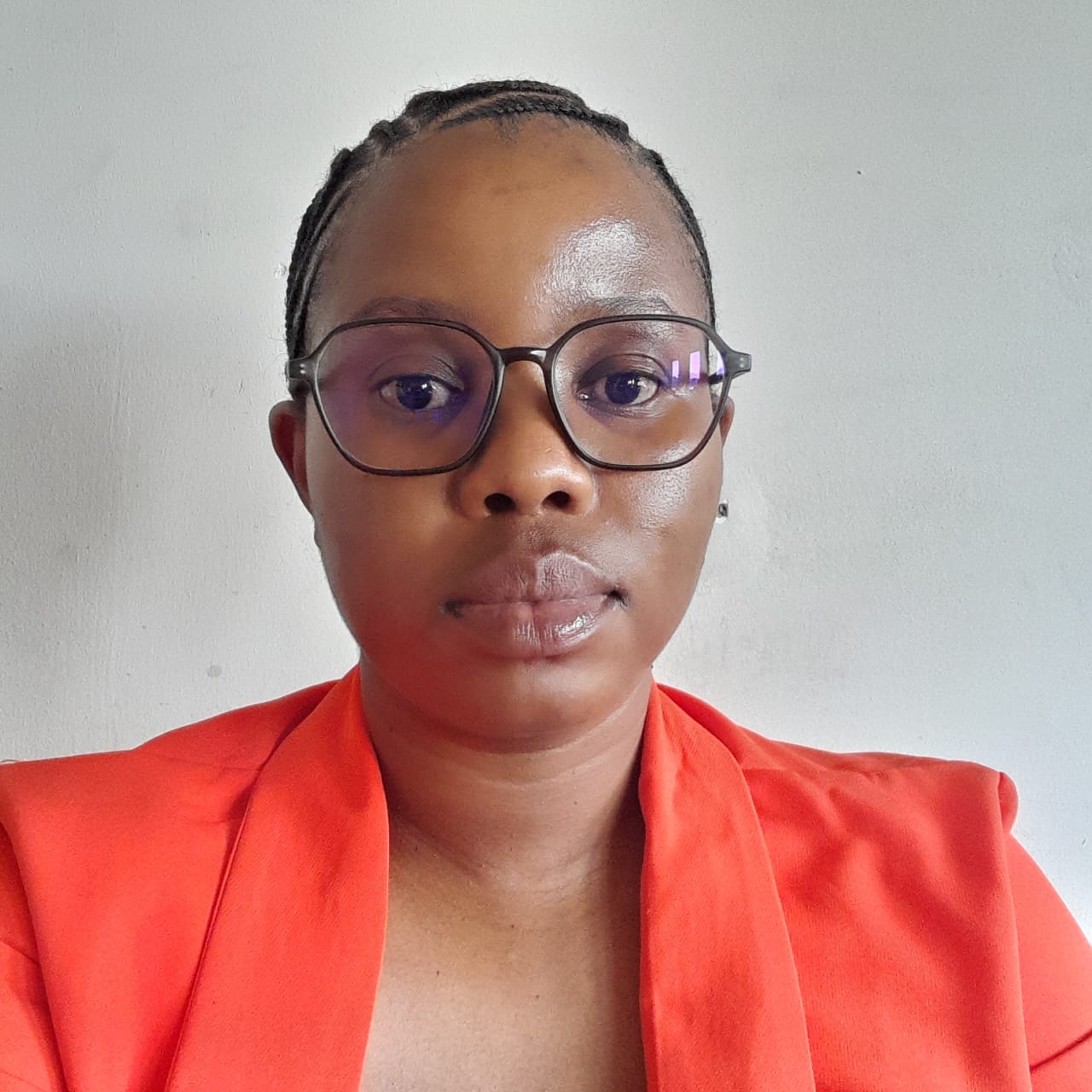
Ntsoaki Motaung is an award-winning health journalist from Lesotho, specializing in community health stories with a focus on sexual and reproductive health and rights, as well as HIV. She has contributed to platforms like “Be in the KNOW,” highlighting issues such as the exclusion of people with disabilities from HIV prevention efforts in Lesotho.
In addition to her journalism, Ntsoaki serves as the Country Coordinator for the Regional Media Action Plan Support Network (REMAPSEN). She is also a 2023 CPHIA Journalism Fellow.