
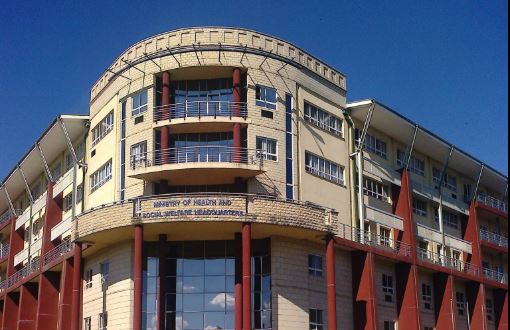
Following a damning report by international organizations, World Health Organisation (WHO) and UNICEF, that highlighted years of vaccine shortages and unreliable records, the Ministry of Health has stepped forward to set the record straight.
To address the growing public concern caused by a recent report published in Newsday, the Expanded Programme on Immunisation (EPI) convened a special briefing to outline where the country has come from, the severe challenges it faced, and the aggressive measures now being taken to safeguard the health of Lesotho’s children.
Speaking on behalf of the EPI, Puleng Limape acknowledged that the health sector did go through a difficult period.
However, Limape emphasised that the narrative of failure does not tell the full story, as many of the issues were triggered by severe global events beyond the country’s direct control.
Limape explained that the vaccine shortages experienced in previous years were not unique to Lesotho. Instead, they were heavily driven by global supply disruptions that hit right after the COVID-19 pandemic, leaving small nations vulnerable to international market shortfalls.
“These challenges were primarily driven by unprecedented global vaccine supply shortages that affected many countries following the COVID-19 pandemic, particularly for Rotavirus, Measles-containing vaccines and other routine childhood vaccines,” Limape stated.
Beyond the global shortage of medical supplies, getting vaccines from central warehouses to rural health posts presented its own major obstacles. Transporting fragile vaccines requires a continuous cold environment, known as a cold chain. Without specialised vehicles, getting those medicines to remote mountainous villages was a constant struggle.
“In addition, the country faced operational constraints related to last-mile vaccine distribution, including limited dedicated transport capacity to ensure timely delivery of vaccines from district stores to health facilities,” Limape added.
Limape noted that while these disruptions led to painful stockouts in the past, the ministry did not sit idly by. Instead, the government used those difficult years as a wake-up call to completely overhaul how child immunisation is funded, stored, and distributed nationwide.
Despite the historical failures detailed in the joint WHO and UNICEF assessment, Limape delivered a strong message of reassurance to the public, the national supply chain is now robust, fully operational, and dependable.
“We are pleased to assure the public that the immunisation supply chain has significantly stabilised. Over the past two years, Lesotho has not experienced any national stock-out of routine vaccines for children under five years of age,” Limape announced.
She said, this stabilisation is the result of a massive, coordinated effort between the government and international partners. To ensure that empty clinic refrigerators are a thing of the past, the Ministry of Health has overhauled its operations across four critical areas.
The ministry has expanded its fleet of dedicated cold-chain vehicles. This ensures that vaccines travel safely from main stores in Maseru all the way to hard-to-reach rural clinics without losing their potency.
New, state-of-the-art refrigeration systems have been installed at central, district, and local health centres, protecting vaccines against local power outages and heat damage.
To prevent reliance on unpredictable emergency aid, the government has dedicated steady domestic funding to procure essential childhood vaccines on time.
Health workers now use modernised inventory tracking systems to predict shortages months before they happen, allowing the country to order fresh batches before stocks run dry.
The WHO and UNICEF report also drew heavy attention to what it described as a “broken pencil” years of chaotic and unreliable paper records that made it difficult to determine exactly how many children had been vaccinated.
Limape directly addressed these concerns, agreeing that accurate data is essential for saving lives. The department is actively moving away from outdated manual record-keeping to ensure every single child is correctly accounted for in official government databases.
“The Ministry also recognises the importance of high-quality immunization data for planning, monitoring programme performance, and ensuring that every eligible child is reached,” Limape explained.
She said to restore complete trust in national statistics, the ministry is rolling out digital information platforms across clinics. These digital systems will reduce human recording errors, allow real-time tracking of child vaccination cards, and support regular data audits and staff training across all ten districts.
While global markets remain unpredictable, Limape reassured citizens that Lesotho is now better prepared than ever. By maintaining extra emergency buffer stocks and coordinating directly with international suppliers like UNICEF Supply Division, WHO, and Gavi, the ministry is built to withstand future global shocks.
Limape concluded the briefing with an urgent appeal to parents, caregivers, and community leaders across the country to remain confident in the public health system.
“Protecting every child from vaccine-preventable diseases remains one of the ministry’s highest public health priorities,” Limape emphasised. “Routine childhood immunisation services continue to be available throughout the country. Parents and caregivers are encouraged to continue taking their children to health facilities according to the national immunisation schedule.”
Summary
- Following a damning report by international organizations, World Health Organisation (WHO) and UNICEF, that highlighted years of vaccine shortages and unreliable records, the Ministry of Health has stepped forward to set the record straight.
- To address the growing public concern caused by a recent report published in Newsday, the Expanded Programme on Immunisation (EPI) convened a special briefing to outline where the country has come from, the severe challenges it faced, and the aggressive measures now being taken to safeguard the health of Lesotho’s children.
- Despite the historical failures detailed in the joint WHO and UNICEF assessment, Limape delivered a strong message of reassurance to the public, the national supply chain is now robust, fully operational, and dependable.

Ntsoaki Motaung is an award-winning health journalist from Lesotho, specializing in community health stories with a focus on sexual and reproductive health and rights, as well as HIV. She has contributed to platforms like “Be in the KNOW,” highlighting issues such as the exclusion of people with disabilities from HIV prevention efforts in Lesotho.
In addition to her journalism, Ntsoaki serves as the Country Coordinator for the Regional Media Action Plan Support Network (REMAPSEN). She is also a 2023 CPHIA Journalism Fellow.