
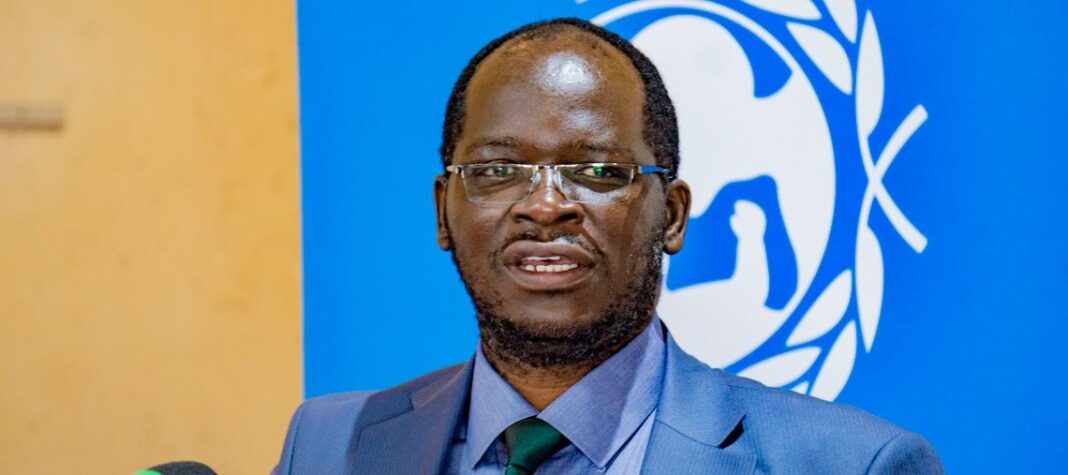
The Acting UNICEF Representative for Lesotho, Bob Muchabaiwa, has called on all partners to work together to strengthen the country’s health information systems, saying this is key to improving sexual and reproductive health and rights (SRHR) for women, adolescents, and other vulnerable groups.
Muchabaiwa was speaking at the opening of a five-day national workshop focused on strengthening SRHR data and information systems in Lesotho.
The workshop, held under the Regional Access and Accountability for Increased SRHR Equity in East and Southern Africa (RAISE SRHR) programme, brought together government officials, UN agencies, development partners, and civil society organisations.
In his address, Muchabaiwa made it clear that UNICEF and other UN agencies see this work as a top priority: “This piece of work is very serious to us, and we would like to see it generate meaningful results,” he said.
He emphasised that the goal is not just to produce another document, but to develop a roadmap that will lead to real change in Lesotho’s health sector. “Stronger SRHR outcomes depend on a stronger system. The core aspect of that is data,” Muchabaiwa stressed, adding that, “Data is the currency that drives development. If you miss the data piece, your planning, your implementation, your monitoring will not work.”
Muchabaiwa urged participants to be open and honest about the challenges facing Lesotho’s health data systems.
“It becomes very easy to just say, okay, finally in a workshop, we talk about this and that, but we are not actually addressing the underlying challenges and bottlenecks,” he warned.
He called on everyone to use the workshop to identify real solutions that can be implemented, financed, and monitored.
He also thanked the Swedish government for funding the initiative and stressed the need for proper financing and ongoing monitoring.
“No matter how much you say you are committed to an issue, if we do not commit resources to that issue whether human or financial it becomes talk, and talk then is cheap,” he said.
Dr. ‘Mamotena Sekhobe, Head of the Family Health Division at the Ministry of Health, thanked partners including UNICEF, WHO, UNFPA, and UNAIDS for their support.
She highlighted the importance of bringing together a diverse group of stakeholders, from the Ministry of Health and the National Statistics Office to civil society and technical experts, to work together.
“This workshop comes at a critical time for Lesotho,” Dr. Sekhobe said, noting that while there have been significant investments in key areas like maternal and adolescent health, the real test is whether these interventions are backed by strong data.
“We must move beyond collecting data for reporting purposes alone and ensure that data is actively used to identify gaps, allocate resources, improve service quality, and strengthen accountability at all levels of the health system,” she said.
Dr. Sekhobe outlined the goals for the week, including reviewing Lesotho’s health information ecosystem, assessing data quality, undertaking field visits, and creating a prioritised, costed national action plan for SRHR data systems.
Both Muchabaiwa and Dr. Sekhobe stressed the importance of practical, realistic solutions.
“The roadmap developed through this workshop should not become another document that sits on a shelf and gathers dust. We need interventions that are realistic, implementable, and capable of delivering tangible improvements within existing national systems.” Dr. Sekhobe said
She also called for stronger collaboration and ownership, noting that the Ministry of Health cannot do this work alone.
“It requires the collective efforts of all stakeholders represented here. Success will depend on our ability to work together, align resources, harmonise reporting systems, and support a common national vision,” she said.
Experts from the Ministry of Health gave detailed presentations on the current state of Lesotho’s health information systems.
Ntebaleng Molemane, from the Health Management Information Systems (HMIS) Division, explained how health data is collected from both communities and health facilities, using a mix of paper-based and electronic registers. She highlighted the need to move from simple reporting to using data for real decision-making.
Seipati Napo, from the Ministry’s ICT department, discussed ongoing efforts to expand and integrate digital health systems. She noted that while some programmes now use electronic registers, others still rely on paper, and key systems, such as the laboratory information system, are not yet fully integrated into the national data warehouse.
“We are on a journey to improve our data analytics and to develop an interoperable national health data system,” she said.
Kerry-lee Bothma, a specialist from the UNICEF Centre of Excellence on SRHR, explained that Lesotho’s efforts form part of a larger regional programme, supported by the European Union and Sweden, to harmonise SRHR indicators and improve data quality across Southern Africa.
“We want to ensure that when we measure an indicator in Lesotho, we are measuring the same thing as in Malawi or South Africa,” she said.
Summary
- The Acting UNICEF Representative for Lesotho, Bob Muchabaiwa, has called on all partners to work together to strengthen the country’s health information systems, saying this is key to improving sexual and reproductive health and rights (SRHR) for women, adolescents, and other vulnerable groups.
- He emphasised that the goal is not just to produce another document, but to develop a roadmap that will lead to real change in Lesotho’s health sector.
- She highlighted the importance of bringing together a diverse group of stakeholders, from the Ministry of Health and the National Statistics Office to civil society and technical experts, to work together.
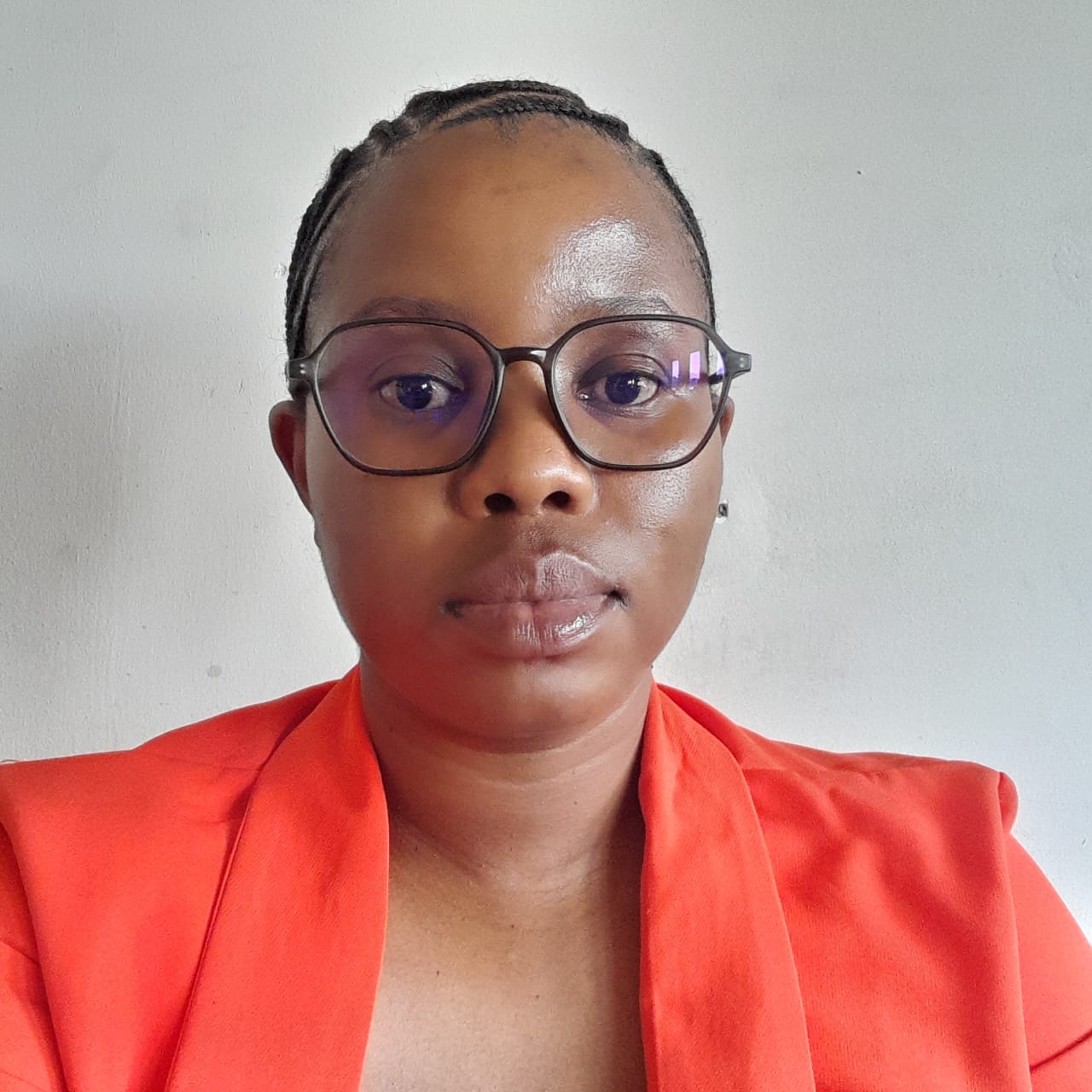
Ntsoaki Motaung is an award-winning health journalist from Lesotho, specializing in community health stories with a focus on sexual and reproductive health and rights, as well as HIV. She has contributed to platforms like “Be in the KNOW,” highlighting issues such as the exclusion of people with disabilities from HIV prevention efforts in Lesotho.
In addition to her journalism, Ntsoaki serves as the Country Coordinator for the Regional Media Action Plan Support Network (REMAPSEN). She is also a 2023 CPHIA Journalism Fellow.