
Lesotho has been called on to fast-track its ratification of the African Minerals Development Centre (AMDC) Statute, joining a continent-wide push to operationalize the decade-old institution that African Union (AU) designed to revolutionize administration of Africa’s mineral wealth.
However, even if Lesotho was to sign and ratify, as it has now pledged to do, the AMDC would still need 10 more ratifications to enter into force. As of January 2026 only four countries namely Guinea, Mali, Zambia and Nigeria had completed the process.
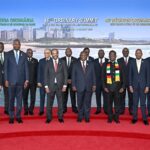
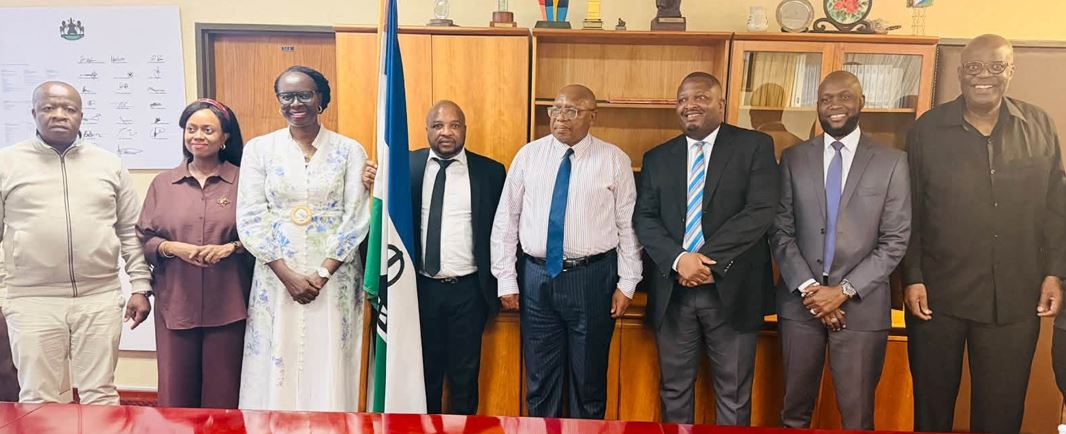
The ratification urgency was underscored this week when a joint delegation comprising the AMDC, the African Peer Review Mechanism’s (APRM) continental secretariat, and the African Centre for the Constructive Resolution of Disputes (ACCORD) arrived in Maseru to lobby Lesotho government officials, parliamentarians and the media to expedite ratification.
The Mission was composed of APRM CEO and ACCORD’s Senior Advisor on Critical Minerals, Professor Eddy Maloka, Advisor to the CEO of the APRM Advocate Batlokoa Makong, Programmes Officer at AMDC Mkhululi Ncube, Consultant on Critical Minerals at ACCORD Ambassador Refiloe Litjobo, Counselor at the Permanent Mission of Lesotho to the African Union Advocate Ishmael Tatolo Sefeane, Joint Project Coordinator Carole Obure, and APRM Researcher Karabo Chadzingwa-Mochebelele.
The AMDC statute was adopted by AU Heads of State in January 2016 as the implementing arm of the Africa Mining Vision (AMV), which is the continental blueprint for turning mineral wealth into shared prosperity. Ten years later, it is yet to start operations due to inadequate ratification numbers.
That stalled progress is why AU officials have intensified travel across the continent including Lesotho in 2026 to close the gap. Lesotho was among the first AU member states to embrace the AMV in principle, having aligned its as yet unused 2015 Minerals and Mining Policy with the AMV’s aims, although it is yet to formally commit to the AMDC statute by way of ratification as of September 2026.
“Lesotho’s commitment and call to action remains unequivocal. We will work towards signing within the immediate future and push the processes to ratify the AMDC Statutes,” said Seboka Thamae, Deputy Principal Secretary in the Ministry of Energy and Mining.
He said ratification would not be a mere formality. “Our ratification deposit will not be done merely as a procedural formality, but as a strategic affirmation that Africa’s mineral destiny must be shaped by Africans, for Africans.”
Thamae outlined what Lesotho expects the AMDC to deliver once operational; harmonised mining policies and regulatory best practice to boost investor confidence while protecting environmental and social standards; technical support for geological surveys, mining cadastres and value-chain analysis; platforms for regional cooperation on cross-border infrastructure and green-minerals strategy; and collective continental advocacy to ensure African producers get fair value in global markets.
“These benefits are not unique to Lesotho. They are the very rationale for the AMDC’s existence,” he said, adding that they can only be realised once the fifteen-ratification threshold is met.
Head of mission Professor Eddy Maloka, said their visit to Lesotho was more than just sensitisation and paperwork. He said the workshop provided an opportunity for stakeholders in Lesotho to retrospect and reflect on the areas that need to be addressed.
Maloka said he left encouraged by the government’s reassurances, but urged Lesotho to avoid further in fulfilling its commitment.
Advocate ‘Makong explained that AMDC is designed to fix specific, long-standing weaknesses in how African minerals are currently managed.
It will improve the quality of geological data available to governments, strengthening their hand in negotiations and leading to fairer investment deals. It will build state capacity to negotiate mining contracts that capture a greater share of resource rents through fiscal regimes sensitive to commodity price swings, while still protecting community access to infrastructure.
It will also pool regulatory and technical skills across the continent to close capacity gaps that individual governments cannot fill alone. And it will help governments capture more mineral wealth directly, whether through state ownership stakes or joint ventures.
‘Makong further noted that infrastructure remains one of the biggest obstacles, pointing to Africa’s logistics costs running roughly 250 percent above the global average, a gap the AMDC aims to narrow by pooling resources through integrated regional Development Corridors.
“It is our sincere conviction as the APRM that greater utilization and governance of Lesotho’s mineral resources will ensure radial socio-economic transformation of Lesotho. It will ensure political stability and sustainable development and prosperity of the country.
“It ensures that the country is better positioned to effectively address the governance challenges identified in the APRM Review Reports. We are convinced beyond reasonable doubt that the AMDC is a tool that will crystalise and accelerate efforts by the Government in ensuring a better life for its citizens.”
On her part, Chadzingwa-Mochebelele indicated that the Africa Governance Report 2025 (AGR-2025) on Natural Resource Governance – developed by the APRM in close collaboration with African Union African Governance Architecture, particularly the African Union Commission through the AMDC, urged AU Member States to implement continental frameworks on mineral resources, including the African Mining Vision.
The AGR-2025 was adopted by the AU Assembly of Heads of States and Governments in February 2025. The Assembly further urged all AU Member States to implement the recommendations contained in AGR-2025, she added.
In order for Lesotho’s ratification to be finalized, the statute must clear both Cabinet and Parliament before being returned, signed, to the Ministry of Foreign Affairs and International Relations, which will formally deposit the instrument of ratification with the AU Commission in Addis Ababa.
Summary
- The ratification urgency was underscored this week when a joint delegation comprising the AMDC, the African Peer Review Mechanism’s (APRM) continental secretariat, and the African Centre for the Constructive Resolution of Disputes (ACCORD) arrived in Maseru to lobby Lesotho government officials, parliamentarians and the media to expedite ratification.
- The Mission was composed of APRM CEO and ACCORD’s Senior Advisor on Critical Minerals, Professor Eddy Maloka, Advisor to the CEO of the APRM Advocate Batlokoa Makong, Programmes Officer at AMDC Mkhululi Ncube, Consultant on Critical Minerals at ACCORD Ambassador Refiloe Litjobo, Counselor at the Permanent Mission of Lesotho to the African Union Advocate Ishmael Tatolo Sefeane, Joint Project Coordinator Carole Obure, and APRM Researcher Karabo Chadzingwa-Mochebelele.
- Lesotho was among the first AU member states to embrace the AMV in principle, having aligned its as yet unused 2015 Minerals and Mining Policy with the AMV’s aims, although it is yet to formally commit to the AMDC statute by way of ratification as of September 2026.