
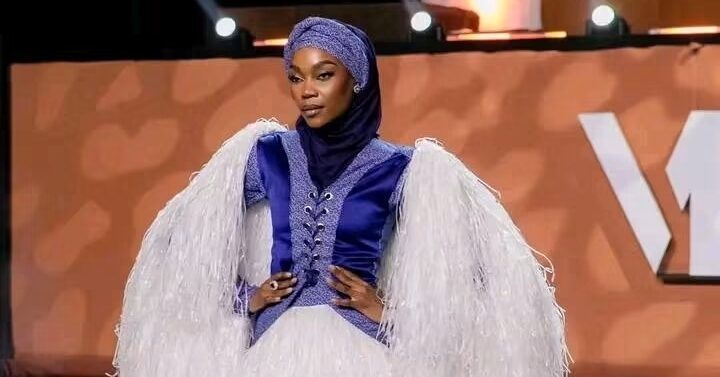
Lesotho-born designer George Malelu is considering taking legal action against the Miss Botswana Organisation, after a royal-blue gown worn by Miss World Botswana Ruth Thomas was linked to his work.
Malelu says his management has already written to the organisation asking for a public apology and compensation. The organisation confirmed it received the letter, but he says weeks have passed without what he considers a real response.
He is now looking for legal help and plans to speak publicly about the matter. At this stage he is only weighing his options.
What started as a striking fashion moment on the Miss World stage has become a dispute about who owns a creative idea, who gets the credit, and how African designers are treated, with Malelu demanding public accountability from the Miss Botswana Organisation.
Malelu says he first saw the gown the morning after the pageant, when a friend tagged him in a Facebook post. His first reaction was confusion.
“I thought, this is my work. How did it get there?”
The gown was shown in the pageant’s Designers of the World segment. Many Basotho saw similarities with Malelu’s work, especially his Potato collection, which he says was inspired by his mother.
An early post by MET Designs Fashions described the outfit as “by our very own MET Designs Fashions, featuring Makgabe made from Kgetsi”. The post called it a celebration of culture, customs and heritage.
As criticism grew, the Miss World platform changed its description. It said the garment was “inspired by one of George Malelu’s creations and made by Met Designs.”
Malelu says the word inspired does not describe what happened.
“Being inspired is something else,” he says. “There was not an issue of inspiration, it was plagiarism.”
For him, this is a serious matter of credit, not a small difference in wording. That is Malelu’s own view of the matter. No court or other independent body has made a legal finding on it.
What the Miss Botswana director said
A WhatsApp exchange between Malelu and Benjamin “Ben” Raletsatsi adds another piece to the story. Malelu identifies Raletsatsi as the National Director of Miss Botswana.
In the message, Raletsatsi says he spoke to the designer who made the gown. He says she confirmed that Miss Botswana herself gave her the design or reference.
“She simply executed the idea as provided to her,” Raletsatsi wrote.
He continued:
“So it appears the original inspiration/reference came from our side, rather than from the designer who made the outfit.”
Raletsatsi said he was updating Malelu while they worked out exactly how the design came to be used.
The message does not on its own show where Ruth Thomas got the reference. It also does not show whether she knew it was Malelu’s work, or whether anyone involved asked for permission to use it. But it does appear to place the source of the reference with the Miss Botswana side, and not with a designer who came up with a similar gown on her own.
Malelu says things became more complicated in later conversations. He says he was told that Raletsatsi and Thomas sent the reference to the designer and asked for the design “as is.”
That, he says, raised more questions about how the design was sourced, and why his work was not acknowledged from the start.
“This was supposed to be a compliment”
Malelu says that when he first saw the gown, he thought the resemblance might be flattering. That changed when he thought about what the design meant to him.
He says the collection it came from was inspired by his mother and is deeply personal.
“This potato collection was inspired by my mother,” he says. “It marked me deeply, going back with a close tie to my heart.”
For Malelu, this is about more than fashion. He believes it shows a wider pattern in which African creatives see their work used, copied or adapted without proper credit.
“We are overlooked while the world has been taking from us. People take from us but don’t want us to be involved in telling our stories.”
Why he is saying no to private deals
Malelu says there were several fair ways his work could have been used. He could have been paid to make the garment. The rights to the design could have been negotiated. Or someone could have asked his permission.
Instead, he says, none of this happened before the gown reached the Miss World stage.
He says both the designer and the Miss Botswana Organisation have since apologised in private. But he believes a private fix is not enough, because the gown was shown to the public.
“If my work was publicly presented, then accountability should also be public,” he says.
Malelu says the remedies discussed included compensation and a chance to travel to Botswana to design clothing for the First Lady of Botswana. He turned the offer down.
In his view, taking another professional job would have turned a separate collaboration into a substitute for dealing with the original problem. He also says he had to think of the Basotho people who publicly defended his work during the controversy.
He says money is not his main goal.
“I am not so much after the compensation. I want to pass a message and a lesson to say this must stop.”
Malelu is also worried about other creatives who may be afraid to challenge powerful organisations because it could cost them opportunities.
A bigger question for Basotho creatives
The dispute raises a wider question for Lesotho’s creative industry: what happens when local creativity travels beyond the country’s borders?
Traditional culture belongs to communities, and no single designer can claim ownership of Basotho heritage itself. But contemporary designers make their own creative choices when they turn that heritage into modern fashion. That is why credit matters.
Malelu’s career already shows how far Basotho creativity can go. His work has appeared on major African platforms and reached international audiences, including through his work with the late Quiteria Kekana.
For him, the Miss World episode is not just about one dress. It is about whether African creatives can help tell the stories that come from their own cultures, and whether credit follows their work when it crosses borders.
“It’s bigger than George Malelu,” he says.
Summary
- What started as a striking fashion moment on the Miss World stage has become a dispute about who owns a creative idea, who gets the credit, and how African designers are treated, with Malelu demanding public accountability from the Miss Botswana Organisation.
- But it does appear to place the source of the reference with the Miss Botswana side, and not with a designer who came up with a similar gown on her own.
- He says he was told that Raletsatsi and Thomas sent the reference to the designer and asked for the design “as is.

A Professional Communications practitioner with a wealth of expertise in marketing, public speaking, communication and media relations. I believe in learning everyday and improving one’s personal and professional capabilities.
* A former journalist and radio host who is passionate about media and it’s impact on society.