
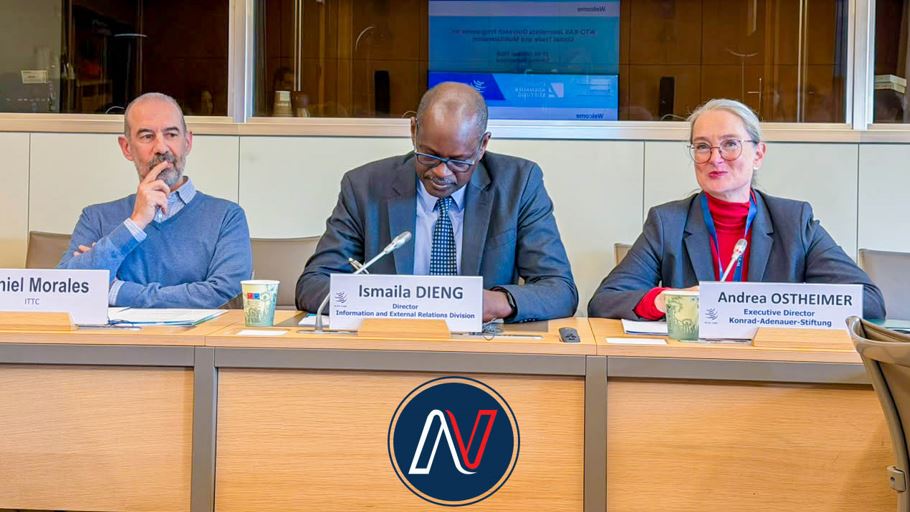
GENEVA, SWITZERLAND – The Konrad-Adenauer-Stiftung (KAS) Executive Director, Andrea Ostheimer, has warned that international trade, despite its potential to stimulate economic development, cannot provide an automatic solution to the challenges facing least developed and developing countries.
Speaking at the opening of the KAS-World Trade Organization (WTO) Outreach Programme for Journalists in Geneva, Switzerland, Ostheimer highlighted the growing importance of international trade relations at a time when development assistance is declining, and many least developed and developing countries are struggling with debt.
“We are hosting this program at a time when Official Development Assistance is racing to the bottom; at a time when many developing countries are facing severe debt burdens which are forcing them towards prioritisation,” Ostheimer said.
She stressed that strong trade relationships were becoming increasingly relevant under these circumstances, but cautioned against regarding trade as a universal remedy for economic development challenges.
“Trade is a powerful tool for development, but the bottlenecks and constraints are real,” she said.
Ostheimer was addressing journalists attending the four-day Media Training Workshop on WTO, Global Trade and Multilateralism, organised by the WTO Secretariat in partnership with KAS from 27 to 30 October 2026.
The workshop coincides with the WTO’s Aid for Trade Global Review Week, which marks the 20th anniversary of the Aid for Trade initiative.
The review brings together governments, businesses, international organisations and development partners to examine the role of trade in promoting economic growth, resilience and development amid geopolitical tensions, economic fragmentation and technological change.
Ostheimer emphasised that participation in regional and global trade requires countries to address domestic constraints alongside pursuing international market opportunities.
She explained that integration into international trade could encourage domestic infrastructure investment, reduce administrative barriers and support the transition of businesses from informal to formal economic activities.
However, she cautioned that greater trade integration could also have adverse consequences.
Her remarks placed particular emphasis on the difficulties facing African countries in implementing the African Continental Free Trade Agreement.
Ostheimer acknowledged the challenges experienced by countries across sub-Saharan Africa in attempting to operationalise the continental agreement.
The discussion formed part of the broader reflection on the achievements and limitations of international trade cooperation during the past two decades.
Turning to the state of international trade governance, Ostheimer warned that the multilateral trading system was experiencing an exceptionally difficult period.
She pointed to the suspension of the WTO’s Appellate Body operations in 2019 as a significant challenge confronting the organisation.
While acknowledging the seriousness of the institutional difficulties, Ostheimer rejected the view that the problems affecting the Appellate Body meant the entire WTO had become dysfunctional.
She maintained that the organisation continued to function for the majority of its members, although reforms remained necessary.
Ostheimer also stressed the continued importance of international institutions in providing predictability, legitimacy and established procedures for cooperation between countries.
“Multilateralism has its moment of crisis,” she said.
She emphasised that multilateral institutions remained necessary despite the challenges confronting them.
Ostheimer further argued that the effectiveness of international institutions was closely linked to the political will of their member states and the trust between them.
She cautioned against criticising institutions for failing to deliver without examining the responsibilities of the governments participating in them.
According to Ostheimer, strengthening multilateral cooperation requires patience, openness and tolerance towards differing national perspectives.
Ostheimer also highlighted the growing significance of artificial intelligence and its implications for developing economies.
She acknowledged that artificial intelligence presents opportunities but stressed that countries must also recognise the associated costs and risks.
She noted that skills and investment were essential for countries seeking to benefit from the technology, yet these resources were often limited in developing-country contexts.
Her remarks placed technological change among the issues requiring attention as governments and international institutions consider the future of trade and development.
Addressing the participating journalists, Ostheimer emphasised their role in helping the public understand the value of international cooperation and multilateral institutions.
She encouraged media practitioners to report beyond their immediate national and institutional perspectives and communicate the relevance of international cooperation to their audiences.
The workshop brings together 16 journalists from Barbados, Chile, Ecuador, Ethiopia, The Gambia, Namibia, Nepal, Timor-Leste, Albania, Botswana, Lesotho, Mexico, North Macedonia, Peru, the Philippines and Thailand.
Organised by the WTO’s Information and External Relations Division in partnership with KAS, the programme is intended to strengthen journalists’ understanding of the WTO, global trade, multilateralism and international economic policy debates.
Participants will engage with WTO officials, economists and representatives of international organisations through technical briefings, discussions and reporting opportunities during the Aid for Trade Global Review Week.
The programme covers tariffs, subsidies, digital trade, development and economic resilience.
It also provides opportunities for engagement with ambassadors, journalists from the United Nations press corps and representatives of international organisations, including the United Nations Conference on Trade and Development (UNCTAD), the Food and Agriculture Organization (FAO) and the International Trade Centre (ITC).
Ostheimer expressed hope that these engagements would equip journalists with information, professional contacts and insights to strengthen their reporting on international cooperation and multilateral processes.
She also thanked Ismaila Dieng, Director of the WTO’s Information and External Relations Division, and his team for their cooperation in organising the programme for the second consecutive year.
The workshop forms part of the WTO’s Technical Assistance and Training Plan for 2026–2027, which seeks to improve understanding of the organisation and the multilateral trading system among legislators and non-governmental stakeholders.
As the WTO marks 20 years of Aid for Trade, the Geneva gathering provides a platform for reviewing the role of international trade in development and the continued relevance of multilateral cooperation in a changing global environment.
Summary
- Speaking at the opening of the KAS-World Trade Organization (WTO) Outreach Programme for Journalists in Geneva, Switzerland, Ostheimer highlighted the growing importance of international trade relations at a time when development assistance is declining, and many least developed and developing countries are struggling with debt.
- The discussion formed part of the broader reflection on the achievements and limitations of international trade cooperation during the past two decades.
- While acknowledging the seriousness of the institutional difficulties, Ostheimer rejected the view that the problems affecting the Appellate Body meant the entire WTO had become dysfunctional.

Co-Owner and Managing Editor of Newsday Media Lesotho. PEPFAR Media champion, Award wining features journalist, an Investigative journalist, REPSSI CAB member. Maseru, Lesotho Joined November 2009.