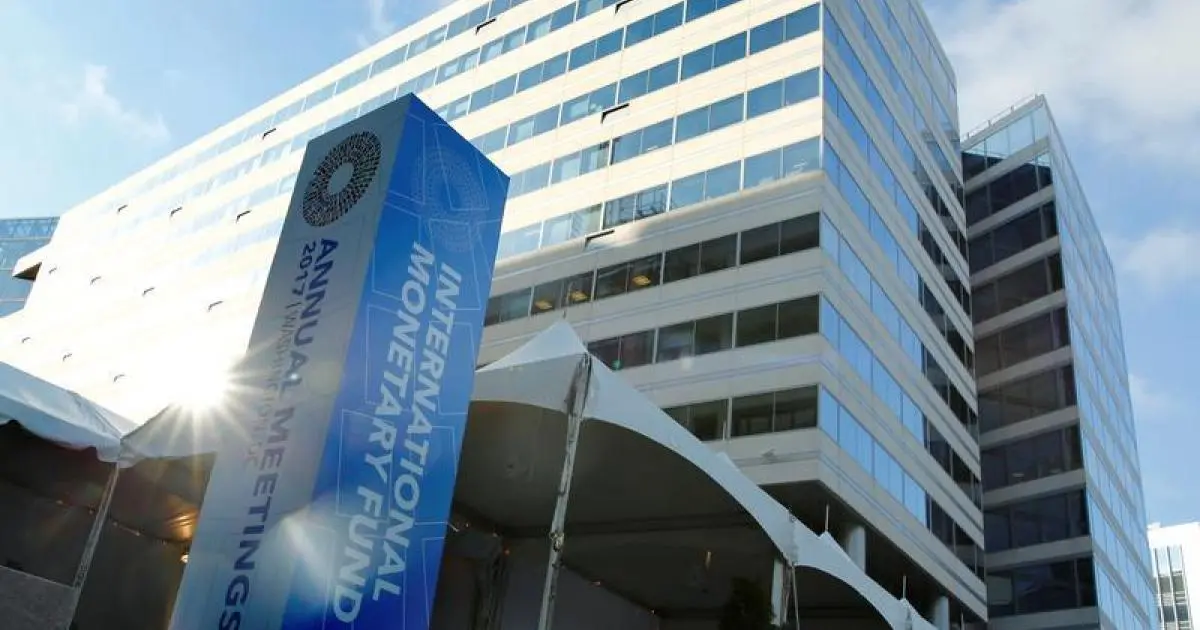

Lesotho’s economy is set to lose momentum every year through 2027, with the International Monetary Fund (IMF) projecting growth will slide from 1.5 percent in 2025 to 1.1 percent in 2026 and 0.8 percent in 2027, a steady decline that points to a prolonged period of weak performance marked by falling household incomes, limited job creation and subdued private-sector activity.
The projections, contained in the IMF’s Regional Economic Outlook Update for Sub-Saharan Africa, show a weakening trajectory at a time when the country faces mounting pressure to create sustainable employment, strengthen domestic production and improve living standards.
The outlook contrasts sharply with the broader Sub-Saharan African region, which is projected to grow by 4.5 percent in both 2026 and 2027. By 2027, Lesotho’s expected growth will be only a fraction of the regional pace.
The IMF warned that although the region had demonstrated resilience to global economic shocks, growth prospects differed significantly between countries, with economies less dependent on natural resources facing slower growth.
It also cautioned that rising inflation, high debt-servicing costs, limited foreign reserves and declining foreign aid were leaving many African countries with little room to absorb further economic shocks.
“Risks remain decidedly tilted to the downside,” the IMF stated, citing possible energy supply disruptions, sovereign repricing, further aid reductions and severe weather events, particularly El Niño.
The fund called for continued fiscal adjustment, targeted support for vulnerable households, protection of productive investment and policies that encourage private-sector growth.
For Lesotho, these concerns come amid persistent structural weaknesses, including limited domestic manufacturing capacity, dependence on imported goods and vulnerability to developments in South Africa, its major trading partner.
The slowdown is already visible in household spending and business activity, with consumers facing pressure from reduced income opportunities while firms contend with weak demand.
Household consumption, a key driver of economic growth, depends largely on employment income and remittances. However, job losses, limited opportunities for new employment and disruptions to remittance flows, particularly from South Africa since March, have weakened households’ ability to spend.
Without stronger purchasing power, businesses have fewer incentives to expand production, invest in new operations or employ additional workers.
The Central Bank of Lesotho (CBL) has also raised concerns about weakening domestic economic activity.
In August, its Monetary Policy Committee (MPC) reported that the moderate economic rebound recorded earlier in the year had been short-lived, with recent indicators pointing to subdued demand in the transport and manufacturing subsectors.
The bank further noted that private-sector credit growth remained subdued, suggesting that households and businesses continued to borrow cautiously despite relatively stable financial conditions.
Credit growth is an important indicator of economic confidence because businesses often borrow to finance expansion, while households use credit to support consumption.
When borrowing and investment remain weak, the economy risks entering a cycle of low demand, limited business expansion and slow job creation.
Although government expenditure remains an important source of economic activity, concerns persist over the extent to which public spending stimulates domestic production and supports Basotho-owned businesses.
Much of the government’s procurement goes towards goods and services sourced from outside the country, particularly South Africa, because Lesotho has a limited manufacturing base.
This means a significant share of money spent within the country flows back into foreign economies through imports, limiting the multiplier effect of public expenditure on local businesses, employment and production.
Concerns have also been raised that government procurement tends to favour larger companies, potentially restricting opportunities for smaller domestic enterprises to participate in major contracts.
While government spending can stimulate demand, it cannot sustainably replace private-sector investment, competitive local industries and a stronger domestic productive base.
Economic growth ultimately depends on the ability of businesses to produce goods and services, create jobs and generate income that circulates within the country. The challenge, therefore, is to build industries around sectors in which Lesotho has a competitive advantage and can develop sustainable employment opportunities
The clothing and textile industry, an important source of formal employment and export earnings, faces uncertainty linked to United States trade policies, tariffs introduced under President Donald Trump and questions surrounding the future of the African Growth and Opportunity Act (AGOA), which provides eligible African countries with preferential access to the US market.
The industry also faces stiff competition from countries such as Kenya and Ethiopia, as well as Asian producers, including Vietnam.
Meanwhile, the downturn in the diamond market has added pressure to an economy already struggling to diversify its sources of export earnings.
These challenges expose Lesotho’s vulnerability to external markets and underline the consequences of having a narrow productive base. With limited manufacturing capacity and significant dependence on imported goods, the country faces difficulties in generating sufficient export revenue to support broader economic development.
Monetary policy developments have added another dimension to the gloomy outlook. The CBL recently increased the Central Bank Rate, also known as the repo rate, by 25 basis points to 7.00 percent per annum. The bank said the adjustment was necessary to maintain the country’s exchange-rate peg, safeguard international reserves and preserve macroeconomic stability.
The increase came amid mounting inflation risks, with domestic inflation beginning to edge upwards, driven mainly by higher transport costs, although food price pressures remained relatively contained.
The MPC also revised its medium-term inflation outlook marginally upwards, warning that risks remained tilted towards higher inflation.
Among the risks identified were persistently elevated oil prices, the possible withdrawal of fuel levy relief measures, weather-related disruptions to food supplies and the potential for rising costs to trigger higher wages and broader price increases.
For a country heavily dependent on imported fuel and food, external price shocks can quickly affect household budgets, transport costs and business operating expenses.
The IMF similarly warned that median inflation across Sub-Saharan Africa was projected to rise from 3.4 percent in 2025 to 4.3 percent in 2026 and 5.0 percent in 2027. It urged governments to contain persistent inflation while protecting vulnerable households and maintaining investment that supports future growth.
The scale of competition for limited employment opportunities was illustrated recently when the Lesotho Mounted Police Service (LMPS) received more than 25,000 applications for just 500 police constable positions.
The figures highlight the intense pressure facing young people seeking formal employment in a country where economic growth remains weak. Although the number of applications does not establish the national unemployment rate, it demonstrates the high demand for a limited number of public-sector jobs.
The challenge extends beyond recruitment into government institutions. Sustainable employment requires an expanding private sector, stronger local industries and investment capable of creating jobs beyond the public service.
Lesotho’s economic difficulties predate the current administration, having persisted through successive governments and been compounded by the Covid-19 pandemic and the Russia-Ukraine war.
However, the IMF’s downward trajectory raises questions about whether enough is being done to address the structural weaknesses that continue to constrain growth under Prime Minister Samuel Ntsokoane Matekane’s administration.
The central challenge is not simply to increase government expenditure but to ensure that economic activity generates more income, supports local enterprises and creates sustainable employment.
A stronger recovery would require policies that encourage domestic production, widen access to government procurement for Basotho businesses, attract productive investment and strengthen industries capable of competing in regional and international markets.
The IMF has emphasised that protecting productive investment and enabling private-sector growth are essential to making economies more resilient to future shocks and improving long-term living standards.
Summary
- 8 percent in 2027, a steady decline that points to a prolonged period of weak performance marked by falling household incomes, limited job creation and subdued private-sector activity.
- The projections, contained in the IMF’s Regional Economic Outlook Update for Sub-Saharan Africa, show a weakening trajectory at a time when the country faces mounting pressure to create sustainable employment, strengthen domestic production and improve living standards.
- In August, its Monetary Policy Committee (MPC) reported that the moderate economic rebound recorded earlier in the year had been short-lived, with recent indicators pointing to subdued demand in the transport and manufacturing subsectors.

Senior journalist and communications professional with extensive experience in general news reporting, specializing in business and sports journalism. Skilled in public speaking, media relations, and strategic communication, with a proven ability to deliver accurate, engaging, and impactful stories.
A strong team player who thrives in collaborative environments and adapts effectively to diverse working conditions. Passionate about continuous learning, professional growth, and enhancing communication practices to meet evolving industry demands.