
A song can become a national hit, dominate radio playlists and fill dance floors across Lesotho, yet the musician behind it may still struggle to earn a sustainable income from the work.
For Basotho musicians, the challenge is no longer only about producing good music and building an audience. It is also about understanding copyright, registering creative works and ensuring that the systems designed to collect royalties can eventually put money into the pockets of the people who create the music.
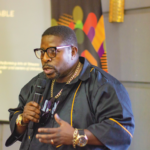
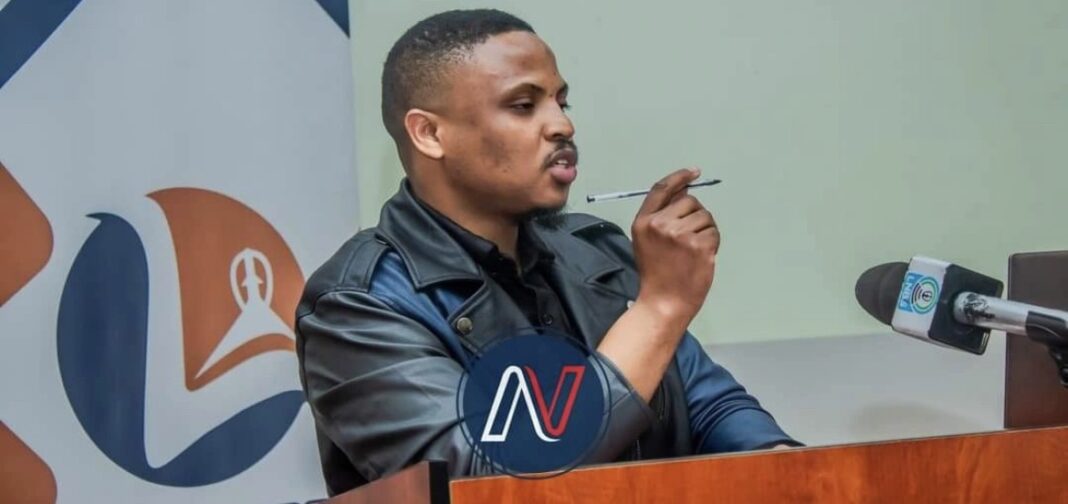
This was among the messages delivered by Recording Industry of South Africa (RiSA) Finance Director Nishal Lalla during the Lesotho Spring Music Conference in Maseru in September, where musicians and industry stakeholders discussed collective management, royalties and music as a business.
Lalla urged artists to look beyond fame and the immediate success of a song, emphasising that a music career can continue generating income long after a track has been released.
“LESCOSAA does not have to come after you guys, you must go to them. They exist for you and they are here to serve you. No artists must claim not to know about collective management,” he said.
His message comes at a critical stage for Lesotho’s music industry, as the Lesotho Copyright Society of Authors and Artists (LESCOSAA) continues developing a system intended to ensure that creators benefit financially when their music is used commercially.
However, while the system is being established, an important question remains: how soon will musicians begin seeing the money?
Understanding the money behind the music
For many artists, income is closely associated with live performances, bookings, appearance fees and direct commercial partnerships. These remain important revenue streams, but they are not the only ways music can generate income.
Depending on the rights involved and how a song is used, royalties can arise from activities such as broadcasting and public performance. Different rights may apply to the composition, lyrics, sound recording and performance, meaning that several contributors can have legitimate interests in the same musical work.
This is where intellectual property becomes central to the business of music.
A song is not simply a creative product released for public consumption. It is also an asset that can generate economic value through repeated use, provided the relevant rights are identified, managed and compensated under the applicable arrangements.
Collective Management Organisations (CMOs) help creators manage certain rights collectively. Rather than requiring every songwriter, performer or rights holder to negotiate separately with every radio station, restaurant, hotel or other music user, a CMO can license relevant uses, monitor usage, collect licence fees and distribute royalties to the rights holders it represents.
For individual artists, this can make it easier to manage rights that would otherwise be difficult to monitor independently.
But the system depends on more than the existence of an organisation. It also requires accurate information about musical works, compliance by music users and reliable processes for matching collected money to the people entitled to receive it.
From legislation to implementation
As reported previously by Newsday, collective management in Lesotho existed for years largely within the legal framework established by the Copyright Order of 1989.
The introduction of formal music tariffs marked an important step towards putting that framework into practice. In November 2024, the government formalised tariffs for the commercial use of protected music, creating a basis for collecting licence fees from relevant users.
These arrangements cover different categories of music users, including commercial establishments and broadcasters, with applicable fees depending on the category and relevant tariff structure.
LESCOSAA began its licensing process in January 2025. Musicians can register with the Society and mandate it to manage the rights covered by its collective management arrangements.
The Society’s responsibilities include licensing relevant music uses, collecting fees, documenting works and distributing royalties to eligible rights holders.
Yet establishing the mechanism and demonstrating that it delivers financial benefits are two different milestones.
In an August 2026, LESCOSAA Chief Executive Officer Advocate Maema Chaka said “approximately 220 artists had registered, against an estimated 2,000 artists in the country,” He noted.
At the time, no registered artist had received royalties from LESCOSAA. Chaka explained that the Society was still in the collection stage following the commencement of licensing in January 2025.
He said “the process would involve matching the collected money to reported music usage and calculating the amounts due under the applicable distribution rules”.
Last week, in a statement by the LESCOSAA Membership & Documentation Manager Relebohile Tsoamotse further confirmed that they had yet to conduct their first royalty distribution and was continuing to build its membership, repertoire and licensing systems.
“For many artists and Basotho in general, we have been getting questions from people who want to know where is the money and when distribution will begin,” he said.
“Let’s start by remembering that LESCOSAA only started collecting in 2025 and the process has been surrounded by numerous challenges because we were doing something that is very new. We are building a system that did not exist for a long time in Lesotho so that can take up a long time”
“The licensing has taken place, the collecting also and now we are finalizing systems that will allow us to pay artists”.
These developments illustrate the stage at which the local system currently stands: licensing and collection have begun, but the transition to actual payments remains the key test.
Registration is only part of the process
LESCOSAA has repeatedly encouraged musicians to register their works and provide accurate information about everyone involved in creating them.
This is particularly important where songs involve multiple contributors, including lyricists, composers, producers and performers.
Without clear information about ownership and the rights attached to a song, distributing royalties fairly can become complicated. Contributors may disagree over their respective shares, or the organisation may lack the information needed to identify the appropriate rights holders.
According to Tsoamotse, musicians registering their works should already have agreed on how royalties will be divided among the relevant contributors.
Registration therefore involves more than putting an artist’s name on a membership list. It also requires proper documentation of individual works and the people entitled to benefit from them.
LESCOSAA has indicated that registration requires identification documents, banking details, information about songs and their contributors, next-of-kin details and a once-off registration fee of M100.
For artists, these requirements are part of treating music as a professional business rather than leaving the administration of their work until a financial opportunity arises.
The Society has also explained that reciprocal arrangements with other collective management organisations can facilitate representation across borders, subject to the applicable agreements and rights involved.
For Basotho musicians whose work reaches audiences outside Lesotho, this is an important consideration. However, artists should understand which rights are managed by each organisation and how their works are documented across different territories.
The trust and compliance challenge
The development of a royalty system also depends on trust between creators, music users and the institution responsible for administering the process.
In previous reporting, Newsday highlighted concerns about registration, compliance and the willingness of music users to pay licence fees.
At the time of an October 2025 report, LESCOSAA had 237 registered members, according to Chaka. The organisation also acknowledged difficulties in persuading artists and businesses to participate in the system.
The relatively low registration figures reported in August 2026 suggest that reaching more creators remains an important task, although the figures represent different reporting periods and should not be treated as a direct measure of the same membership snapshot.
On the music-user side, licensing requires businesses and other relevant users to understand their obligations and comply with the applicable tariffs.
The earlier Newsday investigation also highlighted concerns about compliance among broadcasters, including discussions between LESCOSAA and the Lesotho National Broadcasting Service over licensing arrangements.
Where music is being used but the required licence fees are not being collected, the pool of money available for distribution may be affected. Similarly, where usage is not accurately reported, identifying which works have generated royalties can become more difficult.
The system therefore requires cooperation from both sides: artists must register and document their works, while relevant music users must comply with licensing requirements and provide the information needed for royalty calculations.
What happens to money belonging to unregistered artists?
One of the important questions in the system concerns music whose creators have not registered with LESCOSAA.
Chaka told stated that where the Society identifies music associated with an unregistered artist that has generated royalties, the money can be held while the artist is informed and given an opportunity to register.
According to the explanation he provided, the artist has three years to come forward after being informed. If the artist does not register within that period, the money can eventually be used for the advancement of the creative industry.
This makes registration and accurate contact information particularly important.
An artist may have music that continues to be played long after its release but remain unaware that money associated with its use has been collected. Without a reliable way to identify and contact the rights holder, the process of distributing that money can be delayed.
For musicians who have yet to register, the issue is therefore not simply whether they believe royalties will be substantial. It is whether their works and ownership information are documented so that they can potentially benefit when eligible royalties become distributable.
At the same time, registration alone does not guarantee a payment. Royalties depend on relevant music usage, the fees collected, the rights represented, accurate reporting and the applicable distribution rules.
Building careers beyond the stage
The discussion at the Spring Music Conference reflected a wider need for musicians to understand the commercial realities of their profession.
Lalla’s message was that artists should not wait for institutions to approach them before taking responsibility for their music business.
Understanding copyright, keeping records of songs, agreeing on ownership shares and registering works are practical steps that can help artists manage their intellectual property.
For Lesotho, the stakes extend beyond individual musicians. A functioning creative economy can support songwriters, producers, performers, sound engineers, recording studios, event organisers and other professionals whose livelihoods depend on music.
But that potential requires systems that can reliably connect the commercial use of creative work with the people responsible for producing it.
LESCOSAA’s establishment and commencement of licensing represent steps towards that objective. The organisation’s next challenge is to demonstrate that collection can lead to accurate and transparent distribution.
For musicians, the message is equally clear: talent and popularity are important, but understanding the business of music is part of building a sustainable career.
The real measure of progress will not simply be how many artists register or how many businesses obtain licences. It will be whether the system can identify the music being used, collect the appropriate fees and ensure that the money reaches the rights holders entitled to receive it.
For Basotho musicians, fame may bring recognition, bookings and opportunities. But a sustainable music career also requires an understanding of the rights attached to their work, and a royalty system capable of turning those rights into income.
Summary
- It is also about understanding copyright, registering creative works and ensuring that the systems designed to collect royalties can eventually put money into the pockets of the people who create the music.
- This was among the messages delivered by Recording Industry of South Africa (RiSA) Finance Director Nishal Lalla during the Lesotho Spring Music Conference in Maseru in September, where musicians and industry stakeholders discussed collective management, royalties and music as a business.
- His message comes at a critical stage for Lesotho’s music industry, as the Lesotho Copyright Society of Authors and Artists (LESCOSAA) continues developing a system intended to ensure that creators benefit financially when their music is used commercially.

A Professional Communications practitioner with a wealth of expertise in marketing, public speaking, communication and media relations. I believe in learning everyday and improving one’s personal and professional capabilities.
* A former journalist and radio host who is passionate about media and it’s impact on society.