

Ntsoaki Motaung
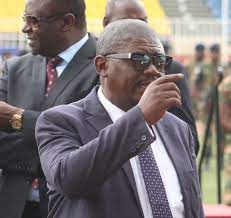
The ministry of agriculture and food security was already allocated an insufficient budget to subsidise farming inputs to bolster the 2022 summer cropping and the Russia-Ukraine conflict has deepened the problem, Minister Keketso Sello said.
Sello indicated that the war between Russia and Ukraine has led to an increase in the prices of seeds and other farming inputs thereby affecting the purchasing power of the government towards subsiding local farmers.
“We were allocated M71 million which we believe is not enough and will not sustain the ministry throughout the financial year. It might happen that the seeds and fertilizers we were able to buy will not be enough for all local farmers,†Sello said.
Last year, the then minister of agriculture, Likopo Mahase, told the press that the government intended to spend M100 million to subsidise farming inputs.
Sello said in trying to mitigate the shortage, his ministry has already approached the cabinet to request a supplementary budget to be able to support more farmers, which has not been approved yet.
From next week Tuesday, he said, farmers will be able to buy subsidised inputs for the summer cropping in their districts at uniform prices countrywide, “…but there is an imminent shortage.â€
The subsidised inputs include seeds, fertilisers, pesticides and herbicides among others.
Maize is one of the most important summer crops produced in Lesotho since it is one of the country’s main dietary staples.
Russia’s invasion of Ukraine, according to reports, has strongly impacted the maize market.
The reports indicate that Ukraine alone accounts for over 15 percent of the world’s corn exports.
The country’s logistics have been severely affected and redirected towards the war effort. Its export ports have been damaged by the Russian bombings while some are blocked by the Russian fleet.
The virtual absence of Ukraine in the supply chain of maize has caused a strong price spike.
The war and the subsequent sanctions have also instantly cut off global markets from Russian and Ukrainian nitrogen and potash fertilizers.
Sello said that while farmers sow their crops in the 2021 summer cropping season expecting good yields, the heavy rains experienced from mid-November 2021 to March this year swept away crops resulting in subdued yields.
The rains were categorised by the Lesotho Meteorological Services (LMS) as normal to above normal.
The situation resulted in widespread damage throughout the country with the worst affected sectors being agriculture, roads, water and sanitation and health.
In a statement on January 17 this year, the Lesotho Red Cross Society said the heavy rains started early and intensified in mid-November 2021.
“They have negatively affected crop production, much as it rained at peak of planting season and the intervals of rainy periods did not provide enough time for land preparations e.g. ploughing and planting for most of the farmers,†read the statement.
It added: “While other already planted crops were at their early stage of emergence, thus depletion of nutrients due to residual moisture.â€
Sello told reporters on Monday that LMS has already alerted his ministry that “this summer there will be much rain just like last yearâ€.
He said: “I, therefore, appeal to the farmers to get ready and prepare the land and plant in time this year.â€
On December 15, 2020, the United Nations Development Programme (UNDP) launched a Human Development Report themed ‘The Next Frontier – Human Development and the Anthropocene’.
The report indicated that torrential rains have exposed Lesotho’s fragility to climate change.
It also revealed that projected changes to the climate over the next half a century in Southern Africa are expected to exacerbate this vulnerability.
“Overall rainfall is expected to decrease over the same period but with the probability of intensity of flash rains thus increasing the likelihood of floods,†it read.
Climate Change Activist, Letsatsi Lekhooa, told Newsday on Monday that Lesotho needs to adopt strategies that will help it to adjust to actual or expected climate change and its effects.
Lekhooa said the country needs to seek ways to moderate or avoid harm brought by climate change or exploit beneficial opportunities.
He explained that the country has in recent years failed to produce enough food as a result of the effects of climate change.
“The ministry of agriculture is still depending on the idea of proving fertilizers to farmers even though they are not helpful in some places. The government has to rely on researchers that will help it come up with new approaches to farming for sustainable food production,†he said.
“We do not have to hide behind climate change but we have to get out to find a way to farm and produce even in unfavourable weather conditions. Farmers should be advised on what kind of seeds they can plough, at what time and in which places while the government works on prioritizing agriculture as stated in the National Strategic Development Plan II (NSDP II),†he added.
70 percent of the population in Lesotho is dependent on agriculture and nature-based activities, according to the UNDP.
Due to the long spells of drought, at least a quarter of the country’s two million inhabitants has been consistently declared food insecure on annual basis for more than a decade.
Summary
- The ministry of agriculture and food security was already allocated an insufficient budget to subsidise farming inputs to bolster the 2022 summer cropping and the Russia-Ukraine conflict has deepened the problem, Minister Keketso Sello said.
- Sello indicated that the war between Russia and Ukraine has led to an increase in the prices of seeds and other farming inputs thereby affecting the purchasing power of the government towards subsiding local farmers.
- Sello said in trying to mitigate the shortage, his ministry has already approached the cabinet to request a supplementary budget to be able to support more farmers, which has not been approved yet.

Welcome to Newsday Media – Your Trusted Source for News and Insights in Lesotho!
At Newsday Media, we are passionate about delivering accurate, timely, and engaging news and multimedia content to our diverse audience. Founded with the vision of revolutionizing the media landscape in Lesotho, we have grown into a leading hybrid media company that blends traditional journalism with innovative digital platforms.
Our mission is simple: to inform, inspire, and empower our readers by providing comprehensive coverage of local and global events, current affairs, and cultural happenings. Whether you’re looking for breaking news, in-depth analysis, or captivating storytelling, Newsday Media is your go-to destination for all things news-related.
With a dedicated team of journalists, editors, and multimedia experts, we are committed to upholding the highest standards of journalistic integrity and professionalism. We pride ourselves on delivering content that not only informs but also sparks conversation, fosters understanding, and drives positive change in our society.
From our flagship newspaper to our dynamic digital platforms, we offer a wide range of multimedia content to cater to the diverse interests and preferences of our audience. Whether you prefer to stay informed through print, online articles, videos, or podcasts, Newsday Media has something for everyone.
We believe in the power of storytelling to connect people, bridge divides, and inspire action. That’s why we’re dedicated to providing a platform for voices from all walks of life, championing diversity, inclusion, and authenticity in everything we do.
Thank you for visiting Newsday Media. We invite you to explore our website, engage with our content, and join us on our journey to inform, inspire, and empower our community. Together, let’s shape the future of media in Lesotho.