

- Ombudsman describes it as an insult
- Nurses hired on probationary terms in 2018 remain unconfirmed 8 years later
The ceilings are collapsing. The showers have no doors. Eighty-four men live in a unit built for thirty-five.
And for eight years, nurses have waited, on probation, without benefits, without certainty, while the state pays them a monthly risk allowance that cannot buy a single loaf of bread.
These are not fragments from a forgotten war zone.
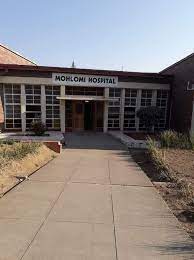
They are the findings of the Ombudsman’s Special Follow-Up Report on Mohlomi Mental Hospital, released on Tuesday this week.
Three years after the original inspection laid bare the “deplorable conditions” at Lesotho’s only psychiatric hospital, the Office of the Ombudsman has returned to find not progress, but regression.
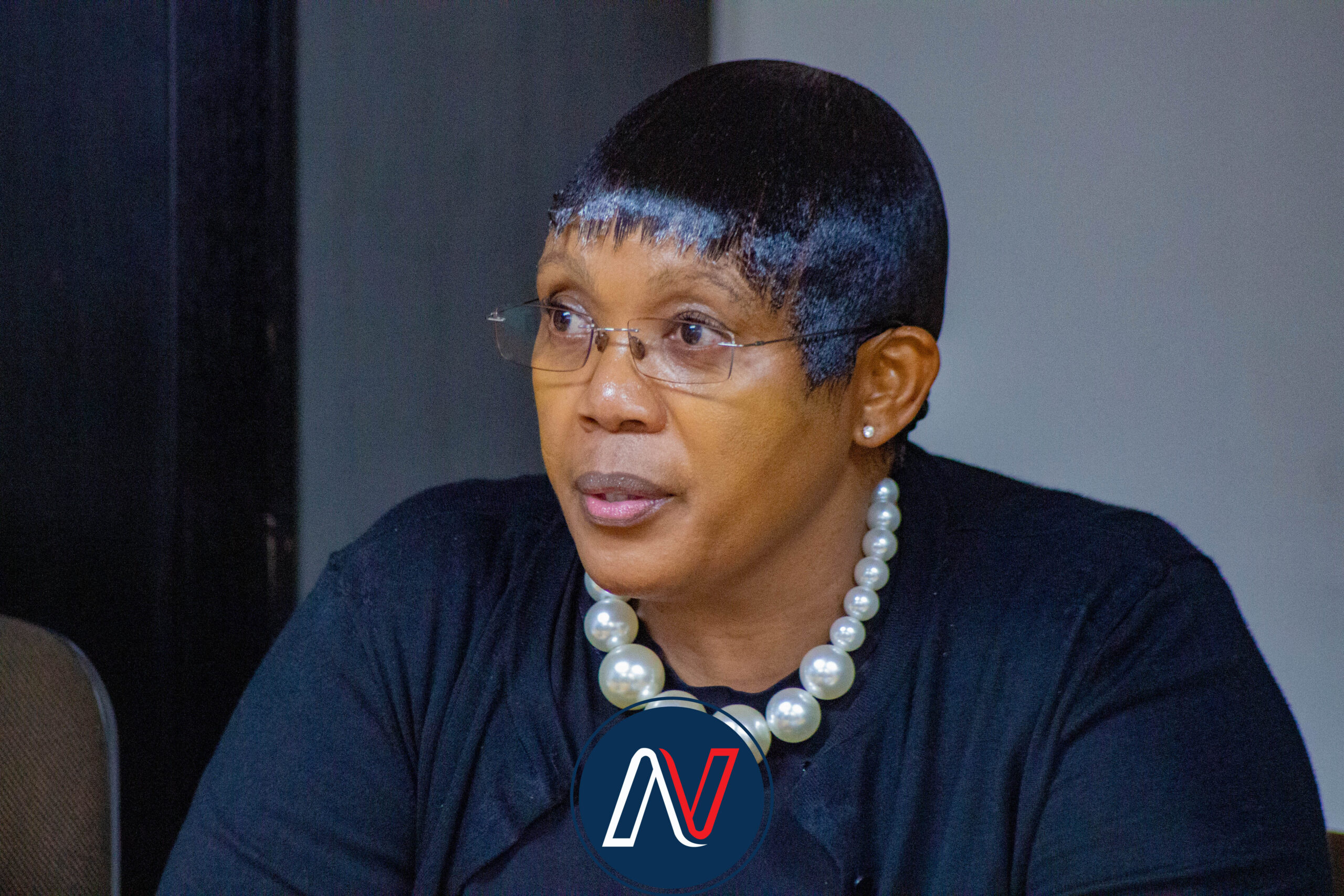
“This follow-up report is therefore issued with a heavy heart but an unwavering resolve,” wrote advocate Tlotliso Polaki, the Ombudsman. “It documents not progress, but regression. It records not reform, but resistance.”
Of the ninety-seven recommendations made in 2023, only twelve have been fully implemented. Seventy remain untouched.
M12.00 per month: “A mockery” that has become an insult
In the forensic unit, Lesotho Correctional Services (LCS) officers and nurses work side by side, managing patients described as “highly violent and aggressive.” They face physical injury, psychological trauma, and the constant threat of attack. For this, the state compensates them with an allowance that has not changed in years.
“The risk allowance of M12.00 per month, noted in 2023 as ‘a mockery,’ remains unchanged,” the report states. “Three years of inflation have rendered this allowance even more meaningless.”
The report calculates the real value: “This amount, which would purchase approximately one loaf of bread, is an insult to staff who risk physical injury daily.”
One nurse interviewed for the 2023 report had her spectacles broken by a patient. She received no compensation. The recommendation that a clear policy on compensation be developed “has not been implemented.” Staff who suffer losses due to patient violence receive nothing.
“The risk allowance of M12.00 per month, noted in 2023 as requiring review, remains unchanged,” the report repeats with weary precision. The Ombudsman now recommends it be increased to between M300 and M500 per month, a twenty-five-fold increase that still barely reflects the danger of the work.
Nurses on probation since 2018
Perhaps no finding better captures the systemic inertia than the fate of the nursing staff.
“Nurses hired on probationary terms since 2018 remain on probation eight years later,” the report reveals. “They cannot access benefits such as study leave, and their future remains uncertain. This uncertainty affects their performance and commitment.”
Eight years. The entirety of primary education plus one year in secondary education. And still, these nurses wait for confirmation that may never come.
The report is unsparing in its chronology: “The eight-year probationary status of nurses hired in 2018” is listed as evidence of a Ministry characterised by “inertia rather than action.”
One senior nursing officer, Mrs ‘Mantoa Maholi-Rampeta, works alone at the hospital, and she is due to retire in March 2026. The two senior nursing officer positions noted as vacant in 2023 remain vacant. Staff acting in these positions serve without acting allowances, despite a recommendation that they be paid.
“Acting staff not compensated,” the report notes bluntly in its implementation table.
The Ministry of Health acknowledges the problem. A new Human Resources Officer has been appointed to resolve “bottlenecks in staff recruitment and confirmation.” But progress is stalled by a Ministry of Finance hiring freeze “aimed at managing the national wage bill.”
“Patients sleep on mattresses on the floor, with up to eleven patients in rooms designed for four or five…”
“Many staff officers remain on probation since 2018, and it is only now that the HR is working on confirming them.”
Overcrowding: 240 percent of capacity and climbing
The forensic unit at Mohlomi was designed for thirty-five patients. In 2023, it housed seventy-seven. Today, it houses eighty-four.
“The forensic unit now houses 84 patients (81 male and 3 female), representing an occupancy rate of 240 percent of design capacity,” the report states.
The general wards house another seventy patients. The total institutional population stands at 154, “substantially above the 110-patient capacity established after the 2001 refurbishments.”
“Patients sleep on mattresses on the floor, with up to eleven patients in rooms designed for four or five,” the report documents. “The proximity of patients facilitates the transmission of communicable diseases, including tuberculosis, scabies, HIV/AIDS and respiratory infections.”
The hospital no longer has vacant observation cells. “All single cells have to now be shared between four patients, irrespective of circumstances that warrant that a patient be isolated for observation purposes.”
One patient’s words from 2023 haunt the report. Quoted again in 2026, they have become a prophecy: “Re folile empa re qetella re boetse re hlanya hape ka lebaka la ho lula le bakuli ba bang” — “We have healed, but we end up relapsing as a result of living with other patients.”
“Sadly, the same patient is still held at the hospital as he awaits assessment and possible pardon.”
The forgotten: Patients detained for decades without review
Because the psychiatrist position was vacant for nine years, because the Advisory Committee has not sat since 2015, and because the Mental Health Review Tribunal last convened in 2015, patients who have recovered from mental illness remain locked inside.
“One patient, committed on account of sexual offences committed while under the influence of dagga in 1998, has now been detained for 28 years,” the report reveals. “A second, committed for arson in 2017, has been detained for nine years despite being stabilised.”
Twenty-eight years. Almost three decades. A detention that began when Nelson Mandela was still president of South Africa, when Lesotho was still under the rule of His Majesty Letsie III’s early reign.
“The absence of a functional review mechanism means that these patients, and dozens like them, are effectively serving indeterminate sentences without judicial oversight,” the report concludes. “This is not treatment; this is imprisonment without trial, and it violates Section 8 of the Constitution.”
“Re folile empa re qetella re boetse re hlanya hape ka lebaka la ho lula le bakuli ba bang”
A foreign Cuban psychiatrist arrived in early 2025, the first psychiatrist able to handle medico-legal matters in nine years. But he speaks neither Sesotho nor English as a first language. “He has had to learn English first to enable him to assess forensic patients,” the report notes. In a full year, he has produced fewer than five evaluation reports.
His contract has now lapsed.
The math of neglect
The report reduces the crisis to numbers that are almost impossible to comprehend as policy choices.
Mohlomi Mental Hospital receives 1.8 percent of the national health budget. Its annual allocation ranges between M8 million and M9 million. “This budget, exemplified by last year’s M8 million, is inadequate to meet the needs of the facility.”
By contrast, an estimated 431,000 Basotho suffer from some form of mental illness.
“This allocation of 1.8% of the health budget to the nation’s only psychiatric hospital, serving a population in which an estimated 431,000 people suffer from mental illness, reflects a profound misallocation of resources,” the report states. “It is a policy choice that prioritises other health expenditures over mental health.”
The centralised procurement system means that even when money exists, supplies do not arrive. Cleaning detergents have not been received “for the past year.” Communal areas are cleaned with water only. Patients, lacking toilet paper, “use alternatives including mattress sponge and blanket fabric.”
“The hospital’s assets are being destroyed because the MOH (Ministry of Health) will not provide M20 rolls of toilet paper consistently,” the report says.
A warning from across the border
The Ombudsman invokes a tragedy that should serve as a warning to every official who reads the report: Life Esidimeni.
In South Africa, 144 psychiatric patients died of starvation and neglect after being transferred to unlicensed facilities. That disaster was described as “the greatest cause of human rights violations” in democratic South Africa.
“Lesotho is not there yet,” the report acknowledges. “But the trajectory is concerning, and the underlying conditions, neglect, under-resourcing, and lack of oversight, are similar.”
The report does not mince words about what is at stake. “The Life Esidimeni tragedy in South Africa should serve as a warning. That tragedy, in which 144 psychiatric patients died, did not happen overnight. It was the culmination of years of neglect, of warnings ignored, of patients forgotten.”
The patients’ words
Throughout the report, the voices of patients and staff break through the bureaucratic language. They are not quoted at length, the Ombudsman’s office records their suffering in clinical prose, but their presence is unmistakable.
There is a 19-year-old male patient, admitted for substance-induced psychosis, who committed suicide in the seclusion room in 2025.
There is the 72-year-old man, Souru, who died of high blood pressure and stroke complications in March 2025. He had been under observation for seven years.
There is a 49-year-old female admitted on 20 November 2025 who died two days later, “from an unknown or unidentified cause of death, query cardiopulmonary arrest.”
There is a minor female patient who murdered and facially deskinned another patient, a case documented in 2023, after which “no systemic changes have been implemented to prevent similar incidents.”
And there is the patient who spoke the words that have become the report’s haunting refrain: “We have healed, but we end up relapsing.”
“Act now or explain why you have chosen not to”
The 2023 report ended with hope. This one ends with a demand.
“The 2023 report ended with an expression of hope that the Ministry would use the report to inform intervention measures,” the Ombudsman writes. “That hope has not been realised. This report ends with a demand: act now or explain to the nation why you have chosen not to.”
The Ombudsman recommends that the Principal Secretary (PS) and Director General of Health Services appear before Parliament to account for their failure. That the mental health budget be increased to at least five percent of the health budget. That the M12.00 risk allowance be raised to M500. That nurses hired in 2018 finally be confirmed.
But the report’s final paragraph is not about recommendations. It is about time.
“The patients of Mohlomi Mental Hospital have waited long enough.”
Three years of inaction. Nine years without a permanent psychiatrist. Eight years of nurses on probation. Twenty-eight years for one patient still waiting to be pardoned.
The ceilings are still collapsing. The showers still have no doors. And the man who said “we have healed, but we end up relapsing” is still inside.
Summary
- And for eight years, nurses have waited, on probation, without benefits, without certainty, while the state pays them a monthly risk allowance that cannot buy a single loaf of bread.
- Three years after the original inspection laid bare the “deplorable conditions” at Lesotho’s only psychiatric hospital, the Office of the Ombudsman has returned to find not progress, but regression.
- The Ombudsman now recommends it be increased to between M300 and M500 per month, a twenty-five-fold increase that still barely reflects the danger of the work.
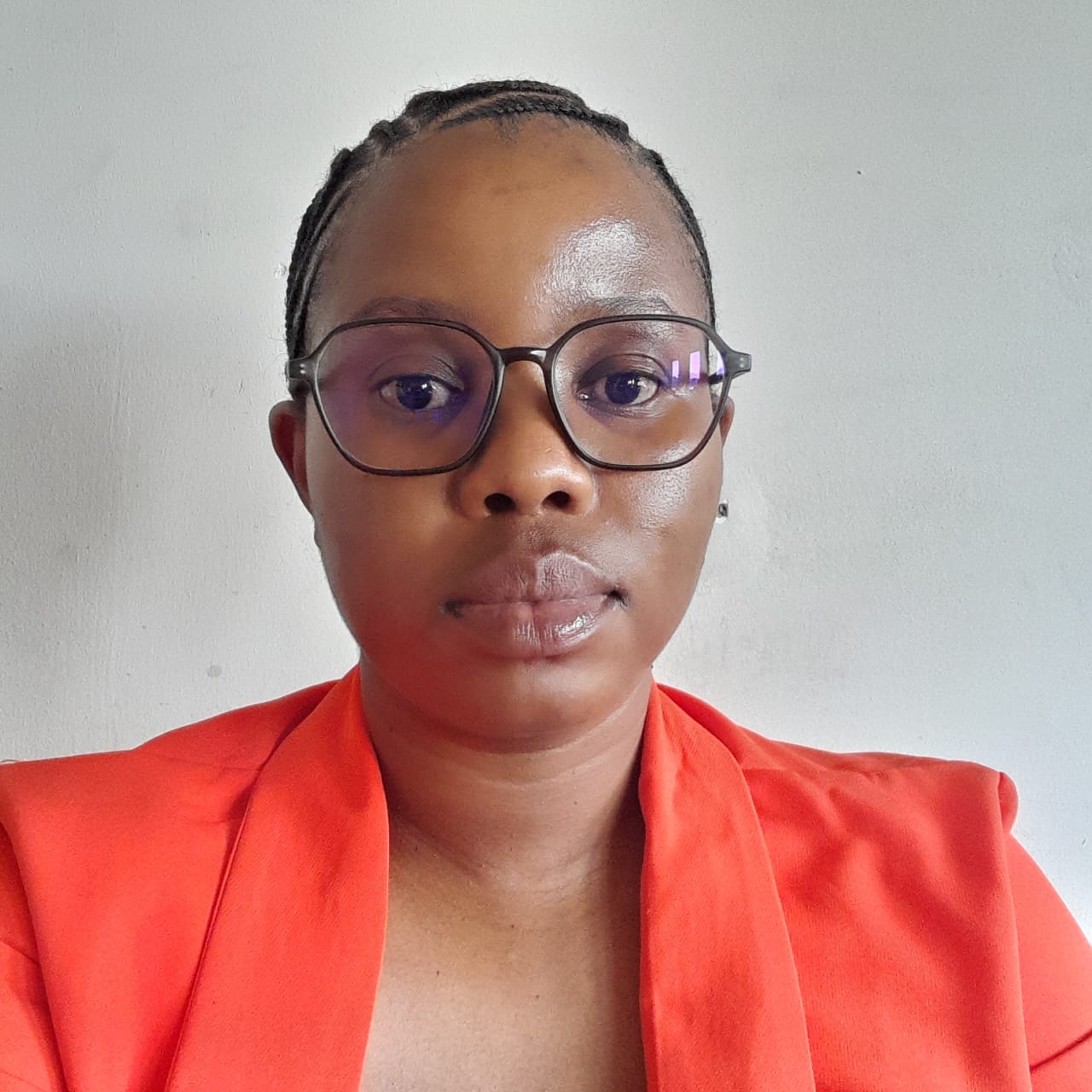
Ntsoaki Motaung is an award-winning health journalist from Lesotho, specializing in community health stories with a focus on sexual and reproductive health and rights, as well as HIV. She has contributed to platforms like “Be in the KNOW,” highlighting issues such as the exclusion of people with disabilities from HIV prevention efforts in Lesotho.
In addition to her journalism, Ntsoaki serves as the Country Coordinator for the Regional Media Action Plan Support Network (REMAPSEN). She is also a 2023 CPHIA Journalism Fellow.