
In hip hop culture, longevity is never accidental. Trends shift quickly, audiences constantly chase new sounds, and many artists fade as fast as they rise.
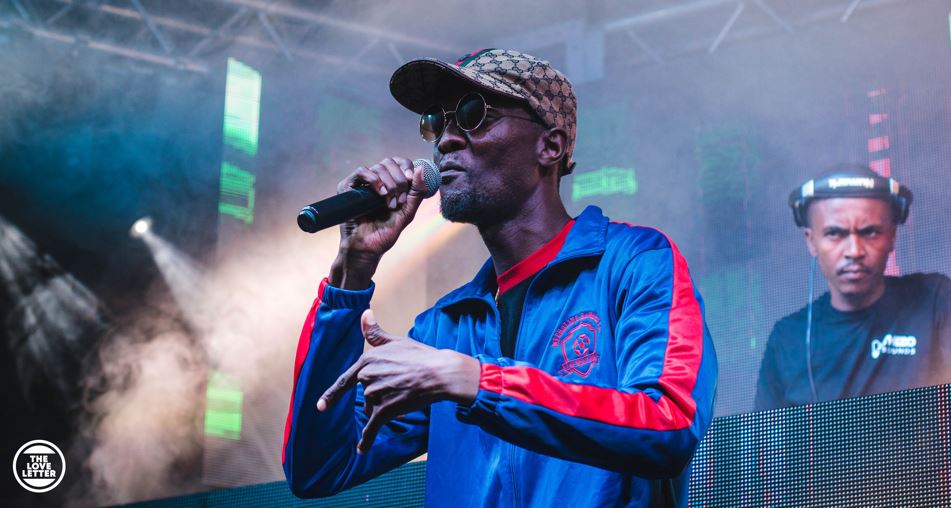
Yet in Lesotho’s evolving music industry, one artist has remained relevant across multiple generations: Mokebe Mohasoa, better known as Skebza D.
For nearly two decades, Skebza D has been more than just a rapper. He has built a reputation as a producer, mentor, creative visionary, and one of the pioneers of “Sotho-Hop,” a subgenre rooted in African identity, lyrical consciousness, and Basotho cultural pride.
“I am Sotho-Hop. I am Lesotho Hip-Hop,” he said confidently.
“I believe that I still have something to offer that some don’t, which is that original conscious Hip-Hop sound.”
Born and raised in Naleli, Maseru, Skebza D says his childhood was shaped by curiosity, education, and a deep interest in African history and identity.
“I always had my head stuck in books. I was constantly thirsty for knowledge, especially about the history of my Basotho and African people,” he recalled.
That intellectual curiosity would later define both his music and philosophy. Growing up in the early 1990s, he was introduced to hip hop and dancehall through his older brothers, but hip hop’s storytelling and consciousness stood out most.
“What attracted me to Hip-Hop was its consciousness and teachings like ‘knowledge of self,’” he explained.
“Also the creativity and theatrics behind the music videos.”
Like many rappers of his era, Skebza D drew inspiration from artists such as Tupac and Nas, whose music combined emotional storytelling with social commentary.
“Songs like Dear Mama, Changes and Brenda’s Got a Baby really hit home,” he said. “These artists spoke to all age groups, which was something I respected very much.”
Before fully embracing rap, Skebza D was heavily involved in poetry and spoken word performance during his school years, an influence he says remains central to lyricism.
“Rap is literally an acronym for Rhythm And Poetry. Possessing the fundamentals of poetry definitely makes a better rap artist,” he said.
That poetic background later evolved into a broader vision. Rather than imitating Western hip hop trends, he wanted to create music rooted in Southern African identity. The result became “Sotho-Hop.”
“Sotho-Hop is representative of our Southern African and Sotho roots,” he explained.
“For a song to be labelled Sotho-Hop, it doesn’t necessarily have to be in Sesotho only or use koriana sounds. It just has to push the philosophies of being a real African who’s proud of their culture and heritage.”
At a time when much of local hip hop leaned heavily toward imitation, Skebza D believed cultural identity was missing.
“Yes, I felt lyrical Hip-Hop lacked cultural identity,” he said.
His fusion of Sesotho and English became part of that cultural mission.
“The fusion of both languages was important in bringing different cultures and tribes together,” he explained. “It has contributed to popularising Basotho and African music globally.”
After starting his career with Hipnotica in the mid-2000s, Skebza D later pursued formal music training in Johannesburg, an experience that exposed him to the business side of entertainment. Over the years, he built a respected catalogue, collaborated with major artists, and performed on important stages locally and internationally.
Still, he believes the industry has changed significantly.
“The older generation were about talent and quality. Now for most, the game is about popularity over talent.”
While acknowledging social media’s advantages, he believes it has shifted focus away from artistry.
“Social media has its pros and cons,” he said. “It has made the game about negativity in the name of likes, numbers and fame over pure talent and hard work.”
Despite his criticisms, Skebza D continues to evolve creatively through music, design, painting, and directing visuals.
“I understand where the music is going. Most times I set the trend instead of following it.” he said
For Skebza D, legacy is no longer about fame, but about building something lasting.
“At this age I’m working to leave a legendary and respectful everlasting legacy,” he said.
And in an industry driven by short attention spans and temporary fame, that may be exactly why Skebza D still matters.
Summary
- He has built a reputation as a producer, mentor, creative visionary, and one of the pioneers of “Sotho-Hop,” .
- Born and raised in Naleli, Maseru, Skebza D says his childhood was shaped by curiosity, education, and a deep interest in African history and identity.
- After starting his career with Hipnotica in the mid-2000s, Skebza D later pursued formal music training in Johannesburg, an experience that exposed him to the business side of entertainment.

A Professional Communications practitioner with a wealth of expertise in marketing, public speaking, communication and media relations. I believe in learning everyday and improving one’s personal and professional capabilities.
* A former journalist and radio host who is passionate about media and it’s impact on society.