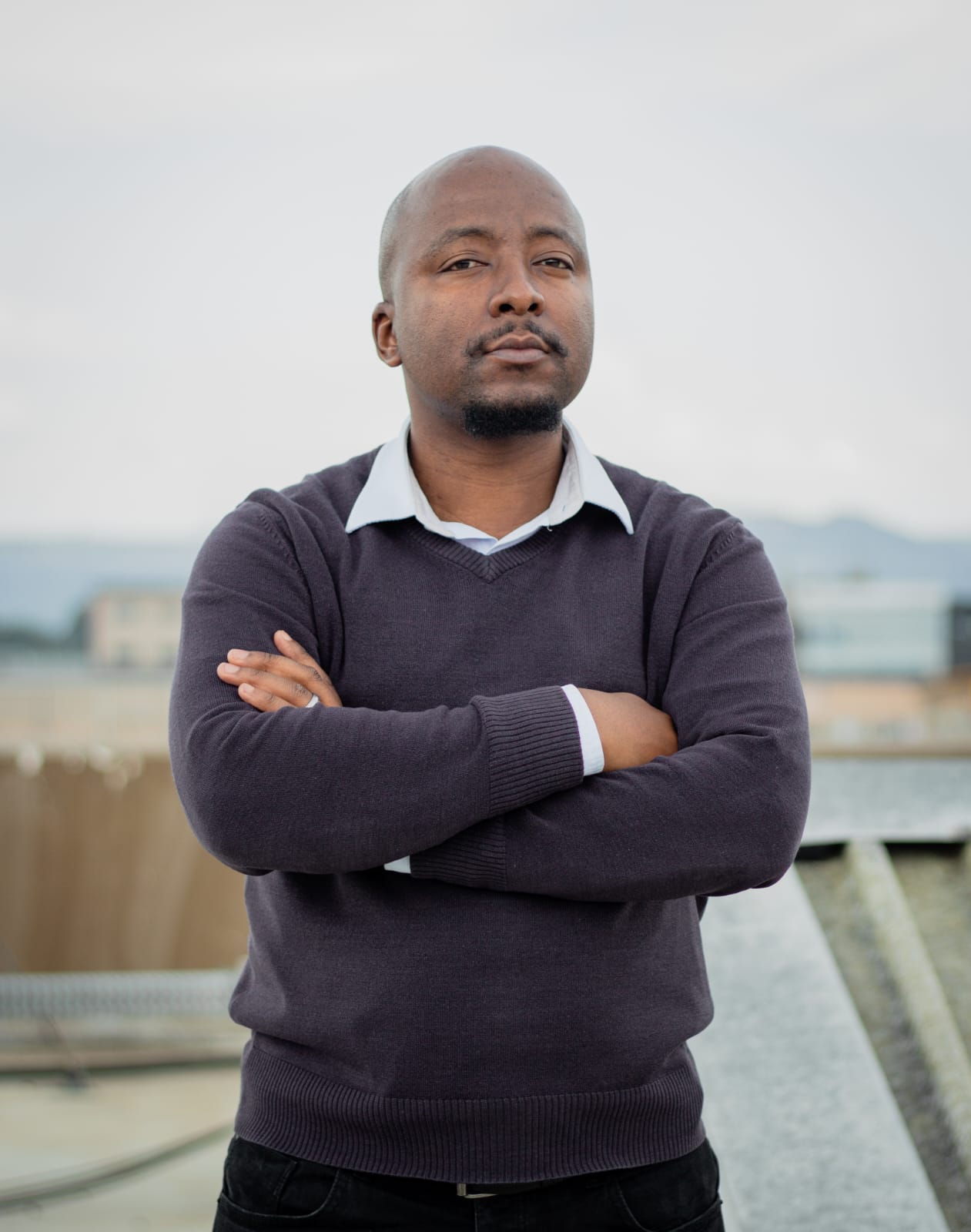

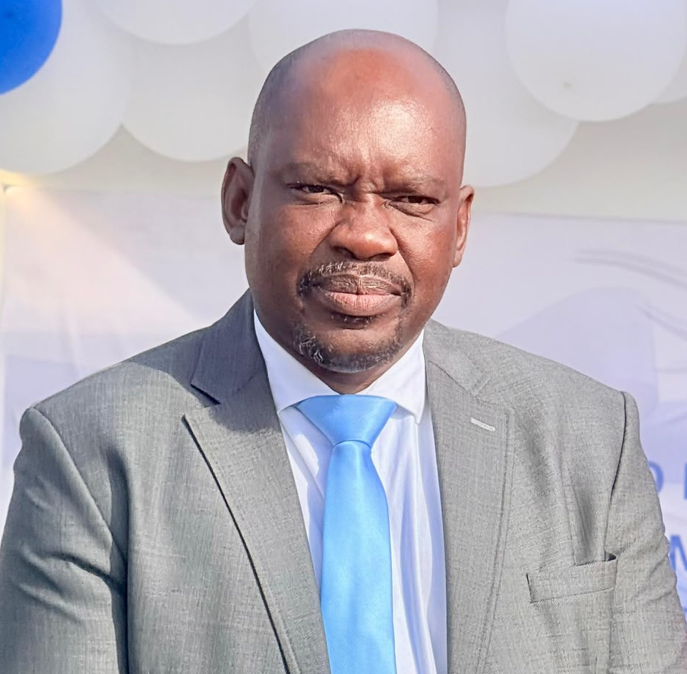
When Mpeke Lebohang Makara walked into the Water and Sewerage Company (WASCO) headquarters as Chief Executive Officer (CEO) in March this year, he inherited a utility facing one of the most daunting financial crises in its history.
The state-owned water utility is grappling with a toxic combination of poor revenue collection, escalating non-revenue water (NRW) losses, and a growing backlog of customer connections challenges that have collectively placed immense strain on its finances and operational sustainability.
The damning statistic is that WASCO is collecting less than 30 percent of the revenue it bills customers for water consumption. In effect, about 70 percent of billed water usage generates no income for the company.
“Our financial situation is not serious; it is dire! This is because we are unable to collect around 70percent from our water bills. That is dangerous,” Makara said in an interview this week.
The admission provides a sobering picture of the magnitude of the task facing the new CEO, whose appointment was announced by WASCO in March as part of a broader effort to usher in a new era of operational excellence and improved service delivery.
For a utility whose operations depend heavily on revenue generated from water sales, the inability to collect payment from the majority of its customers represents a serious threat to its long-term viability.
Makara said many customers have stopped paying their bills because of disputes relating to billing inaccuracies and other service complaints. Rather than adopting a confrontational approach, he intends to engage customers directly and seek mutually beneficial solutions.
“We are saying as you are consuming water you are obligated to pay, notwithstanding the billing disputes that we will engage in. That being said, there are initiatives that we are working on regarding how we can meet our customers halfway in settling their outstanding bills,” he said.
He acknowledged that WASCO’s own inefficiencies have contributed to the problem.
“We admit that we have historically not done things efficiently. We cannot deny that. There were gaps in efficiency.”
While unpaid bills have severely weakened the utility’s cash flow, another major drain on its finances comes from non-revenue water, which is treated water that never generates income because it is lost before reaching paying customers.
According to Makara, NRW currently costs WASCO an estimated M60 million annually. Illegal water connections alone are estimated to cost WASCO more than M350,000 every month, translating into annual losses of about M4.2 million.
“A cost estimate for NRW for us is M60 million per annum. This is the water that we treat but end up getting lost somewhere and becomes unaccounted for, and that is quite huge,” he said.
Non-revenue water refers to water that has been produced and treated but fails to generate revenue due to leakages, illegal connections, faulty meters, inaccurate billing, ageing infrastructure and other operational inefficiencies.
Recognising the urgency of the situation, Makara has already established a dedicated task team to investigate the root causes of the losses and recommend solutions.
“We have constituted a task team that is currently assessing the situation and identifying the main sources of non-revenue water across our network. Once we have a clear understanding of the problem, we will be able to implement targeted interventions.”
The investigation will examine leakages, illegal water connections, ageing infrastructure, meter inaccuracies and commercial losses.
Makara said part of the challenge stems from inherited infrastructure, including some systems taken over from Rural Water Supply networks, which were not originally designed to minimise water losses.
The utility has set itself an ambitious target of reducing NRW levels to at least 40 percent, below the regulatory threshold of 46.5 percent set by the Lesotho Electricity and Water Authority (LEWA).
Reducing water losses would significantly improve WASCO’s financial position without requiring tariff increases or costly expansions in water production capacity.
Beyond tackling NRW, Makara must also confront another persistent challenge: a backlog of more than 2,140 water connections.
The waiting list has become a source of frustration for many households and businesses seeking access to water services. WASCO has already indicated that efforts are underway to strengthen customer payment systems to ensure funds paid for future connections are protected and available when installations are eventually undertaken.
Addressing the backlog is expected to play a critical role in restoring public confidence in the utility and improving customer satisfaction.
To support his turnaround strategy, Makara is also looking to technology. One of the projects being prepped for implementation is the introduction of smart metering systems that can detect leaks, identify meter reading anomalies and provide early warning signals that enable rapid intervention.
Planned for implementation during the current financial year, the technology is expected to improve billing accuracy while helping the utility better monitor water consumption patterns across its network.
Makara’s vision extends beyond plugging revenue leaks.
“What I want to achieve is to get WASCO to a level of operational excellence, including streamlining and optimising our processes to make them more efficient and ensuring that we do things in a manner that introduces cost-saving measures,” he said.
His appointment comes with significant expectations. Before joining WASCO, Makara built a career spanning nearly two decades in operational management, plant management, contract management and the optimisation of large-scale industrial systems in both Lesotho and South Africa.
His experience includes leadership roles in complex technical operations within the mining and processing sectors, where efficiency, asset management and cost control are critical success factors. Those credentials may prove invaluable as he attempts to engineer a turnaround at WASCO.
The challenge ahead is formidable. Collecting billions of litres of lost revenue, recovering unpaid bills, modernising ageing infrastructure and clearing a mounting customer backlog will require significant resources, strong leadership and sustained commitment. Yet Makara remains confident that the utility can reverse its fortunes.
“I want to turn WASCO from a loss making entity to a profit making business when I leave the organisation,” Makara said.
Summary
- The state-owned water utility is grappling with a toxic combination of poor revenue collection, escalating non-revenue water (NRW) losses, and a growing backlog of customer connections challenges that have collectively placed immense strain on its finances and operational sustainability.
- The admission provides a sobering picture of the magnitude of the task facing the new CEO, whose appointment was announced by WASCO in March as part of a broader effort to usher in a new era of operational excellence and improved service delivery.
- For a utility whose operations depend heavily on revenue generated from water sales, the inability to collect payment from the majority of its customers represents a serious threat to its long-term viability.