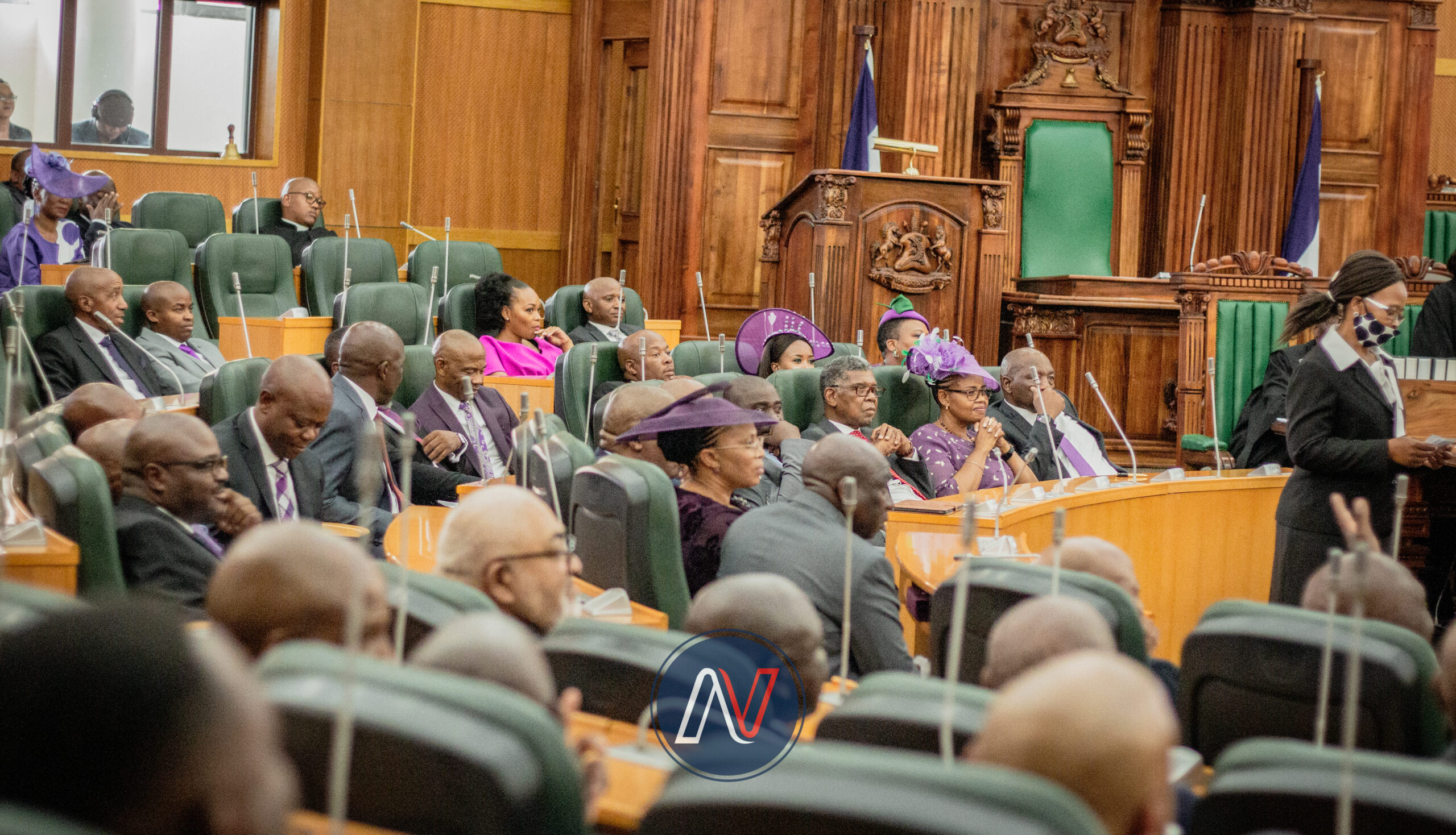

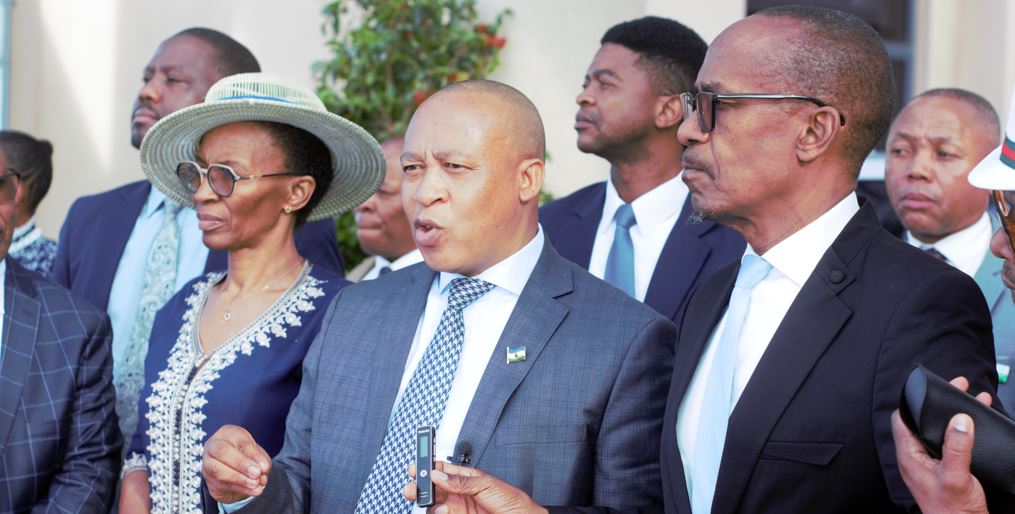
Seething opposition legislators are weighing their options after their latest attempt to compel Prime Minister Ntsokoane Matekane to face questions in the National Assembly collapsed on Tuesday this week in a bitter dispute over parliamentary procedure.
Since the 2022 general election that ushered in his administration, Matekane has never answered questions in the House as the Standing Orders governing parliamentary business provide.
The opposition now accuses Speaker Tlohang Sekhamane of shielding him from scrutiny by allegedly deliberately misinterpreting the rules on questions to the Prime Minister.
Prof Nqosa Mahao, a former minister in the Matekane-led administration, took a swipe at the Prime Minister, saying he “lacked confidence” and that his fellow MPs also lack confidence in him.
Mahao said they would challenge the “so-called ruling” by Deputy Speaker Tšepang Tšita-Mosena, who had allowed questions to be forwarded to the Prime Minister before his appearance in the House for the question session.
He accused the presiding officers of acting as “goalkeepers” for decisions that could not be justified, saying this compromised the proper running of the House.
“We will discuss what the way forward is from here,” Prof Mahao said.
Machesetsa Mofomobe, an MP and leader of the Basotho National Party (BNP), hinted during the fiery session that the opposition could ask the courts to intervene in the matter, which he insists Sekhamane has not handled well.
The row followed the withdrawal of questions by MPs Remaketse Sehlabaka and Dr Mahali Phamotse this week over a disputed procedure, which prevented the much-anticipated session with Matekane from going ahead. While Sehlabaka was given an opportunity to ask his questions by the Speaker, he instead sought clarification on the procedure.
In a letter read in the House by the Speaker, Sehlabaka said he “anticipated” that members of the government side would rise on points of order to surreptitiously prevent the Prime Minister from answering questions until his allocated 25 minutes had elapsed.
On the requirement to submit questions to the Prime Minister before his appearance in the House, Speaker Sekhamane said the procedure was based on a ruling by her deputy, which he could not reverse. He maintained that the ruling remained in force because it had not been challenged.
Sekhamane also referred legislators to decisions made during the 10th Parliament concerning questions directed to the Prime Minister.
The Speaker explained that the requirement to submit questions in advance was intended to give the Prime Minister sufficient time to study them and prepare accurate responses. He argued that asking him questions without prior notice could undermine his ability to provide correct answers, as he would be hearing them for the first time in the House.
He said the questions had therefore been forwarded to the Prime Minister to allow him time to consider them and prepare his responses. The dispute comes against the backdrop of earlier efforts to formalise the Prime Minister’s question time in Parliament.
On 3 May 2023, Motlatsi Maqelepo, now Minister of Trade, moved a motion proposing amendments to Standing Order 27, which governs questions to the Prime Minister.
Among other changes, Maqelepo proposed that the session be held on the first Tuesday of every month and that the time allocated for it be extended from 25 minutes to one hour. The motion, however, failed after the government side voted against it.
Maqelepo also proposed requiring political parties to submit their questions, together with the names of the MPs who would ask them, to the Clerk of the National Assembly at least five clear days before the scheduled session.
On Tuesday opposition MPs argued that the Prime Minister should not have been sent questions in advance. Instead, they said, the Clerk should have been given the names of members who had registered to ask him questions.
Sekhamane told the House that Matekane, who made a rare appearance in the House on Tuesday, was “ready” to answer the questions but that the members had withdrawn them.
A day before the Prime Minister was due to appear, Leader of the Opposition Mathibeli Mokhothu, who also leads the Democratic Congress (DC), wrote to the Speaker asking him to explain how questions to the Prime Minister should be handled. His letter framed the dispute as two procedural questions.
“The matter raises two distinct procedural questions: (a) Whether Standing Order 27(3) requires political parties to submit the actual questions intended for the Right Honourable the Prime Minister in advance, or only the names of the Members who intend to ask them. (b) Whether Standing Order 27 establishes a distinct procedure for questions to the Right Honourable the Prime Minister without prior notice, or whether such questions must additionally satisfy the requirements of Standing Order 24(4),” reads Mokhothu’s letter.
According to Standing Order 27(1), the Business Committee determines one Tuesday of each month for questions to the Prime Minister without prior notice.
Standing Order 27(3) reads: “Political parties shall in writing, and under the signature of the chief whip or leader of that party in the National Assembly, submit the names of members who will ask questions to the Clerk not earlier than five clear days before the day determined by the Business Committee for questions to the Prime Minister without notice.”
Mokhothu accused Sekhamane of “shielding” the Prime Minister by “subverting” the provisions of the Standing Orders, saying the Speaker’s handling of the matter had undermined confidence in Matekane’s accountability.
He said the Prime Minister was the pinnacle of accountability and should account for national issues, particularly in Parliament. He also took a swipe at Matekane for announcing policies in the “streets” instead of in the House, where he would be challenged and scrutinised.
“The Standing Order says we should write the names, but you have seen how the Speaker misdirected himself and even said we know the procedure to challenge his decision,” Mokhothu fumed.
He added that if the matter were put to a vote, the government side would use its majority to “abuse” its numbers and outvote the opposition.
“The nation of Basotho should know that Sam Matekane is the first Prime Minister who refuses to answer the questions in the House [National Assembly],” Mokhothu said.
He said Matekane lacked confidence, as did “his followers”, describing the situation as a “huge embarrassment”. He accused government-side members of pandering to Matekane because they were interested in “tenders”.
Sehlabaka, who also leads the Mpulule Political Summit (MPS), said Parliament could not be a House that obeyed the rules “when it is convenient”. He said nothing obliged Matekane to answer every question on the spot, since he could defer a response and conduct research. However, he said the “fearful” leader lacked the confidence to respond.
“We are working to ensure that things go per the dictates of the law. There is something bad happening in this country that there is a saying that all along they were flouting laws. That’s hogwash,” he said.
Tefo Mapesala, leader of the Basotho Patriotic Party (BPP), called it shameful that the Speaker would deliberately disregard the rules governing the House, saying he had turned into a “goalkeeper” protecting the Prime Minister.
“It is disgusting. You cannot deliberately misguide yourself,” he said.
The confrontation is the latest chapter in a long-running complaint. In November 2025, Mahao, now leader of the Basotho Action Party, said Matekane had completed three years as Prime Minister without ever addressing Parliament.
Sehlabaka had filed a notice of motion in May 2026 seeking to compel the Prime Minister to appear. Sekhamane was a founding member of Matekane’s Revolution for Prosperity (RFP) party before his election as Speaker.
The government has pointed to other avenues of accountability. Questions directed at the Prime Minister’s portfolio are answered by the minister in his office. In July, Matekane committed to making the Leadership Forum and National Accountability Summit an annual platform for dialogue between the government and the public.
Summary
- Mahao said they would challenge the “so-called ruling” by Deputy Speaker Tšepang Tšita-Mosena, who had allowed questions to be forwarded to the Prime Minister before his appearance in the House for the question session.
- In a letter read in the House by the Speaker, Sehlabaka said he “anticipated” that members of the government side would rise on points of order to surreptitiously prevent the Prime Minister from answering questions until his allocated 25 minutes had elapsed.
- On the requirement to submit questions to the Prime Minister before his appearance in the House, Speaker Sekhamane said the procedure was based on a ruling by her deputy, which he could not reverse.
Thoboloko Ntšonyane is a dedicated journalist who has contributed to various publications. He reports on accountability, human rights, exposes corruption and wrong doing by those in power. He reports have exposed corruption, abuse of power, fraud, misconduct and negligence. He subscribes to evidence-based reporting. He reports on governance, parliament, courts, climate change, human rights, sexual and reproductive health rights (SRHR), health, business and agriculture. He gives a voice to the marginalised while also demanding accountability. His work inspires change, triggers dialogue and also promote transparency in a society.